
Passover, or Pesach, is one of the most significant and enduring festivals in the Jewish tradition. Celebrated over eight days (seven in Israel) beginning on the 15th of Nisan, it commemorates the Exodus from Egypt—the liberation of the Israelites from slavery and the birth of a covenantal relationship between a people and their God. Yet beyond its historical narrative, Passover is a deeply spiritual and philosophical festival of freedom, memory, transformation, and sacred responsibility.
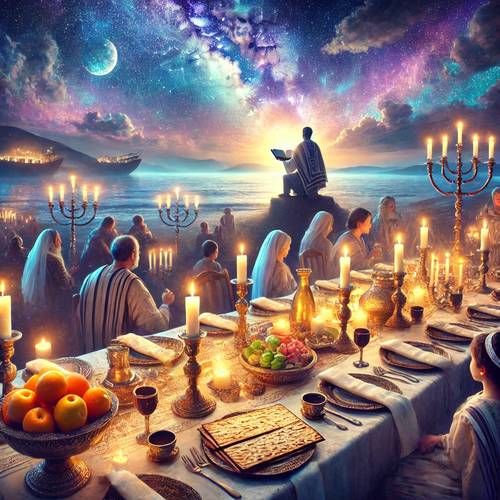
At the heart of the observance is the Seder, a ritual meal held on the first night (or two nights) of the festival. This ceremonial gathering is guided by the Haggadah, a text that weaves together Scripture, song, questions, commentary, and symbolic foods to retell the story of the Exodus. It is not a passive recounting of history, but a participatory ritual—inviting each person to see themselves as if they had come out of Egypt. In this way, Passover becomes a living myth, a reenactment of spiritual liberation in every generation.
The symbolic elements of the Seder table carry layers of meaning. Matzah, the unleavened bread, recalls the haste of the Israelites’ departure, while also symbolising simplicity and humility. Maror, the bitter herbs, represent the pain of bondage. Charoset, a sweet paste of fruit and nuts, evokes the mortar used by enslaved labourers, sweetened by the promise of freedom. The four cups of wine sanctify the four stages of redemption, and the cup for Elijah points toward a messianic hope still to come.
Spiritually, Passover is a call to awaken from inner bondage—whether it be fear, injustice, addiction, or apathy. The Exodus story becomes a metaphor for the journey from constriction (mitzrayim, the Hebrew name for Egypt, also means “narrow places”) toward expansiveness, possibility, and divine encounter. Each year, the holiday invites reflection: what is the Egypt I must leave behind, and what liberation am I ready to embrace?
Philosophically, Passover explores the tension between freedom and responsibility. Liberation is not an end in itself, but a movement toward covenant, toward law infused with compassion, and toward communal flourishing. Freedom in the Jewish tradition is not libertinism, but the opportunity to choose what is right, to sanctify time, and to remember those who are still oppressed.
Passover also has a strong ethical dimension. The experience of slavery becomes the root of moral obligation—“You shall not oppress the stranger, for you were strangers in the land of Egypt.” This memory-based ethics calls for empathy, justice, and the continual work of building a more compassionate world.
Artistically, Passover has inspired music, liturgical poetry (piyyutim), illuminated manuscripts, and contemporary reinterpretations of the Seder. The festival lives not only in tradition, but in creative adaptation, as each generation finds new ways to tell the story and make it speak to the world they inhabit.
Passover is ultimately a festival of sacred storytelling and spiritual awakening. It reminds us that freedom is fragile but possible, that memory is transformative, and that redemption begins not in grand miracles, but in the quiet decision to walk through the waters of fear and into the unknown. Each year, around the Seder table, the story begins again—timeless, urgent, and alive.
