

The Green Man is more than a symbol; he is a reminder of what we have lost and what still lingers within us. His face, entwined with leaves and staring out from the stone of ancient cathedrals, is not just an artistic relic but a whisper from the past, urging us to remember. He is not bound by time, nor by a single interpretation—he is an echo of the spirit that once defined humanity, the voice of the trees and the breath of the earth, calling us back to something we have forgotten. Human beings were never meant to be disconnected from the spiritual; it is the very essence of our existence, woven into the fabric of what it means to be alive. Yet, as Blake noted in his Proverbs of Hell, wise men and holy men hijacked this essence, transforming spirituality into a system of power and submission designed to shield us from pain. In doing so, they severed us from the raw, untamed experience of existence, offering comfort in exchange for obedience, and certainty in place of true understanding. But pain is not the enemy. It is the great refiner, the fire through which man is forged. It is in moments of crisis, in the depths of struggle, that our true nature emerges. We recognize ourselves in each other not in times of abundance and ease, but in hardship, in suffering, in the shared experience of loss and endurance. It is there that we awaken to something greater than ourselves. For some, this connection becomes permanent; for others, it is a fleeting glimpse before the veil of illusion descends again, drawing them back into complacency and forgetfulness.
The tragedy of the modern world is not that suffering has disappeared, but that we have been conditioned to fear it, to avoid it at all costs, to insulate ourselves against the very thing that shapes us. In the past, our spirituality was reshaped by dogma; today, it is hijacked by technology, a force far more insidious in its reach. If the priests of old wielded heaven and hell to control the human soul, then the new prophets of the digital age wield distraction and detachment, lulling us into a state of perpetual numbness. We are given endless forms of escape, artificial constructs designed to consume our attention, our energy, our will to engage with the world as it truly is. Screens become our stained-glass windows, algorithms our sacred texts, and the pursuit of validation our new form of prayer. But what have we gained? In shielding ourselves from discomfort, we have severed the vital connection that binds us to growth, to transformation, to the very essence of the human journey. We have traded wisdom for information, presence for stimulation, and depth for convenience. In doing so, we have not advanced—we have regressed, becoming more fragile, more detached, more willing to surrender the fire of our spirit for the illusion of safety.
Yet, even in the age of disconnection, there are moments when the truth pierces through. A crisis strips away the distractions, a great challenge forces us to remember who we are, a profound loss reminds us of what it means to love, to grieve, to be fully human. And in these moments, the Green Man stands as a testament to something primal and unbroken, waiting to be rediscovered. His image has endured through centuries because it speaks to something fundamental—our ability to rise, to endure, to reclaim what was taken. He is neither god nor demon, neither master nor servant; he is the embodiment of resilience, of cyclical renewal, of the untamed force that lies dormant within us all. He does not ask for worship, nor does he demand obedience. He simply is, a presence beyond doctrine, beyond control, beyond the constructed illusions of the modern age. His is the wisdom of the trees, the knowledge of deep roots and ever-changing seasons, the eternal truth that life is not meant to be a passive experience but an active transformation.
To suffer, to learn, and to connect is the cycle that propels human evolution forward. It is through adversity that we become the best version of ourselves, not through passive detachment but through active engagement with the fire of transformation. The Green Man does not offer salvation, nor does he promise to remove the burdens of life. Instead, he reminds us that the burdens themselves are the path, that the fire is necessary, that the pain we seek to avoid is the very thing that awakens us to our true potential. His face, hidden in the stonework of ancient halls, is not there to haunt us but to call us back—to whisper that we were never meant to be mere observers in our own lives. We were meant to be forged in fire, to emerge stronger, wiser, and more connected than before.
Be not afraid of change, of challenge, or of the unknown. Fear only the slow descent into comfortable numbness, for it is in the fire that we remember who we are. Fear only the absence of struggle, for it is through struggle that we transcend. Fear only a life lived without depth, for it is through depth that we find meaning. The Green Man endures not because he belongs to the past, but because he is a beacon for the future, a symbol of the raw and unbroken force that has always driven humanity forward. The world has changed, but the essence remains the same. The fire still burns, the roots still grow, and the call still echoes through the leaves. The only question is whether we will listen.
The Green Man and Tree Lore: Echoes of the Forest in Art, Myth, and Spirituality
For centuries, the Green Man has gazed down from cathedral arches, carved into wood and stone, his face entwined with leaves, vines spilling from his mouth as if the forest itself were speaking. He is an ancient symbol—one that has persisted through shifting beliefs and eras, evolving from pre-Christian fertility figures to a modern emblem of environmental consciousness. But who, or what, is the Green Man? And why does his presence endure?
Origins and Evolution of the Green Man
The earliest traces of the Green Man can be found in pre-Christian Europe, where he was likely a representation of nature’s cycles, rebirth, and fertility. Though his form varies—sometimes a full figure, sometimes just a face engulfed by foliage—his presence is universal. In Celtic traditions, nature spirits were revered as guardians of the wild, closely linked to the trees and sacred groves that held deep spiritual significance. The Romans, too, had their own interpretations, incorporating leafy-faced deities in their architecture as symbols of renewal and the ever-turning seasons.

By the Middle Ages, the Green Man had become a common motif in Gothic cathedrals across Europe, particularly in England and France. Here, his meaning is more enigmatic: was he a pagan reminder nestled in Christian architecture, or did he come to represent the paradox of life and death, much like the crucifixion and resurrection of Christ? Regardless, the Green Man's presence persisted, lurking at the fringes of mainstream belief, a relic of an older world refusing to be erased.
Tree Lore and the Spiritual Connection
Trees have long been considered sacred across numerous cultures, and the Green Man’s association with them solidifies his role as a guardian of nature’s wisdom. The Druids, who played a central role in early Celtic spirituality, viewed trees as living entities with distinct energies. The oak was a symbol of strength and endurance, the yew of death and rebirth, the hazel of wisdom.
The concept of “tree lore” isn’t just about mythology; it also extends into historical practices. In ancient Britain and Ireland, people believed certain trees could serve as conduits to other realms. The Green Man, often seen emerging from this foliage, can be interpreted as a spirit bridging the human and natural worlds. His expression is sometimes serene, sometimes haunting—perhaps reflecting nature’s duality of creation and destruction.
The Green Man in Art and Music
Despite centuries of religious and cultural transformation, the Green Man has never disappeared. Instead, he has found new life in contemporary art and music. He has been adopted by environmental movements, appearing as a symbol of ecological awareness and the call to protect nature from destruction. In music, folk and progressive rock bands have drawn inspiration from the Green Man’s mythos, with artists like Jethro Tull weaving references into their lyrics, conjuring images of the wild and untamed spirit of the woods.
His influence can also be seen in visual art, where he has been reinterpreted in everything from stained glass to modern sculpture. Festivals dedicated to him continue to thrive, most notably the Green Man Festival in Wales, a celebration of music and arts deeply connected to nature and mysticism.
Conclusion: Why the Green Man Still Matters
The Green Man endures because his message is timeless. He speaks to a primal connection between humanity and nature—one that has been obscured by modernity but never fully erased. Whether as a medieval motif, a folkloric guardian, or a contemporary environmental symbol, he serves as a reminder that the natural world is alive, watching, and waiting for us to listen.
Perhaps that is why, when we walk through forests or ancient ruins, we still feel his presence. He is not just a relic of the past—he is the voice of the trees, whispering through the leaves, urging us to remember where we came from.
The Green Man is more than a symbol; he is a reminder of what we have lost and what still lingers within us. His face, entwined with leaves and staring out from the stone of ancient cathedrals, is not just an artistic relic but a whisper from the past, urging us to remember. Human beings were never meant to be disconnected from the spiritual; it is the very essence of our existence. Yet, as Blake noted in his Proverbs of Hell, wise men and holy men hijacked this essence, transforming spirituality into a system of power and submission designed to shield us from pain. But pain is not the enemy. Man is forged in fire, and it is in moments of crisis, in the depths of struggle, that our true nature emerges. We recognize ourselves in each other in hardship, and in that recognition, we awaken to something greater than ourselves. For some, this connection becomes permanent; for others, it is a fleeting glimpse before the veil of illusion descends again.
In the past, our spirituality was reshaped by dogma; today, it is hijacked by technology, a force that clouds our true purpose. We are conditioned to seek comfort, to escape struggle, to numb the raw experience of existence. But to suffer, to learn, and to connect is the cycle that propels human evolution forward. It is through adversity that we become the best version of ourselves, not through passive detachment but through active engagement with the fire of transformation. The Green Man stands as a testament to this truth, a guardian of something primal and unbroken, waiting to be rediscovered. His image has endured through centuries because it speaks to something fundamental—our ability to rise, to endure, to reclaim what was taken. Be not afraid of change, of challenge, or of the unknown. Fear only the slow descent into comfortable numbness, for it is in the fire that we remember who we are.
Books & Articles on the Green Man and Tree Lore
Bord, C., & Bord, J. (2004). Green Man: The archetype of our oneness with the Earth. Gaia Books.
Anderson, W. (1990). Green Man: The archetype of our oneness with the Earth. HarperCollins.
Coulter, C. R. (2017). The Green Man in mythology and literature: A study of a symbol's evolution. Palgrave Macmillan.
Hutton, R. (1991). The pagan religions of the ancient British Isles: Their nature and legacy. Blackwell.
Westwood, J. (2006). Albion: A guide to legendary Britain. Gollancz.
Philosophy, Psychology, and Spirituality
Blake, W. (1793). The marriage of heaven and hell. (Reprinted 2000). Oxford University Press.
Jung, C. G. (1969). The archetypes and the collective unconscious. Princeton University Press.
Eliade, M. (1959). The sacred and the profane: The nature of religion. Harcourt Brace Jovanovich.
Campbell, J. (1949). The hero with a thousand faces. Princeton University Press.
Harris, S. (2014). Waking up: A guide to spirituality without religion. Simon & Schuster.
Technology & Modern Detachment
Carr, N. (2010). The shallows: What the internet is doing to our brains. W. W. Norton & Company.
Turkle, S. (2011). Alone together: Why we expect more from technology and less from each other. Basic Books.
Harari, Y. N. (2017). Homo Deus: A brief history of tomorrow. HarperCollins.
Zuboff, S. (2019). The age of surveillance capitalism: The fight for a human future at the new frontier of power. PublicAffairs.
Pink, D. H. (2018). When: The scientific secrets of perfect timing. Riverhead Books.
Read more articles by Gerardo Alvarado.

What if geometry was more than formulas and shapes? What if it was a gateway to sacred spaces? An artistic practice infused with spiritual meaning?
Every line, every curve, every pattern in Islamic Geometry is more than a design. It is an invitation to the contemplation of Allah. A visual language shaped by spiritual symbolism and grounded in divine purpose.
Emerging from a golden age of scientific and theological exploration, sacred geometry flourished across the Islamic world as a profound synthesis of mathematics, mysticism, and art, opening the realms of the Unseen.
Principles and sacred symbolism
Sacred geometry serves as a spiritual canvas for Muslims, infusing their faith with profound visual meaning and precision.
To avoid shirk, idolatry or the association of others with Allah by depicting sentient beings, Muslims focused on cultivating a tradition of abstract, geometric, and calligraphic designs. Accordingly, in Islamic spiritual arts, the artist becomes hidden. The focus is not on personal expression nor on signature style, but on divine beauty, transcendance, and power. This anonymity honours humility, removes the ego and self-promotion, ultimately transforming the creative process into an act of worship.
Hence rooted in non-figurative divine representation, sacred geometry provides a unique artistry that reflects divine infinity and spiritual ideals. Whilst it can be intuitive, it always adheres to specific principles and design rules, notably pattern, symmetry, proportion, repetition, and colour.
Pattern
Pattern is core to Islamic geometry as it emphasises the unending cycle of creation.
Often, designs are inspired by Nature or celestial bodies, echoing with tawhid, the concept of oneness in Islam. For example flowers and stars act as a visual reminder that all creation originates from Allah, that its perfection can be observed in the grandeur of Nature, and that everything is interconnected. The mathematical precision of the chosen elements tie to the divine logic woven into creation and Allah’s supremacy.
In complement, abstract geometric shapes liberate the viewers of material realities, allowing the transcendence of earthly life references and the access to metaphysical realities.
Together, patterns bridge the finite and the infinite, accompanying the believers into pondering on their existence.
Symmetry
Symmetry invokes balance and harmony, symbolising the inherent equilibrium of the natural world and the cosmos.
Mizan, the Islamic concept of divine balance, refers to justice and order. It implies that everything has its rightful place and function. On a theological level, it highlights divine justice, appealing to moral accountability and fairness, including in the akhira, the afterlife.
Thus, symmetry links worldly life to the hereafter, emphasising that every deed has implications beyond the unseen world and promoting an ethical conduct. Believers are reminded of the importance to uphold responsibility and to live purposefully, in harmony and equity.

Repetition
Repetition is a tenet of Islamic sacred geometry and involves more than a stylistic choice. Facilitating inner peace, repetitive patterns mirror the dikhr, a spiritual practice which involves the remembrance of Allah through cyclical recitation of specific formulas (i.e. names of Allah, Quranic verses, duas).
As the eyes contemplate repeated units, the mind may enter into a meditative state. Like a visual mantra, the repetition brings a sense of peace and attunes the soul to the infinite nature of Allah.
Colour
Colour in Islamic sacred geometry is not arbitrary and is added to designs as a way to enhance spiritual attunement.
Gold is used to highlight the majesty of Allah, signifying light, warmth, prestige, abundance, and eternity. White refers to the essence of the soul, depicting the fitrah, the inherent constitution of humankind. Black signifies the Unknown and contrasts the layers of life experience. Green is associated with jannah, paradise, or spiritual growth. It is widely appreciated amongst Muslims as the favourite colour of Prophet Muhammad (PBUH). Blue appeals to peace, trust, and introspection. Red captures the power and energy of spiritual striving, denoting martyrdom and the fire of divine love, ishq. Yellow represents vitality and joy, manifesting the radiance of Allah’s guidance.
These colours stimulate encounter with the sacred and elevate the viewer’s consciousness.
Tool of devotion
Islamic sacred geometry has a calming effect on the soul. By incorporating it in architecture, manuscripts and calligraphy, Muslims are enveloped in an environment that guides the soul towards divine presence.
Whether it is when entering a mosque with adorned domes or opening a Quran with embellishing motifs, Muslims are prompted to immerse themselves in a visual theology. Through Islamic sacred geometry, believers engage in a form of spiritual training to deepen their mar’ifah, divine knowledge and experience. More than visually appealing, it is metaphysical, devotional, and profoundly mystical.
Legacy and Modern Resonance
Across centuries, sacred geometry has permeated Islamic visual culture in architecture, manuscripts, tile work, and crafts. In today’s digital world and consumer-driven society, where individualism dominates, its relevance might seem diminished.
Yet, many contemporary artists are reinterpreting the timeless tradition, appreciating its aesthetic and spiritual power. Using new media and styles, they revive the ancient wisdom and amplify its distribution.
As a divine blueprint, sacred geometry offers a framework to express unity, order, balance, and the infinite perfection of Allah’s creation. It continues to resonate, providing a significant counterpoint to our fragmentation of Modern life, reminding us that art can lead us to the sacred and foster spiritual awareness.
Further reading
Al-Badawi, M. (2024). Islamic art: Architecture and spiritual meaning. Al bouraq.
Shaw, W. M. (2023). Language without a code: Islamic geometry and modernity. In Beyond Babel: Religion and Linguistic Pluralism (pp. 25–48). Cham: Springer International Publishing. https://doi.org/10.1007/978-3-031-29495-7_2
Broug, E. (2015). L’art des motifs islamiques. Pyramyd.
Sutton, D. (2007). Islamic design: A Genius for geometry. Wooden Books.
Read more articles by Sahar El Faijah.

I was inspired to write about aphantasia because of my mother. She can only see images in her mind's eye when she is dreaming. However, like other people with aphantasia, visualisation is difficult for her, if not impossible. This makes reading fiction or fantasy a challenge — she struggles to picture the landscapes, characters and unfolding scenes in her mind as she reads. As a result, she is not able to lose herself in a story in the same way as someone who does not have aphantasia.
As a poet, my writing is often sparked by mental imagery. When I compiled my poems for a book recently, I wanted to share the visual aspects of my work with all readers, including my mother. Images of the sea, shifting skies and quiet forests aim to enrich the emotions, self-empowerment and spirituality embedded in my writing. Yet, illustrated works beyond children’s books, comics and graphic novels are not the norm in adult literature. This raises important questions: Does aphantasia hinder imagination? Are those with the condition trapped in a purely logical world? Is it like having a TV whose screen never turns on? And if mental imagery is a crucial tool for spirituality and creativity, how does aphantasia shape these experiences?
Understanding Aphantasia: The Science of a Mind Without Images
Aphantasia was first identified by English polymath Francis Galton in 1880 in a statistical study about mental imagery. He observed that while some individuals could picture objects vividly, others were unable to form any mental images. He noted:
"To my astonishment, I found that the great majority of the men of science to whom I first applied protested that mental imagery was unknown to them. ... They had no more notion of its true nature than a colour-blind man who has not discerned his defect of the nature of colour.”
Today, researchers estimate that aphantasia affects approximately one in 50 people. Neurologically, it is associated with reduced activity in the brain's visual cortex. Brain scans reveal that when people without aphantasia visualise something, their visual cortex lights up much the same way as when it sees real object. However, in individuals with aphantasia, this region remains inactive during visualisation tasks, suggesting a disconnect between thought and visual representation. Some people are born with aphantasia, while others develop it due to brain injuries or neurological conditions.
Creativity, Spirituality and the Inner Experience of Aphantasia
Aphantasia does not mean a lack of imagination — imagination simply manifests differently. While some rely on mental pictures to create, others use abstract, conceptual or sensory-based thinking. Pixar co-founder Ed Catmuli learned that he had aphantasia when he failed to visualise a sphere during a Tibetan meditation session. Despite this, he pioneered innovative computer animation and story-telling. Similarly, Glen Keane, the animator behind Ariel in The Little Mermaid, does not see images before he draws them — his creativity flows from muscle memory and intuition rather than visualization.
Fantasy author Mark Lawrence offered an insightful perspective when speaking about aphantasia in a newspaper interview:
"These days, I reject the description of aphantasia as a defect. I see it as an alternative. You see a horse if asked to imagine one. I find this rather limiting. I imagine a web of horse-stuff that leads me down many paths. The idea of seeing one particular horse actually lacks appeal. What if it’s not the horse I want? What if I want something larger, more fundamental than an image?”
This alternative way of imagining extends into spirituality. Many spiritual traditions rely on visualisation — guided meditations, astral projection and energy work often involve picturing scenes, auras or symbols. For those with aphantasia, spiritual experiences may take different forms, such as a gut feeling, an emotional response or a sense of presence without visualising an image of something. For example, instead of seeing an iridescent light in meditation, they might detect a change in vibration or get an internal sensation.
Expanding the Artistic Experience: Why Illustration Matters

Getting lost in a story is a beautiful experience. Books transport us to distant worlds, introduce us to fascinating characters and stir deep emotions. I’ve been to Hogwarts with Harry Potter, explored parallel lives in The Midnight Library with Nora Seed, travelled to Tubaygat with Jebel Rum in The Thin Executioner and embarked on epic quests with countless heroes — all without leaving home. For those with aphantasia, this kind of immersion may be limited. This is why I believe illustrated books should be more widely available for adults, not just children.
Art and imagery serve as bridges between the inner and outer worlds. For those with aphantasia, they provide a tangible representation of ideas that may otherwise remain abstract. The creative process — whether through writing, painting or music — can help unlock new ways of perceiving and experiencing imagination.
There is a role for music here, too. Personally, I find music a powerful tool for engaging my mind. I often imagine scenes unfolding to the beat of a song, even conceptualizing alternate music videos in my head.
Ultimately, imagination is not confined to visual images; it is an art in itself. Whether through words, sounds or emotions, it connects us to our spiritual, creative selves. By embracing different ways of experiencing imagination, we can create a world where all minds — whether vividly picturing or abstractly conceptualising — are enriched by art and story-telling.
Guided Meditation for Aphantasia
People with aphantasia often struggle with guided meditations that rely on visualisation. Being told to “picture yourself walking on a beach” or “see yourself sitting in a meadow” can feel frustrating or even impossible. For some, this realisation is how they first discover their mind works differently. But after that, traditional guided meditation may seem like a waste of time.
This is unfortunate, as many people, myself included, find meditation easier when there is something to focus on. A structured approach can help prevent the mind from wandering too much. Fortunately, an alternative technique does not require mental imagery. It is called Open Focus meditation.
Open Focus was developed by Dr. Lester Fehmi in 1971 during his research on brainwave activity. He conducted experiments measuring electroencephalogram (EEG) responses while guiding volunteers into an alpha brainwave state. Some participants were asked to visualize tranquil scenes, while others were exposed to soothing fragrances, negative ion generators, or colorful lights. Most of these techniques had little effect on producing deep relaxation.
Then, Fehmi began using guiding questions instead. He asked participants to imagine a dewdrop on a rose petal or a waterfall, but these prompts produced no significant EEG changes. However, when he asked, “Can you imagine the space between your eyes?”, something remarkable happened. High-amplitude alpha waves appeared almost instantly. When he followed with, “Canyou imagine the space between your ears?”, the EEG showed another surge of synchronized alpha activity.
Fehmi discovered that focusing on space rather than on objects or images was one of the most effective ways to induce deep relaxation. This finding is particularly valuable for people with aphantasia, as it provides a meditation technique that does not require visualisation.
Open Focus meditation shifts awareness to the “space” within and around us. This technique taps into a sense of expansiveness and stillness, allowing the mind and body to reset. Like a seed growing in the soil, this quiet presence can be deeply restorative.
I have found Open Focus to be a powerful tool for grounding myself, enhancing creativity, and feeling more in tune with my intuition. Unlike traditional visualisation-based meditation, it is accessible to everyone, whether or not they can see images in their mind’s eye.
By embracing different approaches to meditation, we open the door to deeper relaxation, creativity and connection — regardless of how our minds process imagery.
Further Reading
Lester Fehmi's Open-Focus Attention: The Cure for Narrow Focus and Stress - Subtle Energy Sciences
When the mind’s eye is blind - Austin Kleon
Read more articles by Nicole Bonnett.

All my life I’ve been creative and musical in many ways, loving the mystical, nature and animals. I can’t remember not drawing. I grew up always creating music or art, just like other family members in my ‘family tree’; fantasy artists, illustrators, sculptors and musicians (Celtic music). Though I’ve always followed my own artistic and spiritual path, I also find a lot of inspiration in magical places in nature. I’ve got family and friends living in Dartmoor (UK) where the veil to other realms in the woods is very thin and I love visiting! Fantasy art, the love for depicting animals in spiritual artwork and making Celtic music is spread through my family. I am Marjolein (say Mary o-lane) born in ’76 based in The Netherlands, Amersfoort where I live with my husband, my son and ragdoll cat Simba.
Spirituality and the mystical
As a child I was highly sensitive and quite psychic (which wasn’t recognized as such at school). Growing up being too aware of bad energy dynamics, my youth didn’t feel easy. Often when I got overwhelmed I withdrew and connected to animals. Here I found I communicated with them on heart level. Drawing animals was a logical way to connect to my inner feelings, higher self and trying to find inner peace. Creativity was also a way for me to connect with others ‘safely’, because I knew I had talent and enough self esteem to share this true part of me. By willingly giving free drawings to others I hoped to stay friends with them. Doing commissions from the age of 6, it felt natural to me to attune to what ‘the other’ was looking for, so I could ‘make them happy’ by drawing that for them. I was a typical ‘free’ child, who didn’t understand why rules where there. Feeling suppressed by them, I stated never wanted to work from 9-5. I just didn’t get that system. This created the foundation of my arts, choosing this as a profession I’ve now been living for 25 years full-time (since 1999) independently!
How my art academy trauma helped me spiritually grow:
My dad taught me to let images ‘appear’ on paper. Starting in an abstract way, I learned to listen and see what wants to come through, but also to be selective in that process. Focussing only on ‘good’ vibes. He’s a marvellous watercolour artist having painted soul portraits of many people and the angelic kingdom. This technique awakened me at a very young age to think and feel into a zero-point, which is still helpful to this day in creating my spiritual artwork!

I was very young finishing high school (15 turning 16). First I studied to become an art teacher to learn the profession in Amsterdam. During my studies we travelled several times to learn the history of arts and architecture and discover art materials in a playful way by doodling on sight. Visiting art museums in Venice and later in Egypt made a deep impression on me, to follow the mystical (unknown) and angelic art I was drawn to.
After that I went to the Royal Art academy in The Hague, to dive deeper into my inspiration. I didn’t find that until after I graduated there in 1999. My teachers didn’t understand my inspiration at all and dimmed me (by contract!) to create only what they approved of. Looking back this was a traumatic experience, which took me over 10 years to recover from. It made me physically so ill, that I went down the rabbit hole. It became a spiritual quest needing alternative healing and reading every book out there on mindfulness, new age, spirituality, divine energies and God. Looking back, this decade helped me to become a healer myself. In my arts a good teacher and coach. Recognizing creative blocks of other artists and helping them to unblock them. Via guiding instead of criticizing! It’s so important as an artist to embrace your own unique divine creativity! I believe art is a soul expression.
From realistic to spiritual animal Art
Once I discovered Celtic music in 1996, a sense of belonging opened up. I started painting the ‘Celtic way’ in my English nature artwork. Painting Celtic power symbols underneath ancient trees, waterfalls, stone circles and animal paintings. During that decade I went through serious physical challenges, in which my spiritual awareness grew quickly. Due to endless searching for answers that doctors couldn’t give me. I dove deep into healthy living, the body-mind connection, meditation, taking many spiritual courses, communication with animals, healing with crystals, shamanistic singing and animal messages, and researching the question: why are we here in the first place!
When I was asked to perform my arts on Dutch tv live by painting animals on the spot, my career exploded. Fully booked for 3 years with commissions became my norm in my pet portraiture. I had at least 10 exhibitions a year in galleries showing my mystical landscapes and wildlife art. I worked so hard! Customers seemed to find me so easily (no social media back then). Even the Sultan of Oman commissioned me for an artwork for his then new palace. I had this massive urge to share my creative joy, resulting in writing articles about my painting techniques for 15 years for international magazines, two books on how to paint animals and giving many workshops.

Though my series of ‘spiritual animals’ I kept to myself. Purely for protection giving it space to develop. Also to prevent retraumatizing, since hearing the critical voices of my art teachers in my head for many years.
Starting to bloom!
In 2018 everything came together when Hay House saw one of my large spiritual wolf paintings. I was commissioned to illustrate the “Archangel Animal oracle deck” for Diana Cooper, Hay House UK. They gave me full space and confidence in the project. I bloomed! I felt artistically so free, it helped me to work very swift and confident. The “Magic of the Unicorns Oracle deck” followed quickly after. Attuning to such high frequencies changed my life. I was giving physical healings to people and animals, and even during my travels I often ‘had to’ clear a place, ley line or any other mystical attunement. I’ve been learning so much by connecting with the elemental kingdom, angels and even dragons. It flows naturally through me. And I love doing it all. Whether it is through my art or giving healing to someone, my aim is to contribute to help people open up their higher heart to treat animals better, mother Earth and themselves. We need to remember that Love is all there is. I hope my art does that for many throughout the world.
Service work, healing the heart art
Connecting to the animal kingdom via meditation (even for commissioned art) has been my absolute training to learn how to capture the soul energy of animals. Calling in the (over)soul of an animal is where I get the most information from, which continues flowing through during painting. For me portraits feels like coaching people, helping pet owners in their grief process (deceased pets portraiture) by guiding them through memories and choosing the best ‘sphere’ I need to capture in a painting. This way the pet can come through clearly. This feels as a spiritual service: divine light shining through, the energy is there. My art is like a ‘rainbow bridge’. I often hear ‘I am not gone, I’m still here!’ during painting. A message I like to give through via my art. People often don’t realize that strong emotions of missing a pet can actually block their heart connection to hear and feel them around! I learned that my portraits help them process emotions and reconnect with them. Sometimes even unconsciously. Since recent years I’m asked to give distant animal healings more often or channel their wisdom to help.
Creative process
When I start I need to get myself in a no-nonsense state: sit, attune, and start. I love combining symbols and themes from the collective energy that is ‘in the air’ at that time. Something I trained doing when working on the oracle decks. Creating an energy transformation on canvas. When I choose a subject, things start to present themselves. My subject seems everywhere all of a sudden! Though I find creating spiritual arts does require responsibility. You can’t let ‘anything’ appear on canvas. There’s much of the unseen that not supportive. I never understand why an artist would create unsettling or even dark portals on canvas. Unfortunately it happens a lot. Learning how to attune properly is a very important step in this and obvious energy protection. I do need the energy to be clear. I use meditation, Solfeggio frequencies, singing bowls, decrees and beautiful angelic music to attune. Once I start I work very quickly. I’m a sprinter, but afterwards I need to ground and unplug to recover.
Spiritual or fantasy?
After creating almost 3 decades of attuned art, I can honestly say the spiritual energy in my art is real. It is although a downgraded version of the limitless inspiration given by God. Paint and canvas can’t capture all expansiveness of energy, right? Through the years many people, even people who don’t like this type of art, have burst into tears when being in presence of a painting of mine. So what’s happening there? I believe that an x-factor is necessary. A bridge, a transformation needs to take place during creativity. That’s our role as artists, being a translator. I like the image of me -as an artist- being some kind of butterfly catcher. Capturing divine Golden nuggets. I love to see myself as an ambassador for the animals, to bring spiritual messages through. Aiming to awaken people that animals are sentient beings like us.

Energy becoming visible
My psychic abilities have grown a lot. I always see little flashy lights around my hands, and sometimes oval pulsing orbs of one super bright colour flashing somewhere in my studio or around people. When I’m working on portraits I often sense the soul of the pet around and sometimes seeing the deceased pet in the corner of my eye walking by or hearing it on the stairs. I have to discern the messages that come through during painting, as I can easily pick up emotions from my customers too. Or astral entities via emotions of others that can hop on for some energy drainage. I had to train myself to focus on the animals or specific divine energies only. That continues to this day, as the energy shifts globally alter too. When working on larger spiritual paintings I sense (arch)angels, guiding my hands and what colours to pick. They can be specific! Also in nature I pick up on the presence of elementals. In Wales (UK) I saw two of them with my physical, eyes and even by sound. That was amazing! Mostly, in special powerful places like the chalice wells in Glastonbury, I sense them or feeling them stroking my clothes or hair. Knowing they are there. It’s a high pitch filled with love. Sometimes even giggles. Or ‘wondering’, I sense that they often question why we humans do the things we do. Altering the energy to a bit more serious. I like to send silently send love, gratefulness or colours to them.
How has your art and the creative process been healing for your life?
It’s very healing to paint. It heightens my energy always. Paintings are a reflection of who I am and my connection to the divine. Sometimes I have more energy after painting a whole day! Especially when painting unicorns. It can be very confronting and tiring too though, when working on an oracle deck. Imagine what life throws in your lap when you work on a theme like ‘stand in your power’ or paint the card ‘caring community’. Spiritual knowledge is always tested. My art is helping me on my ascension journey. I’m curious what the next 25+ years will bring!
Future
It’s summer 2024 when writing this. A new Golden Age is in process. The ‘sober and earthy’ artist in me is worried of the continuation of art business in general, due to the release of A.I. and government restricitions to living independently as a small business owner. The spiritual artist in me is constantly trying to remind me to focus on the positive, grounding in the light via my art. Clearing as much personal shadows as possible withIN me. This (im) balance seems a never ending play! We, as artists, have to fight for our artistic freedom when required.
Two anchor points are my ongoing two series of ‘I Am’ and ‘Illumined’ paintings. I create them as Healing Art. With codes, symbols and symbolism that goes beyond my (en)vision. Designed by attuning to the I AM consciousness, to God, the archangels and higher elemental and animal kingdoms. Activating rays of light, Christ light and consciousness in every painting. Some of these paintings take over 2 years to complete. At the moment I am creating an oracle deck of these works with channelled messages of the animals. Aiming to find the right publisher for that. The pet portraits and other commissioned animal art will continue to help healing hearts and I'd love to create a (spiritual art) book in the near future. Though painting the natural world has so much beauty, it will remain a jump between realism and spirituality I think. You can’t beat the bad haircut of a marabou, that’s just too funny. That should be painted realistic! Also, I’d love to paint more elementals like fairies, dragons, deva’s in their natural element. Creating spiritual children's books, illustrations and working on larger pieces to nourish my own soul.

Greetings, friends! My name is Aloel Cristal, and I am, tentatively speaking, a healer and creator, focusing at present on visual arts with the intention of evolving my artistic potential to its fullest.
I have been born into my family as a 3d generation of medical doctors on my maternal side, and later, after relocating to Canada became a naturopathic doctor, focusing on vibrational healing.
I have been drawing and painting since early childhood, sometimes using doors or walls as drawing surfaces and my fingers as brushes for oil paints :). I have been aware of seeing different faces or other shapes in random patterns everywhere, which as I was told recently, is very characteristic for artists.
When I was 4 years old my family moved from Latvia, where I was born, to Moscow, where I was growing up and basically surviving on a daily basis in a rather harsh societal environment, never feeling like I belonged, on many levels. I tried to adapt unconsciously, like children do, and at times it felt like I was being accepted by other children or later on, the society in general, but eventually it became clear that trying to conform does not work for me. I refused to continue moulding myself into the “standard”, “acceptable” or “normal”.
When great societal shifts began and so much hidden came to the surface and to my awareness, I felt totally clear that I simply cannot continue living this common lie, pretending, playing a required role in this destructive mass theatrical show…
I left the country where I was growing up in the midst of a huge political turmoil with my little daughter and my parents and we settled in Toronto, Canada. There I became a Naturopathic Doctor, having discovered a totally new universe of medical knowledge, completely different from the medicine I knew and practiced, and which made so much more sense! Learning it was like coming home, remembering a long forgotten knowledge.

Around the time I was admitted into the Naturopathic College I became severely ill as the result of all previous stresses, including immigration and all the “fun” associated with it. The timing was absolutely perfect, and I avoided potential disability by learning all I could about healing on many levels and applying this knowledge to my own process. In my naturopathic practice I concentrated on addressing the true causality of dis-ease in my patients, helping them see how they inadvertently created their own problems with health or life in general. As I was working on myself, cleansing, meditating, doing energy work, journalling etc., my clairvoyant and other abilities became more evident, assisting me tremendously in my work with the patients.
Since studying at the Naturopathic College and especially when my awareness began to increase more and more as I began to practice, I remember being preoccupied with two questions: why people get ill; and how to protect myself from other people’s energies, as I acutely sensed their disbalances and always felt drained and unwell after seeing patients. The first theme remained for years to be answered multiple times, each time at a new level of understanding.

The second theme served as a beautiful incentive for inner searching and eventually led me to esoterica and metaphysics, studying as much as I could ancient esoteric religions, theosophical knowledge, modern spiritual teachings, energy medicine, vibrational healing, alternative diagnostic techniques etc. Eventually I left it all behind and realised that all these teachings served simply as remembrance points and in truth all the knowledge exists eternally within me. All I need to do is to create optimal conditions for this knowledge to come to my awareness. Thus I gradually created my own understanding and ways for continuous expansion of my consciousness.
At the same time I continued being creative - painting, drawing, working with fibres and clay making pottery. I seemed to be going through cycles where I would feel like painting and I would create a few works in a short period of time working very fast, as if exhaling something from the depth of my being. Most of these paintings live now in the homes of my friends and family as well as some people who felt connected to them. Then I would concentrate on sewing or felting, or making beautiful pottery. If for some reason I could not be creative for a while I would feel suffocated. Creativity to me is an expression and a manifestation of my connection to the Soul. Without this connection life would be unbearable…
My life has been quite challenging in many aspects, but one main thing remained unscattered - this deep inner knowing of which direction to choose next, grounded in the deepest Trust for support and guidance that come from within. I never truly connected with the way humans live here on this planet, it never made sense to me. I always felt like an outsider, a true foreigner, observing surroundings with detached amusement or, more often, annoyance.
After I began truly awakening after the age of 30 it all gradually became clear. I have realized that I am an eternal light being going through this particular human experience here on this holographic planet in this particular holographic body writing just another story for the Creation in general. I have recollected a lot of my previous experiences and reconnected with some of my Star families. I received my true ("spiritual") name around the age of 45. This is the name I have now, slightly adapted for the human ear. I chose to stay unseen to the Socium in general, quietly going through my own transformational processes and preferring to work one on one with those few humans who are brought into my awareness for assistance, mostly healing, inner growth and expansion of consciousness.
After retiring from my practice I moved to Bulgaria to live in a remote tiny ecovillage. Being surrounded with Nature helps to reconnect within on even deeper levels. Almost every drawing or painting is a meditation practice in a way, - me flowing intuitively in the mystical flow of creativity. I know that this creative impulse comes from the Soul, and I see my main task in not standing in its way but rather assisting it in expressing its potential. In order to do that I need to be in a very balanced, harmonious and happy state when I approach a painting or drawing. Every time I pick up a brush or some other tool I feel like stepping onto a magical path, leading indefinitely deeper and deeper, into a multidimensional realm of my True Being. In that realm there is no separation, no division, no polarity games, no drama, - just wholeness, unity, harmony and peace representative of the new incoming high frequency energies. These are all aspects of the beginning of a new Cosmic cycle, a new era…

My love for art and drawing has existed since I was a child. I was a lonely child surrounded by many adults and, to distract myself, I spent most of my time drawing.
My drawings were rarely just scribbles; they ended up becoming characters and scenes in a story that kept me company throughout the day.
My family didn't encourage me much, even though I always expressed my love for art, because for them it was important to study hard and have a serious career to survive in the world.
So as I grew up, I put the pencil and paper aside while I studied to get into a good university.
Which led me to go to college at the age of 16 and graduate in architecture in 2019. Even though I had chosen a profession that could express some of my love for drawing, I felt trapped in the rigidity of conventional education, which obeyed the market, and of architectural computer programs in which we were forced to reproduce more of the same.
I was almost graduating and spiralling into a state of depression when, in a last-ditch attempt to discover what I loved, I sought refuge in alternative architecture and began studying things like earth building, permaculture, conscious design, and natural geometries.
During the pandemic in 2020, I studied everything I could about alternative knowledge and sacred geometries. I took a Reiki course as a way to help me with my healing journey and emotional processes. I started meditating every day and stopped eating meat.

At that time, I had a transcendental experience during one of my daily meditations, when I heard the name “starseed” and saw for a few seconds a cosmic tree that was throwing seeds towards Earth.
As the pandemic passed, I immersed myself in spiritual knowledge and alternative living, and eventually sought a practical experience in which I could live in my daily life the entire Universe that I was discovering.
In 2021, I backpacked through several Brazilian states, visiting alternative and sustainable communities.
It was in some of these communities that I had the opportunity to drink ayahuasca in a ceremony with indigenous people from the Brazilian Amazon.
After my first experience with ayahuasca tea, I had a major turning point that changed my inner self and my entire way of seeing reality.
I continued traveling to several more communities for approximately 6 months and consecrating ayahuasca monthly.
Plant Medicine taught me more about myself, my Soul and cosmic history, and showed me how, based on my own experience, I could also pass this knowledge on to others.
I left architecture aside because I realized that I chose this profession more as an attempt to fit into society than to express who I really was.

At the end of 2021, while I was still traveling, I started to provide services as an energy therapist. At first, I imagined that I was doing something similar to Reiki, but just like in my ayahuasca ceremonies, my cosmic family would introduce themselves, and eventually, the cosmic family of the person I was treating.
Over time, I began to channel the guidance and star family of my patients, and soon after, I would access the Akashic records. My services became increasingly full of visions, in which I had to both describe and explain the meaning of these visions to the person I was treating.
They included descriptions of star guides, such as their world and the way they lived, other lives of these people, on Earth or beyond, as well as symbols, which I later discovered were light codes, which activated specific energies in the field of my patients.
The first 6 months were a great process of discovering what I was doing and how I could put this service into the world. Architecture school had traumatized me somewhat in terms of drawing, and since I graduated I had stopped using pencil and paper, until I heard very clearly from my guidance in one of the ceremonies I participated in: “You need to start drawing again.” And I knew exactly what I needed to draw.
I first started putting on paper my own visions from personal meditations, symbols I received, information from my own Higher Self and Akashic, and I realized how putting them on paper made me more aware of that information, and new informations that complemented the previous one began to emerge.
Until August 2022, I began offering, along with my energy therapy, the “Arts of the Soul” channelled art that initially portrayed what I saw in my patients’ energy fields during therapy.
Over time, the art stopped representing only the therapy sessions and brought even more information and messages about their experiences and Soul stories. Today, in June 2025, there have been 77 Soul Arts channelled, all hand-drawn, painted in watercolour, acrylic paint, and more recently digital painting.
I hope to soon extend the channelled art not only to personal orders, but also to the co-creation of oracles and art books that can inspire and remind people all over the world.
I also have a great love for the world of illustrations and children’s stories and would love to create books that inspire children to meditate, connect with their guides, and express more of their unique energy and creativity.

There are certain songs that don’t just rise from the throat—they echo from the soul. I don’t remember the first time I sang. I only know that I always did. It was instinctive, like breathing or dreaming. I was barely more than a toddler when my mother—wild, radiant, and Irish to her bones—taught me the ancient songs of her homeland. Lullabies and laments, folk tales and fairies, saints and sinners—they became my lullaby, my language, my lineage. The songs carried names I couldn’t yet pronounce, stories I didn’t fully understand, but they rooted themselves in me like ivy, curling through every part of my being.
Even now, I can still hear her voice, strong and silvery, rising like mist over a green hill. Music was never simply entertainment in our household—it was the connective tissue of memory, ancestry, and imagination. I sang for the same reason I later learned people pray: to feel less alone. To send something out into the ether and hope the universe sings back.
As I grew, my voice wandered, exploring other landscapes—jazz clubs, smoky blues, glittering musical theatre, even the grand, aching heights of operatic arias. Each genre offered a new lens through which to glimpse the world, and in turn, myself. But no matter how far I strayed, I always returned to the music that felt like home—Celtic melodies, with their lonesome drones and lilting cadences. They carried something primal, something older than time. Music, for me, has always been a kind of remembering.

It wasn’t until I met Neil, my creative soulmate, that the puzzle began to complete itself. We didn’t just write music—we conjured it. Crafted it from myths and moorlands, legends and longing. The first time we created together, it was like opening a secret door inside myself. Since then, we’ve written hundreds of songs, and each one has held a piece of something larger than us—a kind of unseen thread we follow with faith and instinct. Our debut album, Siren’s Song, which later won ‘Best Celtic Album’ at the Lakemusic Awards, felt like a rite of passage. Not because of accolades, but because it captured my spirit—especially the track My Spirit, which became a mirror to my own awakening.
That word—awakening—has taken on many forms over the years. For some, it’s a moment of lightning. For me, it was a slow unfurling, a peeling back of layers built by heartbreak, grief, and the long, quiet ache of not quite knowing where I belonged. I had lived life at full volume for many years—on stages, in studios, in cities that never stopped buzzing. And then, one day, I stepped away. Or perhaps, I stepped toward something else entirely.
I moved onto the water.
Trading concrete for the gentle lapping of waves, I found something I hadn’t even known I was missing: stillness. It is impossible to live surrounded by water and not be changed by it. It seeps into your bones, your breath, your way of being. The rhythms of the river slowed me, soothed me, and eventually reshaped me. The music I make now is quieter, deeper—though no less powerful. It listens as much as it sings. I often say I am a “water gypsy,” and I suppose that’s true. My life now is one of movement and peace, solitude and story.
From this floating sanctuary, I’ve delved into the sacredness of sound in ways I never could before. Music has become my ritual, my offering, my bridge between the seen and unseen. There are moments, mid-composition, when time dissolves. I’ll look up and hours will have passed, and yet I’ve returned with something that feels... ancient. Not written, but retrieved.

Myth, legend, and folklore are constant companions. I’ve always been drawn to the women of story: the selkies, the sibyls, the fae. The high-born lady who flees into the forest to join the Romany camp. The girl who dances barefoot under moonlight. The healer who sings spells into the wind. These are not just archetypes—they are fragments of myself I’ve stitched together through song. I see the world as layered. There is always more beneath the surface if we are willing to listen.
And I listen a lot. I listen to the voices of ancestors in lullabies. I listen to the wind as it whistles through reeds and rigging. I listen to the silence between chords. I’ve learned that silence isn’t absence—it’s invitation. In silence, songs are born.
Of course, like many, I have known loss. I have wept with a guitar in my lap. I have sung through grief when no words would come. But music, in its infinite generosity, has always offered me a path through. And somehow, in my own process of healing, I have, I hope, helped others do the same. I don’t think this is accidental. I think that’s what music is for.
Working with Neil has only deepened this truth. There’s a synergy in our partnership that’s hard to describe—one that’s equal parts alchemy and trust. Together we’ve composed soundtracks for films, written for others, created audio landscapes from pop to cinematic to spiritual. But our real work, I believe, is invisible. It lies in the frequency beneath the note, the energy behind the breath. We don’t just want people to hear—we want them to feel.
Lately, I’ve been channelling this intention into guided meditations and artist support work. For years, I suffered from debilitating stage fright. Now, I help others turn nerves into power, fear into presence. Because it’s all the same root—energy needing somewhere to go. Whether it’s through singing, speaking, or simply being, my mission remains the same: to help people remember who they are, through music.
I’m often asked what my genre is, and I struggle to answer. My music lives at the crossroads—between folk and fantasy, ballad and boldness, reverie and rebellion. It is Celtic, yes. Ethereal, often. But mostly, it’s a conversation between my soul and the world around me.
These days, I feel less like I’m making music and more like I’m receiving it. As if I am just the vessel through which melody flows. And perhaps that is the most spiritual part of all—that surrender. That knowing that what we create is never just ours, but something offered. A torch in the dark. A song on the wind. A memory waiting to be born.
Caitlin x

I have a passion for all things creative, channelling creative energy in order to manifest thought provoking abstract artwork. I consider myself an international artist having exhibited my work all over Europe in cities including Amsterdam, Zurich, Berlin, Paris, London and Monaco.
In the past, I was represented by a New York art gallery and have also had my work showcased in Miami. Currently I am represented across the USA by an arts organisation.
My passion for art began at an early age and has continued throughout my adult life, it is all I want to do.
The aptitude for creative vision has never left me and is continuously evolving and my personal Spiritual journey has been the momentum and driving force behind my artwork. However, things changed when my life was in turmoil back in the summer of 2018. That was a turning point for me, not only personally but also for my art. At that time, I stated out load “there has to be a better way”. And lo and behold my prayers were answered when a Spiritual text called “A Course in Miracles” came into my life and changed things forever.
A Course in Miracles (also referred to as ACIM) is a 1976 book by Helen Schuman. The underlying premise is that the greatest "miracle" is the act of simply gaining a full "awareness of love's presence" in a person's life. Schuman said that the book had been dictated to her, word for word, via a process of "inner dictation" from Jesus Christ. However, this text is not based on the conventional christian teachings. I had grown up very powerfully indoctrinated into catholicism so when ACIM mentioned God I was immediately triggered. I had never really associated God and Jesus with Spiritualism, or the New Age movement and I certainly never considered myself religious and still do not to this day.

However, after studying the book ACIM (that I believe Spirit sent me) almost daily since 2018, I understand it has nothing to do with the teachings in the bible or anything religious, even though it is said to be the voice of Jesus himself and, yes does mention God. My relationship with Jesus and God previous to studying ACIM and during my catholic upbringing was a not a good one.
They talked of sin and punishment, and I never resonated and still do not, with that thought process or the teachings in the Christian bible. ACIM has taught me the truth and that truth is that we are all eternal beings, no sin, no punishment and love is who we are. By definition there can be no sin or punishment in love.
Recently I have worked on a series of paintings based on this Spiritual text. Having already completed three paintings named ACIM 1, 2 and 3 that were on exhibition in London in July 2024, I know that this series will be a lifelong project as will my study of ACIM. In these works, I have manifested the vibrations that the text radiates that is said to change the way the Western indoctrinated mind functions in an ego-based dualistic playground.
I have a fascination with the mind. One of my other most recent works named “Confliction” is inspired by the decision processes that are undertaken in the mind which create an internal mental battle between peace and suffering. This painting was also inspired by the book “A Course in Miracles”. The painting conveys the belief that in the indoctrinated mind the influences of fear can be overpowering if they are allowed to take control and are given strength by one's belief in them.
Fears, however, are merely thoughts and are not real. The minds natural state is one of peace and this can be achieved when negative thoughts are evicted from the thinking process, hence leaving only peace. I believe happiness is one's natural state.

When I look at a painting that I have finished, I have no idea how I did it and I wouldn’t be able to repaint it, I have no idea where it came from. I have the sense that it has come from something apart from me.
- Gino Parisi
Whilst predominantly using acrylic, I am not limited to this medium and often will use a combination of acrylic, pastel and chalk in many of my paintings. However, it has not always been this way; at the start of my artistic journey my preferred medium was charcoal and hence this can still be found in many of my works today.
With no preconception of what will flow onto the canvas, I allow my connection with the creative Source or Sprit, to inspire and lead my work. I enter into a different state of being and allow my creative and intuitive mind to expand beyond our idea of reality to a place where creative energy flows through me and onto the canvas. I believe that this process is a form of channelling Spirit, not with words but with painting and the messages in my art are unique to each viewer.
My paintings are atmospheric and full of colour. I wish my art to draw a viewer into to an engaging and enchanted place where the mind is allowed to be imaginative and inspirational. It is in this peaceful place the viewer can step into, enabling them to explore the energetic and spiritual vibrations emitting from what they are viewing. They are encouraged to be imaginative and creative by what they see.
When viewing my work, the observer not only uses their sight in the process but also their feelings are engaged and drawn in by the energy that is radiating from the artwork. In my series of works inspired by ACIM, I have collaged pages of the book onto the paintings. The book itself is said be of a high vibration and hence the pages emit this. This energy remains with the observer long after viewing the artwork, benefiting their experience and allowing them to take continued inspiration from it. I believe that this is all the work of Spirit, I am merely the conduit.
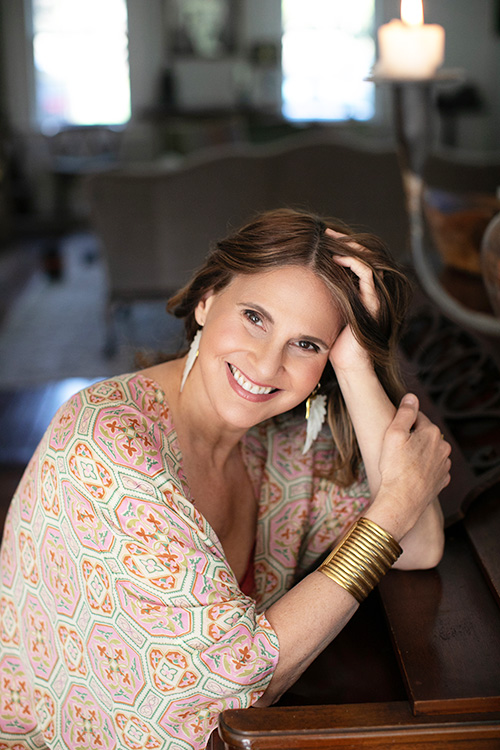
For as long as I can remember, I’ve felt things deeply. Music was my first language of healing, before I had words for pain or wonder - I had melodies. As a young girl, I’d write poems in the quiet and play songs on the piano - soothing my soul with melody, even when I didn’t believe I could ever do more with it. I’d sing only when I was alone at my piano, or my voice would find safety in the company of trees, wind, and sky.
I loved the stage and performed often, but my tendency to compare myself and a fear of being fully seen kept me small. My knees would shake at piano recitals. I was the shy one - the good girl. I’d smile and play with precision, always the excellent student. But beneath it all, a tender, powerful voice stayed quiet. My standards were sky-high, and they convinced me I was never quite good enough.
It took decades to undo that silence.
I didn’t release my first album until after the age of 40. I didn’t perform with a full band until my 50s. And I didn’t begin recording music videos until I was 60 - fulfilling a dream I’d quietly carried since MTV first aired in the 1980s. Now, at 61, I am creating the most aligned, purpose-filled work of my life.
But the journey here wasn’t linear. It wasn’t loud. It was a spiral of self-remembrance - through motherhood, marriage, healing, hiding, and finally, rising.
Music has always been my medicine. But it wasn’t until I began integrating the spiritual and energetic tools I’d been studying - Human Design, Gene Keys, sound alchemy, shamanic practices, and connecting with the sacred rhythms of nature - that my art became something more than expression. It became a transmission.

I hold a master’s degree in Educational Theater from NYU. That training gave me a strong foundation in storytelling, multimedia, and the art of creating transformative experiences. I understand the power of story, ritual, and embodied experience to teach and to heal.
But this desire to create meaning runs even deeper - it’s rooted in my upbringing, with parents who instilled a longing to make the world more peaceful, and in my 30 years of Buddhist practice.
Growing up in Washington, DC, I was surrounded by music as a force for social change - attending rallies and concerts in the 70s and 80s that shaped my belief in the power of art to heal and awaken.
In the 1990s, a poem by Buddhist philosopher Daisaku Ikeda stirred something in me - urging me to realize my dreams not just for myself, but for the healing of the world. Around that same time, I met my first music mentor, Billy Davis, whose encouragement helped me see that my voice had a place beyond my living room. My writing - whether a song or a soul activation - isn’t meant to just entertain. It’s meant to remember. To reawaken what was once buried.
When I sit down to write, I often begin with an emotion. Something I’m working through. A feeling in the body. A riff. A phrase that won’t let me go. I write in circles, spirals, whispers - letting the song unfold in its own time. I find shapes on the piano and experiment with chords and sound. I play by ear. By connecting to my soul. By tapping into the energy of the collective.
I write for the woman who’s been hiding. For the girl who was told to be smaller. For the part of myself that still wonders, “Is it too late?”
It’s never too late.
My latest body of work is called Soul Alive- an album and collection of healing experiences designed to help people come back to life, back to themselves, back to the truth. Each song is a seed of transformation. From “Remembrance” to “Butterfly,” from “Goodbye” to “Mary Magdalene,” and into the sacred grounding of “Beautiful Earth” - each carries a frequency of empowerment, surrender, devotion, and rebirth.
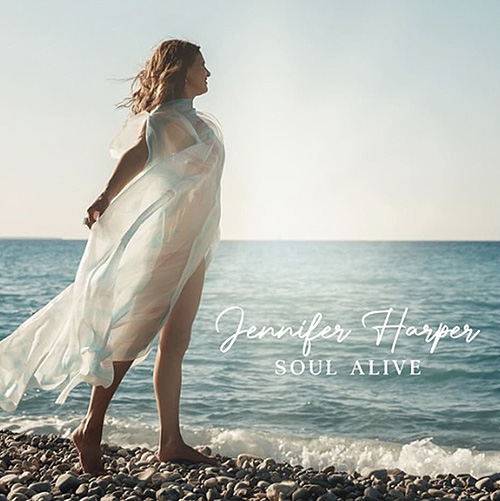
I choose words very consciously. Words are magic. They create our reality, and I’m very aware of that as I write. I tap into my truth and craft first and foremost in a frequency that resonates and is healing to me. Then I review how it feels with the listener in mind. Sometimes lyrics can be very sparse or mantra like. Other times the songs are more like sacred storytelling. They are intended to activate - to move energy. To awaken clarity. To open the heart.
One of the most profound extensions of my current work is my project I Am a Queen - a song born from my own healing and now being turned into a music video in partnership with charities that support girls rescued from extreme abuse. When I wrote the song, I was reclaiming something in myself. But now it’s becoming a global mirror - a message of worth, dignity, and the safety of being seen.
This is the kind of art I want to make. Not just beautiful, but useful. Not just personal, but universal. Art that invites you into your own voice, your own rhythm, your own knowing.
In a world that feels noisy and overwhelming, I bring sound with intention.
When everything moves too fast, I offer space for something slower, more meaningful.
And in times of burnout, I return to beauty - not as a luxury, but as a way to soothe and remember.
I write to wake something up.
I sing to feel connected.
And I don’t believe healing has to be hard, but I do believe it has to be honest.
My process is deeply intuitive and emotionally driven. I write in devotion to truth. I sing in devotion to love. And I show up again and again to the creative altar, trusting that what moves through me will find who it’s meant for.
So here I am - an artist in her 60s, still blooming. A mother of three grown children. I’m committed to living with courage, using my voice, and having no regrets - to making the most of my life for the sake of my children and future generations. A woman who once feared being seen, now helping others find the courage to shine.
My story isn’t one of overnight success. It’s one of sacred timing, radical trust, and creative resurrection.
And my hope is that in hearing it, something in you stirs too. A dream long dormant. A gift waiting to rise. A truth ready to be sung.
Because you are a queen. And it’s safe to be seen.

Resonance is an ongoing experimental collaborative project which uses AI and emerging technology to imagine a new religion based on animistic cultures, Gaia hypothesis and transpersonal & ecopsychology, with the goal of using Art and technology to re-enchant humans with their natural environment in order to catalyse change in a time of climate crisis.
Resonance premiered at G5A Foundation as part of the Eyemyth Presents series, Mumbai, India on the 21st December 2024, featuring an interactive art exhibition, artist talk, AV ritual performance, music ensemble and aerial dance.
India-based British New Media Artist and curator/director Caroline Stedman Mishra conceived the project during the 2024 Eyemyth/Unbox Labs Artist residency in Goa. “Resonance began as a date – Winter Solstice. We were given the opportunity to put on a series of shows at the fantastic G5A Foundation in Mumbai and one coincided with the 21st December – an important date in the Pagan calendar.”
“I had already been working on a series of thought experiments around using AI for good. The first project and one which is still in development was Catius B, where I aimed to ask the question ‘is AI inherently good or bad, and if AI is the culmination of human knowledge and creativity, can we find out the age old-lord of the flies question; are humans inherently good or bad? I did this by creating a superintelligent race of alien cats named ‘the Felinids.’ I didn’t prompt the AI to make them either good or bad, just super-intelligent. As it turned out, the cats were really, really good. They were entirely wholesome in every area of their culture, spirituality, approach to their natural environment etc. They were basically what we strive to be as humans in a utopian world.”

“This led me to explore further how we can learn from AI and ultimately gain insights into ourselves and our potential. I am a tech optimist and I believe technology has the power to save the planet so I wanted to demonstrate how technology need not separate and distance us from the natural world, as so many years of capitalism and patriarchal religion has done, but tech can actually enable us to connect with our environment and thus protect and nurture it.”
“So I used AI to create a new, nature-based religion, training the model on NASA scientist James Lovelock’s Gaia hypothesis, dozens of academic papers on nature-based religions, from my own Celtic Paganism through to Native American Indian beliefs as well as thesis on transpersonal and eco psychology. Resonance was born and using the AI model I created all the mythology, music, hymns, artwork, fables and ritual practices around the imaginary deities born out of Resonance. The art was combined with nature-based photography works by Parizad D and illustrations by Optikbloom.”

“The work culminated in a show which featured an interactive exhibition of artworks, all linked by QR codes to sections on the website displaying guided meditations, short films and music videos or more information allowing the audience to deep dive into the world of Resonance. The show began with a performance-ritual where a high priest(ess) character was played by two non-binary performers Osheen and Musiq, symbolising light and shadow. They took us through a ritual whereby the audience wrote things down that they wanted to close a cycle on and expel from their lives. The ‘ritual resonators’ then spoke about the Dark Mother deity- the fertile darkness from which all of creation springs from, and the importance of embracing the shadow to find the light. The ceremony concluded with packets of seeds and a poem written for the occasion ‘The Turning Year’ by renowned poet Priya Malik. The audience were told to go home and plant with the seeds their intentions for the coming year and what they want to welcome into their lives.”
“The show culminated with an aerial dance performance and live electronic music from PIR and Anuj Deo, live percussion from Anand Bhagat and live throat singing and beatboxing from MC Eucalips with live visuals from myself featuring animations of works from all contributing artists in a fitting celebration to bring in the new lunar year.”
“We also built an infrasound generator based on a design by Sarah Angliss – a machine which produces sound below the human range of hearing which is reported to enhance emotional and religious experiences, to deepen the experience of the show.”
“We hope to continue the Resonance project and bring it to Arts Festivals, Spiritual gatherings, Art Galleries and unconventional spaces on auspicious dates and collaborating with more artists, musicians and performers who are inspired by nature in their work. The accompanying and ever-growing collection of audio-visual works are available all year round for audiences to explore via our website below. My hope is that by reconnecting people with nature and inspiring awe and wonder around the natural world using science and technology, we can build a better future of all inhabitants of the beautiful planet we call home.”
Website | Facebook | Instagram | Soundcloud | LinkedIn

My name is Lady Luna Star, and I am a psychic artist devoted to creating spiritually guided works of art that serve as portals of healing, insight, and transformation. Each piece I create is more than a visual—it is a message, a mirror, a thread between the seen and unseen. My work blends traditional painting, digital art, and automatic drawing to give form to energies, emotions, and visions from beyond the veil.
But my path here was anything but smooth.
For years, I struggled to bring my art into the world. I failed university—twice. Not because I lacked talent or desire, but because I never quite fit into the mold of conventional systems. My creativity didn’t thrive in rigid structures. It wanted to flow, not conform. Then came my time as a Twitch streamer. I poured everything into that chapter, building a community, showing up day after day, pushing through exhaustion. I applied for Twitch Partner status seven times—seven times I was denied. Each “no” chipped away at me.
The hardest part wasn’t the rejection. It was the slow, painful unraveling of something I had built with my whole heart. I lost countless community members along the way. Burnout consumed me. I couldn’t keep pushing. My spirit was screaming for space, for stillness, for a different kind of life.

So I let it all go.
I left the platform. I left the country. I started from scratch in a place where nobody knew me, with no safety net but my own intuition. It was terrifying—and it was the most honest decision I’ve ever made. In that silence, I remembered who I was before the noise. I reconnected with the spiritual gifts I had kept tucked away. And I began to paint—not just for beauty, but for truth.
Now, my art is created through ritual, reverence, and deep listening. I begin each piece in sacred stillness. I meditate. I connect with Spirit—guides, ancestors, or energetic currents. Sometimes I tune into a client’s frequency and allow messages to flow. Other times, I let universal themes guide me. The hand moves before the mind understands. That’s especially true in my automatic drawings, where shapes and symbols emerge from pure intuition.
In my traditional and digital paintings, I often start with a single color vibration or spiritual theme. My tools vary—brushes, fingertips, even unconventional objects—but each stroke is intentional. Each piece is an offering. My studio is my sanctuary: I cleanse it energetically before working, surround myself with crystals, incense, and soft music, and treat the creative process as a form of channeling.
I don’t just make art. I bring through visions.

Why? Because this is how I survive. This is how I serve. Spirit and art saved me when I was at my lowest, and now I offer that light to others. We live in a world where many feel unseen, disconnected, or spiritually lost. My creations are beacons for those wandering in the dark. They are mirrors for the soul, encoded with messages of remembrance and resilience.
When someone tells me, “This piece feels like it was made just for me,” or “Your painting helped me through grief,” I know I’m doing what I was born to do. Those moments of recognition—soul to soul—are why I keep going, even when the road is uncertain.
I offer original paintings, prints, and deeply personal commission work. For my commissioned pieces, I channel images based on the client's energy, often revealing spirit guides, emotional landscapes, or symbols for their current spiritual journey. These artworks become sacred tools—kept on altars, used in rituals, or held close as reminders of the unseen support around them.
I also create video content to bring my art to life. My mystical slideshows feature my work paired with music and soft text overlays—gentle transmissions meant to soothe and awaken. The style is dreamy, intentional, and deeply personal, ending with a final slide that reaffirms the painting’s message or theme.
The visual language of Lady Luna Star is mystical yet minimal. I use clean fonts to let the artwork speak, and I gravitate toward rich purples and indigos—the hues of intuition, mystery, and the divine feminine. My online home is a space where visitors can explore my gallery, learn about my process, and commission their own soulful artwork.
I’m not here because it was easy. I’m here because I refused to give up.
Through heartbreak, burnout, and the collapse of everything I thought I was building—I chose to begin again. And in that beginning, I found my truth. I found Spirit. I found art as a form of healing, and a lifeline to others who need to remember that beauty and guidance still exist, even in the darkest times.
If my art calls to you, there is a reason. Spirit has a way of guiding us where we are meant to be. Whether you are seeking insight, comfort, or simply beauty that speaks to your soul, you are welcome here. This is more than art. It is a conversation between realms, and I am honoured to be the vessel.
I’ve always loved writing. During my early school days I developed a love for English literature because of a kindly teacher and every lesson was an adventure I looked forward to.
I wrote a few lyrics for friends when I was an Art student, mostly because I was able to manufacture the most absurd phrases on the spot. This lured me into thinking that maybe I might become a songwriter one day, and after the late John Peel read out some of my lyrics on the radio one evening my confidence soared. However, as a troubled teenager with other mindless agendas, I relegated writing to the something to do later in life drawer.
A few years ago, I duly completed an adult education course at City Lit entitled Towards a Novel. This taught me some important rudiments, including writing without extraneous text and, especially, not to attempt completing a novel in a week! The five hundred words a day writing technique of the great Graham Greene resonated with me (although his words would have been far better crafted than my own). A novel, I learned, is written in the same way a marathon is run, at a regimented and disciplined pace. Even at this stage there was a distinct voice in my mind telling me that I should write. What, however, was unclear.
Deciding to practise what I’d learned, I duly wrote my first novel, a crime thriller. And I learned another lesson, not to get too excited once you’ve finished a manuscript and someone takes notice. A certain company requested the full manuscript and, a few months later, a glossy, impressively bound publishing contract flopped through my letterbox. My delight was soon quashed by someone in the know who pointed out that this company were basically self-publishers offering spurious deals with hidden and costly add-ons.
Having at least proved to myself that I had the discipline to write a book, I self-published the novel independently. Yet the nagging voice was still present, telling me there was something more important I should write. I tried ignoring this but it kept coming back again like a boomerang. In an epiphany one day, I decided to focus my writing on my brother’s story in an attempt to fathom his troubles.
I’d been generally sceptical of my brother’s claims that the cottage we moved into as children was the source of his troubles, and that something had tormented him ever since. This was despite the undeniable truths of his claims: paranormal events were witnessed by others and the eminent priest Dom Robert Petitpierre also documented some of them. By immersing myself in Jason’s perspective and listening to him when he was lucid, I opened my mind to the possibility of this dark influence on his life.
Writing fiction had been far easier than writing something as challenging and raw as my brother’s life struggles. My thoughts on how to approach writing something so emotive and personal changed many times. Once I almost decided to collaborate with someone else, rather than face the buried emotions alone.

Writing is like making a good sauce. Essentially you firstly need good ingredients, ones you’re familiar with that add a definite punch. Then you begin the experiment…
Our troubled childhood years provided a plethora of emotional prompts and motivation to write the book, providing I could manage the emotional rollercoaster throwing me in every direction. Amidst the backdrop of our parents’ volatile and failing marriage and the downfall of my highly sensitive younger brother, these emotions breathed too many ingredients into the writing cauldron. I didn’t expect them to bubble and spit back at me quite as vehemently.
Having too many ingredients, as it turned out, had thrown a definite curveball into the mix of telling this story. As well as an enlightening exploration of how paranormal influences affect highly sensitive people like my brother, I’d wanted the book to be an important contribution towards understanding human consciousness.
Perhaps I was naïve in underestimating the emotional impact of writing a personal memoir. Then there’s also the research to consider, assembling facts accurately as well as transcribing stories from other people personally involved: this perspective is crucial if we want to write something that reads truthfully and has enough emotional impact to leave an indelible message.
The grief that emerged was visceral and hard-hitting, facing the fact that I’d basically failed my brother at the beginning of his troubles. It wasn’t until I was in my twenties, sitting on the edge of his soiled bed, that I did that all-important thing…
I connected with him.
I wanted to help unravel the mayhem his life had spiraled into and he also needed a voice. The question was whether I was up to the challenge. Thankfully, once I’d fully understood the true extent of my brother’s addiction and resultant mental health issues, I was able to fully immerse myself in his story from his perspective.
True, some of the things he professed still seemed too far-fetched and I wasn’t enlightened enough to understand the effects that paranormal encounters, perceived or otherwise, can have on someone like my brother. This became a journey for us both. Just because something didn’t seem possible for me, didn’t mean it wasn’t real for him. And he needed that acknowledgement and empathy, to tame his fear and torment and curb the escape route he had chosen because of a lack of connection.
My brother has thankfully survived, just, and enabled me to tell his story. He’s Not Mad He’s My Brother had several previous titles, each one swayed by my varying approaches and emotions. In the end, the book is his voice, hoping to encourage our understanding of mental ill-health.
Gratifyingly, it won the Local Legend national Spiritual Writing Competition in 2024.
