
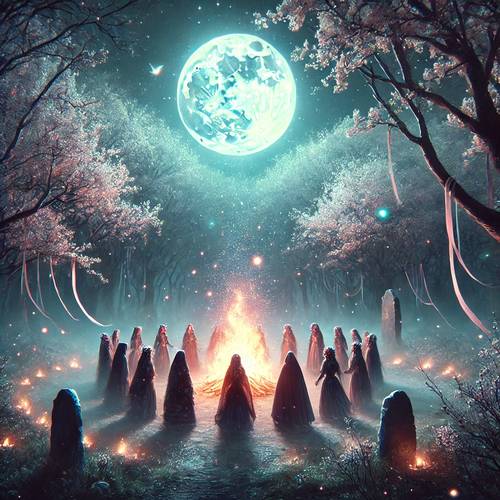
May Eve, also known as Beltaine Eve, is a deeply mystical and liminal point in the wheel of the year—a night of ancient magic, sensual energy, and sacred thresholds. As the sun sets on the final day of April, the veil between worlds is said to thin, and the spirit of the land stirs with wild vitality. It is a time when boundaries dissolve, when humans, fae, ancestors, and elemental forces draw near, and when the pulse of life is felt in its raw, unguarded intensity.
In Celtic tradition, Beltaine Eve is the gateway to Beltaine, the great fire festival of fertility and blossoming. But where Beltaine by day is celebration, Beltaine Eve by night is enchantment. It is the edge before emergence, the hush before the bloom. This night holds the energy of threshold and initiation—a crossing from spring into summer, from seed into flame, from dreaming into desire.
Historically, fires were kindled on hilltops in anticipation of Beltaine’s dawn. Yet the night before was often filled with divination, storytelling, and vigil-keeping. It was believed that spirits roamed more freely, that the fae were active and watching, and that one's thoughts, dreams, and intentions could shape the coming season. Protective herbs such as rowan, hawthorn, and elder were hung above doors; milk, bread, or flowers might be left out as offerings to unseen beings.
May Eve is deeply connected to the land’s awakening sensuality. The earth is flush with new life—buds opened, blossoms falling, the air fragrant with growth. The energies of the masculine and feminine are heightened, not as gendered roles, but as archetypal forces seeking union and balance. This is the sacred dance of polarity, where passion is not indulgence but reverence for the creative power of nature.
Spiritually, May Eve is a time of personal and communal blessing. Sacred wells and springs were visited, and people would walk through dew-laden meadows at twilight to receive the earth’s renewal. The night encourages rites of love, fertility, and joyful wildness, yet always with a sense of sacred respect. It is a liminal, in-between space—where intuition sharpens, inner vision awakens, and time flows differently.
Philosophically, Beltaine Eve invites reflection on the power of transition. It is a space of becoming—when what was held in potential begins to emerge. The darkness of night does not hide but reveals. It is the time to light a small fire, speak intentions into smoke, or dream deeply beside candlelight. It reminds us that creation often begins not in certainty, but in openness.
Artistically, May Eve has inspired poetry and song, from ancient bardic tales of forest spirits and lovers’ meetings to modern invocations of nature’s awakening. It is a night best met with silence, music, and touch—where the sacred is felt in heartbeat rhythms, wind-stirred leaves, and the flicker of flame in the dark.
May Eve is ultimately a festival of enchantment and invitation. It whispers to the soul: come closer. Step barefoot into the night meadow. Watch the stars flicker like faery lamps. Let go of fear and feel the world alive around you. It is a night of ancient remembering, where desire becomes a prayer, and the earth sings the song of becoming.
