
Art, Music & Dance Therapy
For thousands of years, people have used music, art, storytelling and movement to express emotions, make sense of experience and support healing. Across cultures, creative practices have served purposes that reach beyond artistic achievement, providing ways of communicating what cannot always be easily said.
Modern research is increasingly lending support to these long-held intuitions. A growing body of evidence suggests that creative activity can contribute to wellbeing, emotional health and human connection, leading to the development of professional disciplines that place artistic expression at the centre of therapeutic practice. Today, creative therapies are used in hospitals, schools, care homes, mental health services and community settings throughout the world.
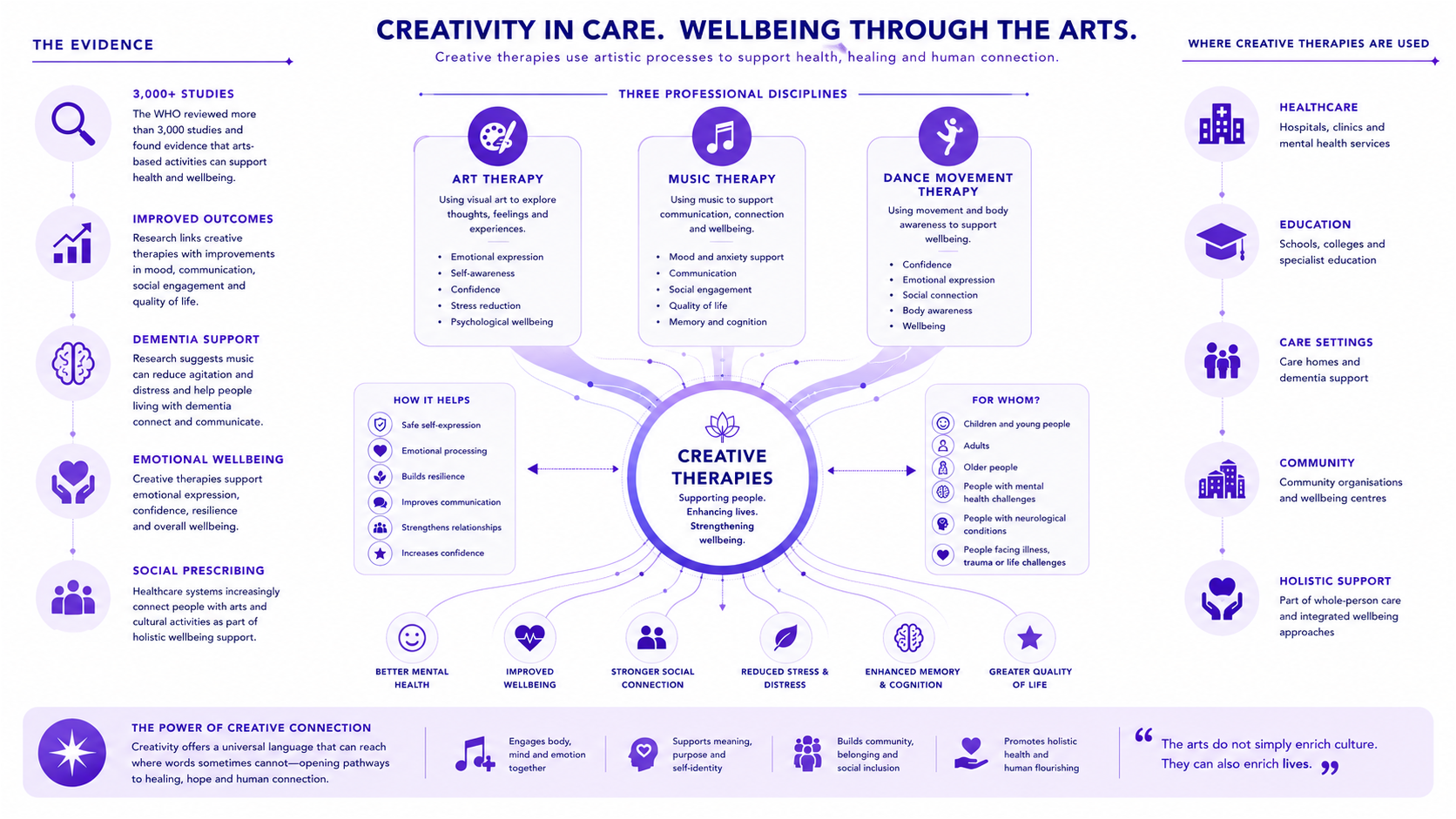
Among the most established are Art Therapy, Music Therapy and Dance Movement Therapy. Although each employs different methods, they share a common aim: using creative processes to help people explore thoughts, feelings and experiences in ways that support wellbeing and personal development. The focus is not on artistic accomplishment but on the individual engaging in the process.
Art Therapy uses drawing, painting, sculpture and other visual forms as means of expression and reflection. For people who struggle to articulate experiences through words alone, image-making can provide an alternative route into self-understanding. Research has linked Art Therapy with emotional expression, self-awareness, confidence, reduced stress and improved psychological wellbeing across a wide range of age groups and settings.
Music Therapy has become one of the most extensively researched creative therapies. It has been used with people experiencing anxiety, depression, trauma, autism, dementia, neurological conditions and stroke recovery. Music's ability to engage memory, emotion and communication simultaneously gives it a distinctive therapeutic potential, particularly when other forms of expression become difficult.
Its application within dementia care has attracted particular attention. Studies suggest that music can help people living with dementia reconnect with memories, emotions and social relationships that may appear increasingly distant. Research has associated music-based interventions with improvements in mood, communication, social interaction and quality of life, while some studies have reported reductions in agitation and distress. Such findings have helped establish music as a valued component of many dementia support programmes.
Dance Movement Therapy approaches wellbeing through movement and bodily awareness. Recognising that communication is not confined to language, it uses movement as a means of expression, reflection and connection. Research suggests dance-based approaches can support confidence, emotional expression, body awareness, social connection and overall wellbeing, while also encouraging physical activity and participation.
The growing interest in these disciplines reflects a broader understanding of mental health. Creative therapies are increasingly used to help people manage stress, explore emotions, strengthen resilience, improve self-esteem and develop coping strategies. Their value often lies in providing a safe environment in which experiences can be expressed without the pressure to explain or justify them.
This shift in thinking can also be seen in the rise of social prescribing. Rather than focusing exclusively on clinical interventions, social prescribing recognises that health is influenced by social and cultural factors as well as medical ones. People may therefore be connected with choirs, art groups, creative workshops, dance classes and other cultural activities that offer opportunities for participation, purpose and connection.
Underlying these developments is a growing recognition that wellbeing is shaped by more than the absence of illness. Human beings are social, emotional and creative by nature, and the conditions that support health often extend beyond conventional medical treatment.
For The Spiritual Arts Foundation, the expanding evidence surrounding creative therapies reinforces a simple but far-reaching idea. Creativity is not merely a means of producing cultural artefacts; it is one of the ways people understand themselves, communicate with others and navigate the challenges of life.
The increasing presence of art, music and movement within therapeutic settings reflects a broader cultural shift in how creativity is understood. What was once regarded primarily as a source of enrichment or entertainment is increasingly recognised as part of the fabric of human wellbeing. The arts remain cultural achievements, but they are also practical resources through which people find connection, expression and, at times, healing.
Key Findings
- The World Health Organization reviewed more than 3,000 studies and found evidence that arts-based activities can support physical health, mental health and wellbeing.
- Art Therapy, Music Therapy and Dance Movement Therapy are recognised professional disciplines used in healthcare, education and community settings.
- Music therapy has been associated with improvements in mood, communication, social engagement and quality of life.
- Research suggests music can help reduce agitation and distress among some people living with dementia.
- Creative therapies can support emotional expression, confidence, resilience and wellbeing.
- Social prescribing programmes increasingly connect people with creative and cultural activities as part of holistic wellbeing support.
Sources & Further Reading
World Health Organization – Arts and Health Review
https://iris.who.int/items/ba079951-0beb-4b7f-a1c5-a75cc66c283e
UK Government – The Role of Arts in Improving Health and Wellbeing
https://www.gov.uk/government/publications/evidence-summary-for-policy-the-role-of-arts-in-improving-health-and-wellbeing
British Association of Art Therapists
https://baat.org
British Association for Music Therapy
https://www.bamt.org
Association for Dance Movement Psychotherapy UK
https://admp.org.uk
National Academy for Social Prescribing
https://socialprescribingacademy.org.uk
National Centre for Creative Health
https://ncch.org.uk
NHS England – Social Prescribing
https://www.england.nhs.uk/personalisedcare/social-prescribing
UCL Arts and Health Research
https://www.ucl.ac.uk/behaviour-change/arts-health
