
What do William Blake, Johann Sebastian Bach, Hilma af Klint, Vincent van Gogh, Dante Alighieri, Michelangelo, Arvo Pärt, Vangelis and Roger Penrose have in common?
At first glance, very little.
Some were painters. Others were composers, writers, scientists, philosophers or visionaries. They lived in different countries, belonged to different cultures and often held very different beliefs.
Yet they shared something important.
All were deeply interested in questions that extend beyond ordinary material concerns. Questions of meaning, purpose, beauty, transcendence, consciousness, imagination and humanity's place within the wider universe.
And they expressed that interest through their work.
We call this tradition The Spiritual Arts.
The idea may seem unfamiliar at first.
Most people are taught about artists, musicians, writers and thinkers as individuals or as members of artistic movements. We learn about the Renaissance, Romanticism, Symbolism, Surrealism and Modernism. We study painters, poets and composers separately.
Rarely are we encouraged to notice a larger pattern.
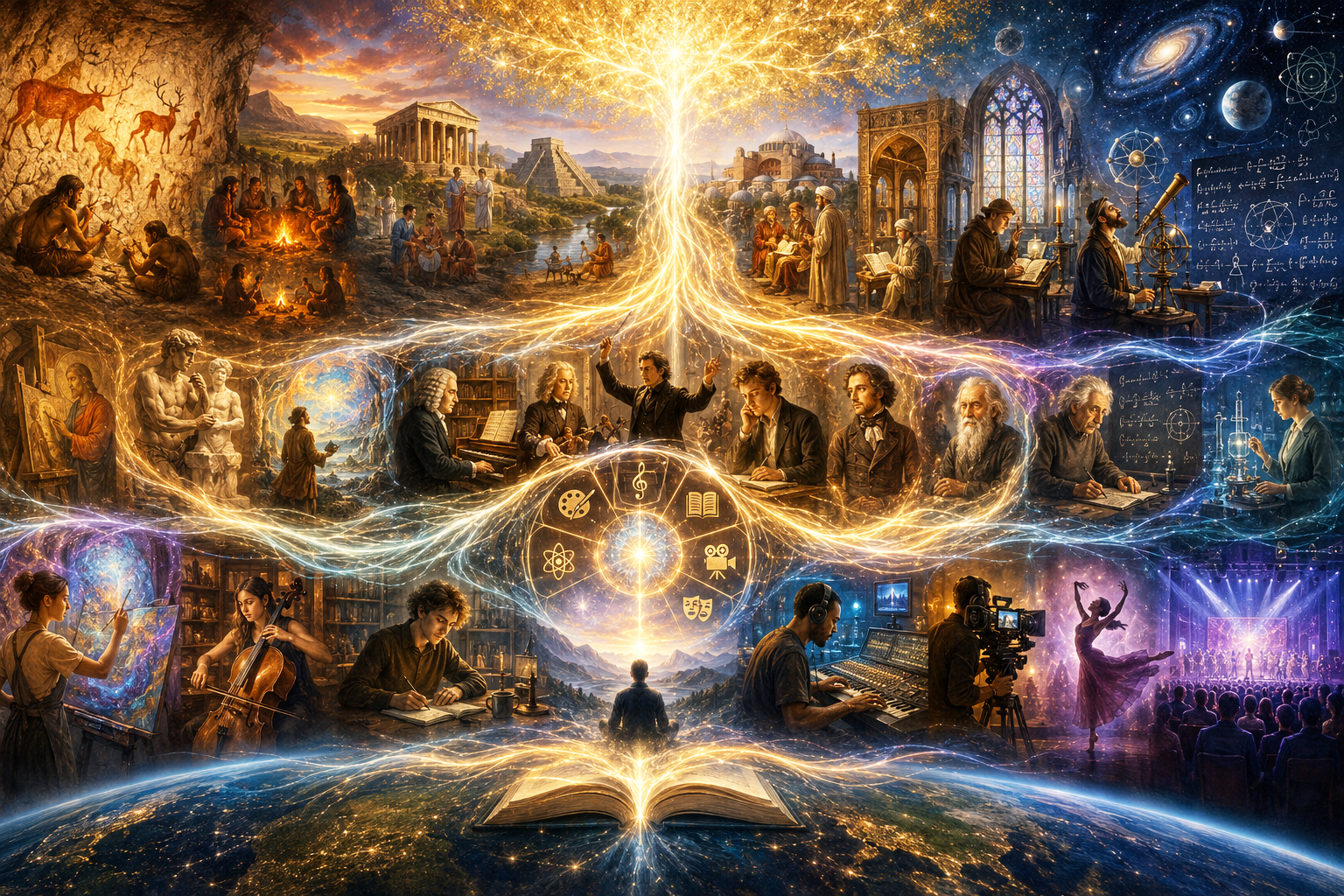
Throughout history, countless creative individuals have explored spiritual questions through their work.
They have painted visions of heaven and the afterlife.
They have composed music intended to evoke wonder, contemplation and transcendence.
They have written stories exploring humanity's search for meaning.
They have created films, poems, sculptures, performances and books inspired by experiences that seemed to point beyond ordinary reality.
These creators did not all agree with one another.
Some were religious.
Some were mystical.
Some were philosophical.
Some were scientific.
Some rejected organised religion entirely.
Yet all recognised that human beings seek more than survival alone.
They sought understanding.
They sought meaning.
And they expressed that search creatively.
The Spiritual Arts Foundation uses the word spirituality in a broad and inclusive sense.
We do not use it to refer to any particular religion, belief system or ideology.
Instead, spirituality refers to humanity's enduring exploration of meaning, purpose, connection, imagination, wonder and transcendence. It includes the questions people have asked throughout history about themselves, the universe and their place within it.
Similarly, when we speak of the arts, we mean the many ways human beings express ideas, emotions and experiences through creative work.
The spiritual arts emerge where these two worlds meet.
They represent the relationship between spirituality and creativity.
The spiritual arts are not a new phenomenon.
They may be one of humanity's oldest creative traditions.
Long before modern nations existed, human beings were creating art, music, stories and ceremonies that explored mystery, meaning and the unseen dimensions of life. The earliest cave paintings, sacred songs, myths and rituals all suggest a desire to understand existence and our relationship with the wider cosmos.
Across the centuries this tradition continued.
It can be found in the cathedrals of Europe, the temples of Asia, the poetry of Persia, the sacred music of countless cultures, the visionary paintings of artists, the writings of philosophers and the discoveries of scientists who wondered whether reality might be deeper than it first appears.
The forms changed.
The questions remained.
Many of history's most celebrated creative figures worked within this tradition.
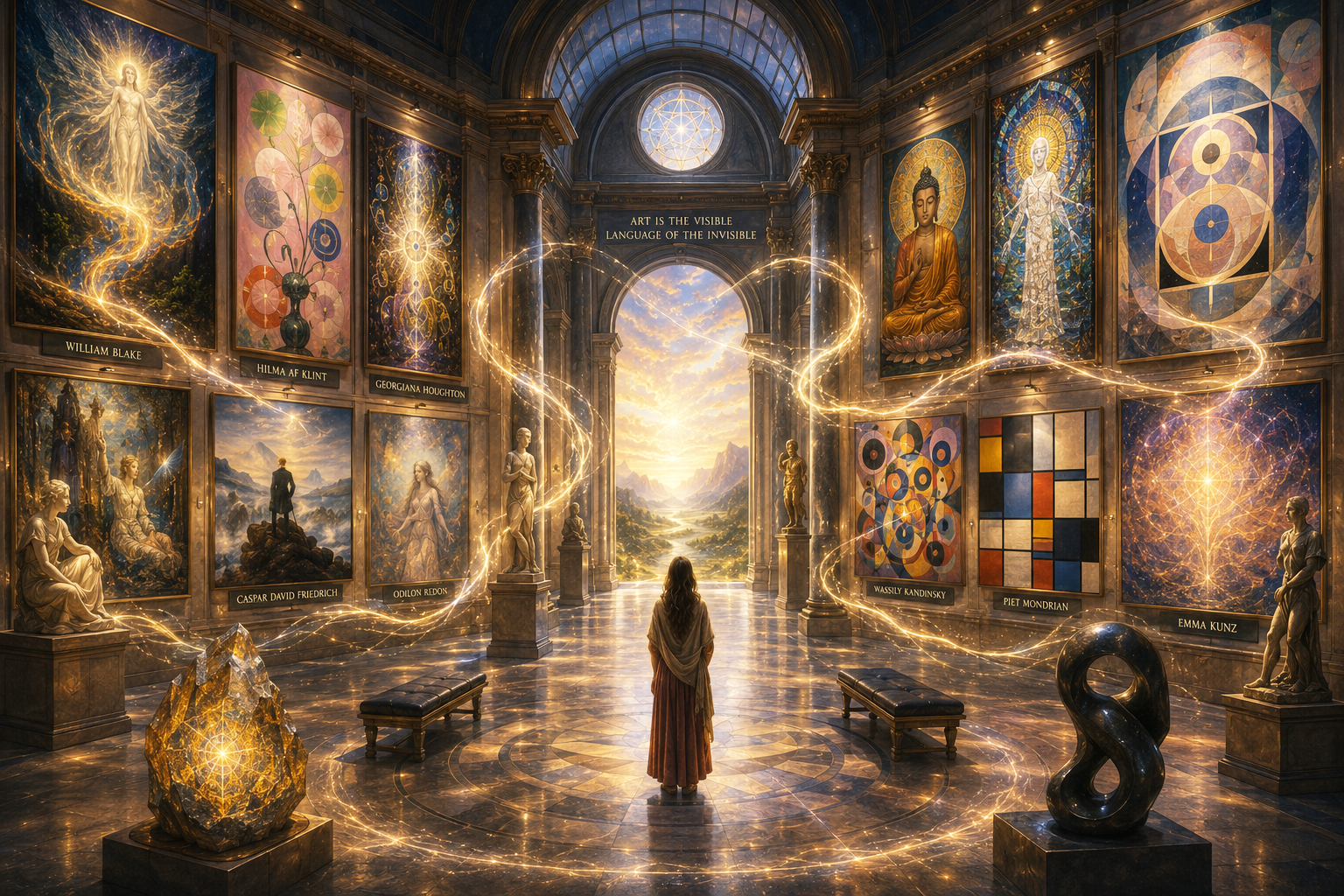
Artists such as William Blake, Hilma af Klint, Wassily Kandinsky, Georgiana Houghton and Salvador Dalí explored spiritual themes directly through their work.
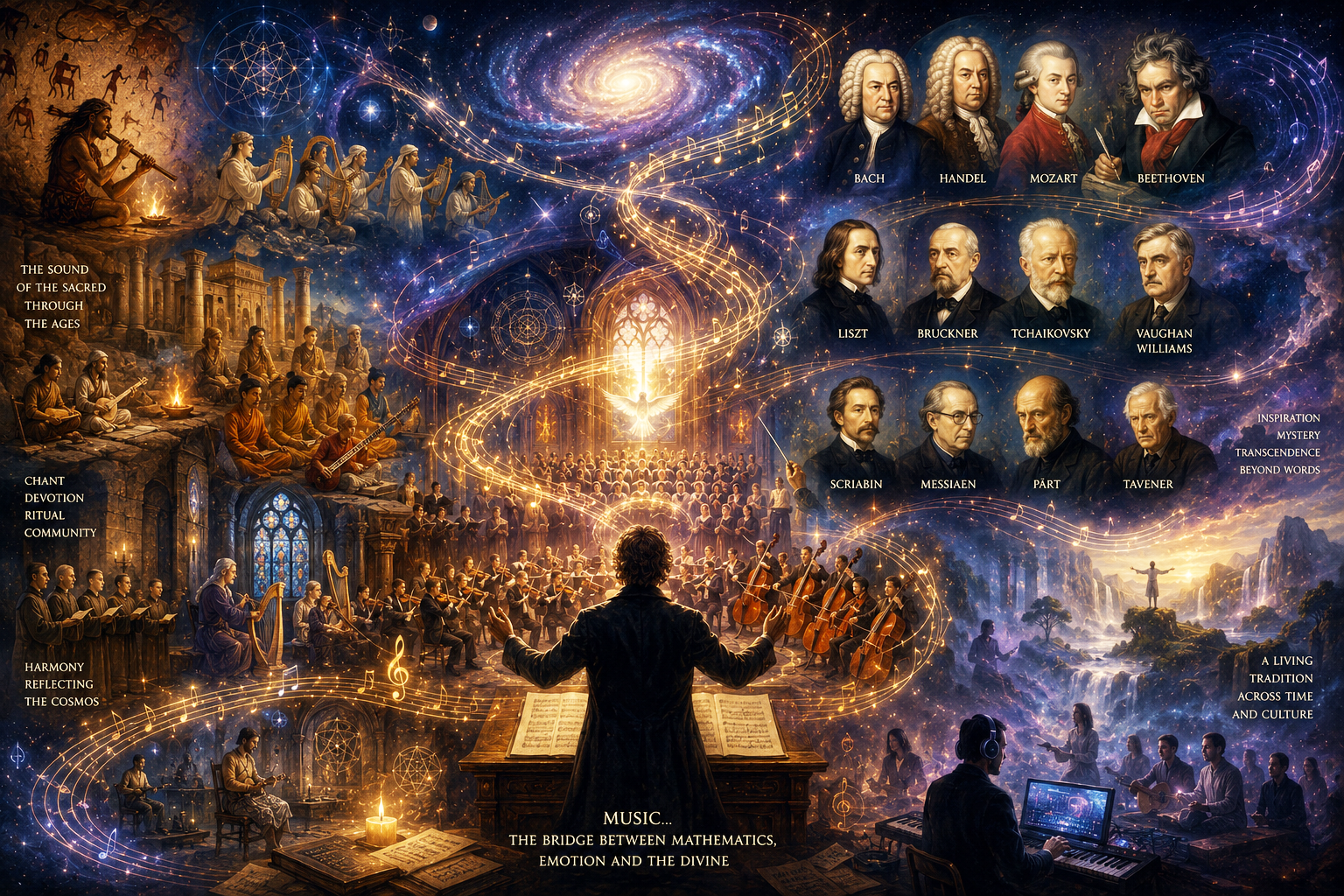
Composers including Bach, Beethoven, Scriabin, Messiaen, Arvo Pärt and John Tavener created music inspired by profound questions of faith, mystery, beauty and transcendence.
Writers, poets and storytellers across centuries have wrestled with questions of destiny, morality, purpose and the nature of reality itself.
Even within science, figures such as Einstein, Schrödinger, Bohm and Penrose have explored questions touching upon consciousness, reality and humanity's place within the universe.
The Spiritual Arts Foundation does not claim that all these individuals believed the same things.
Far from it.
What unites them is not doctrine.
It is inquiry.
A willingness to engage with the deeper questions of existence and to express that exploration through creative or intellectual endeavour.
This is perhaps the most interesting question of all.
Throughout history, spirituality has inspired some of humanity's greatest achievements in art, music, literature, architecture and culture. Yet despite its enormous influence, spirituality and creativity are rarely recognised together as a distinct field of cultural activity.
Arts organisations support the arts.
Universities study history.
Religious organisations explore faith.
Museums preserve cultural heritage.
Each performs an important role.
Yet remarkably few organisations exist specifically to explore the relationship between spirituality and creativity itself.
As a result, an important cultural tradition often remains hidden in plain sight.
We live in an age of extraordinary technological achievement.
Yet many people continue to ask the same questions that inspired artists, musicians, writers and thinkers thousands of years ago.
Who are we?
Why are we here?
What gives life meaning?
What is beauty?
What is consciousness?
What does it mean to live well?
The spiritual arts provide one way of exploring these questions.
They remind us that creativity is not merely entertainment.
It is also a means of understanding ourselves, connecting with others and engaging with the deeper dimensions of human experience.
The spiritual arts do not belong solely to the past.
They continue today.
Every year artists, musicians, filmmakers, writers and creative practitioners produce new work exploring meaning, imagination, consciousness, mythology, faith, wonder and human experience.
The tradition is still evolving.
New voices continue to emerge.
New ideas continue to appear.
New generations continue to ask timeless questions.
The Spiritual Arts Foundation exists to support, preserve, celebrate and develop this living tradition.
Not because it belongs to one religion, philosophy or worldview.
But because it belongs to humanity.
And because some of the most important questions we can ask are still waiting to be explored.

Spirituality is often treated as a specialised subject, separate from mainstream culture and creative life.
Yet a closer examination of human history reveals something very different.
From the earliest cave paintings to contemporary films, from sacred music to modern literature, spirituality has been one of the most enduring sources of artistic inspiration ever known.
Indeed, it could be argued that spirituality is not a peripheral influence upon the arts at all.
It is one of their foundations.
Long before the rise of cities, kingdoms and organised religions, our ancestors were already creating art.
The remarkable cave paintings of Europe, Australia, Africa and Asia reveal that early human beings were not concerned solely with survival. They were also seeking meaning.
Animals, symbols, ceremonies and mythic imagery appear throughout prehistoric art. Whether these works were devotional, ritualistic, educational or symbolic, they suggest that creativity and spirituality have been intertwined since the dawn of human culture.
The desire to express what lies beyond immediate experience may be one of humanity's oldest creative instincts.
As civilisations emerged, spirituality became inseparable from artistic expression.
The temples of Egypt, the myths of Greece, the sacred architecture of India, the artistic traditions of China and the ceremonial works of countless indigenous cultures all reveal the same pattern.
Art was not merely decorative.
It was a means of exploring humanity's relationship with the cosmos.
Sculpture, painting, music, poetry and storytelling became vehicles through which people attempted to understand existence, celebrate the sacred and pass wisdom from one generation to the next.
The forms differed.
The impulse remained remarkably consistent.
Many of humanity's most celebrated artistic achievements emerged within religious and spiritual contexts.
Cathedrals, temples, mosques, monasteries and sacred sites were often built not only as places of worship, but as works of art in their own right.
Paintings, sculptures, manuscripts, hymns and choral works sought to communicate truths that words alone seemed unable to express.
For centuries, some of the world's greatest artists, musicians and writers devoted their talents to exploring spiritual themes.
Much of our cultural heritage would not exist without this relationship.
The Renaissance produced some of the most influential artistic works in history.
Figures such as Botticelli, Michelangelo and Leonardo da Vinci explored subjects that combined technical mastery with profound philosophical and spiritual questions.
Yet spirituality did not disappear as society became more modern.
It simply evolved.
The Romantic artists looked towards nature, imagination and the sublime.
The Symbolists explored dreams, visions and inner realities.
The Pre-Raphaelites rediscovered myth, mystery and transcendence.
Again and again, artists returned to the same enduring questions.
Some creators engaged with spirituality more directly.
Artists such as Georgiana Houghton, Hilma af Klint, Agnes Pelton, Emma Kunz, Anna Mary Howitt and Madge Gill produced works inspired by visionary, mystical or intuitive experiences.
Many of these artists were ignored or misunderstood during their lifetimes.
Today, however, their contributions are increasingly recognised as important chapters in the history of modern art.
Their work reminds us that creativity has often been used to explore realities that lie beyond ordinary perception.
The same pattern can be found throughout the history of music.
Johann Sebastian Bach regarded music as an expression of divine order.
Beethoven wrestled with profound questions of destiny and transcendence.
Liszt, Bruckner and Messiaen drew inspiration from spiritual traditions.
Scriabin attempted to unite music, philosophy and mystical experience.
In more recent times, composers such as Arvo Pärt and John Tavener have created works that continue this tradition.
Across centuries and cultures, music has provided one of humanity's most powerful means of expressing awe, wonder and connection.
Writers and poets have long explored spiritual themes through stories, symbols and imagination.
From ancient epics and sacred texts to modern novels and visionary poetry, literature has repeatedly addressed questions of purpose, mortality, consciousness and transcendence.
Many of the world's greatest literary works are, at their heart, explorations of what it means to be human.
The language changes.
The questions remain.
Spirituality did not vanish with the arrival of modernity.
It continues to appear throughout contemporary culture.
Films explore life after death, destiny, consciousness and personal transformation.
Musicians write about transcendence, connection and meaning.
Artists continue to create visionary works inspired by inner experience.
Writers explore timeless questions through new forms and media.
The spiritual arts remain alive because the human search for meaning remains alive.
When viewed individually, these examples may appear unrelated.
A Renaissance painter.
A visionary artist.
A classical composer.
A filmmaker.
A poet.
A scientist.
Yet when viewed together, a remarkable pattern emerges.
Across thousands of years, countless creators have used their work to explore humanity's deepest questions.
The relationship between spirituality and creativity is not unusual.
It is one of the most persistent themes in cultural history.
And yet it remains surprisingly overlooked.
The Spiritual Arts Foundation believes this tradition deserves greater recognition.
Not because all spiritual artists share the same beliefs.
Not because spirituality belongs to any one religion or philosophy.
But because the evidence of history is clear.
Spirituality has inspired some of humanity's greatest artistic, musical, literary and cultural achievements.
It has shaped civilisations.
It has enriched lives.
It has expanded the boundaries of imagination.
And it continues to inspire creative people today.
The spiritual arts are not a new movement.
They are an ancient tradition that has been quietly unfolding throughout human history.

The relationship between spirituality and the visual arts is one of the oldest and most enduring partnerships in human history. From prehistoric cave paintings to contemporary digital art, artists have repeatedly turned to spiritual ideas, experiences and questions as a source of inspiration.
Long before the invention of writing, human beings were expressing spiritual ideas through images, symbols and visual storytelling.
Across cultures and centuries, artists have used their work to explore mystery, beauty, meaning and humanity's relationship with realities beyond the material world.
The history of art is, in many respects, also a history of humanity's spiritual imagination.
Some experiences are difficult to describe with words.
Artists have long turned to colour, form, symbolism and metaphor to communicate ideas that seem to exist beyond ordinary language.
Through images, they have attempted to depict heaven and earth, life and death, dreams and visions, suffering and redemption, the visible world and the unseen dimensions that many believe lie beyond it.
Art provides a language through which spiritual experience can be explored, shared and contemplated.
Throughout history, many artists have seen their work as more than decoration or entertainment.
For them, art became a means of inquiry.
A way of asking profound questions.
Who are we?
Why are we here?
What is beauty?
What lies beyond the world we can see?
The answers varied.
The questions remained remarkably consistent.
Many of humanity's earliest artistic achievements emerged within spiritual and religious contexts.
Temples, shrines, sacred objects, icons and ceremonial artworks played central roles within ancient cultures.
Art was often used to preserve stories, communicate wisdom and express humanity's understanding of the cosmos.
These traditions can be found across continents and civilisations.
Different beliefs.
Different symbols.
A shared desire to explore the mystery of existence.
Some artists sought not merely to represent the world around them, but to depict realities they believed existed beyond ordinary perception.
Visionary and mystical art has appeared throughout history, often created by individuals who described profound spiritual experiences, dreams, insights or revelations.
Artists such as William Blake, Georgiana Houghton, Hilma af Klint, Emma Kunz, Agnes Pelton and Madge Gill created works that attempted to give visual form to inner realities.
In many cases, their work was misunderstood during their lifetimes.
Today, many are recognised as pioneers whose influence extended far beyond their own era.
Spiritual art is not always overtly religious.
Many artists have explored spiritual themes through symbolism, mythology, imagination and the subconscious.
The works of Caspar David Friedrich, Gustave Moreau, Odilon Redon, Edward Burne-Jones and others often invite viewers into worlds of mystery, contemplation and wonder.
Rather than offering answers, such works encourage reflection.
They create space for the viewer's own spiritual and emotional journey.
The emergence of modern art opened new possibilities for spiritual exploration.
Artists such as Wassily Kandinsky, Piet Mondrian, František Kupka and Paul Klee believed that colour, shape and composition could communicate spiritual realities directly.
Rather than depicting physical objects, they sought to express states of consciousness, harmony, energy and inner experience.
Their work helped establish some of the foundations of modern abstraction.
Yet at its heart remained a spiritual impulse.
Spiritual art continues to resonate because it addresses experiences that remain fundamental to human life.
Wonder.
Beauty.
Meaning.
Love.
Loss.
Transformation.
Hope.
These are not merely religious concerns.
They are human concerns.
Spiritual art provides a space where such experiences can be explored without certainty being imposed upon the viewer.
It invites contemplation rather than instruction.
Questions rather than conclusions.
The tradition continues today.
Contemporary artists around the world continue to explore spirituality through painting, sculpture, photography, digital art and mixed media.
Some draw upon established religious traditions.
Others explore consciousness, mythology, nature, psychology or personal experience.
What unites them is a desire to engage with realities that extend beyond the purely material.
The tools may change.
The impulse remains.
At its heart, spiritual art is not defined by style, technique or subject matter.
It is defined by intention.
The spiritual artist seeks to explore, express or illuminate aspects of human experience that touch upon meaning, wonder, transcendence and connection.
Such artists have existed throughout history.
They continue to create today.
And their work remains an essential part of humanity's cultural heritage.

Music is one of humanity's greatest mysteries.
Unlike a painting, it cannot be seen.
Unlike a sculpture, it cannot be touched.
Unlike a book, it contains no physical story.
And yet few forms of human expression possess the power to move us as deeply.
Throughout history, people have described music using language more commonly associated with spirituality than entertainment. They speak of transcendence, inspiration, ecstasy, awe, beauty, revelation and even communion with something greater than themselves.
Perhaps this is why music has accompanied humanity's spiritual journey for thousands of years.
Across cultures, religions and civilisations, music has been used to express the inexpressible.
Long before the invention of concert halls and recording studios, music played a central role in spiritual life.
Ancient chants, sacred hymns, ceremonial drumming and devotional singing formed part of religious and cultural traditions around the world.
Whether performed in temples, churches, mosques, monasteries, sacred groves or around communal fires, music became a way of connecting individuals to something larger than themselves.
Its purpose was not merely entertainment.
It was transformation.
Music helped mark important moments, celebrate communal identity, transmit wisdom and evoke states of contemplation, devotion and wonder.
Many ancient cultures believed that music reflected deeper principles operating within the universe itself.
The Greek philosopher Pythagoras famously explored the mathematical relationships underlying musical harmony and proposed the idea of a "music of the spheres" – a cosmic harmony generated by the movements of the heavens.
Whether understood literally or metaphorically, the idea remains powerful.
Music appears to occupy a unique space between mathematics and emotion.
It is governed by numerical relationships and patterns, yet capable of producing profound emotional responses.
This unusual combination has fascinated philosophers, scientists and musicians for centuries.
The history of Western music contains countless examples of composers whose work was shaped by spiritual themes, beliefs or questions.
Johann Sebastian Bach regarded his music as an expression of divine order and frequently dedicated his work to the glory of God.
Handel's Messiah remains one of the most celebrated sacred compositions ever written.
Mozart, Beethoven and Schubert explored profound questions of human existence through music that continues to inspire audiences centuries later.
During the nineteenth century, composers such as Liszt, Bruckner, Franck, Dvořák and Tchaikovsky created works infused with spiritual, philosophical and religious themes.
The twentieth century continued this tradition through figures such as Scriabin, Vaughan Williams, Rachmaninoff and Messiaen.
In more recent decades, composers including Arvo Pärt and John Tavener have become internationally recognised for music that openly embraces contemplation, silence, mystery and transcendence.
Although their beliefs differed, each sought to express realities that extended beyond ordinary experience.
One of music's most remarkable qualities is its ability to communicate without language.
A painting may require interpretation.
A book may require translation.
Music can often speak directly to people regardless of nationality, culture or belief.
It can express joy, sorrow, longing, peace, triumph, grief and wonder without a single word being spoken.
This ability has led many people to describe music as a universal language.
Others have gone further, suggesting that music allows us to experience aspects of reality that cannot easily be explained through rational thought alone.
Many listeners have experienced moments when music seems to transport them beyond the concerns of everyday life.
A symphony, choir, chant or song can create a sense of timelessness.
For a brief moment, ordinary awareness appears to expand.
The boundaries between self and experience seem less defined.
Such moments have been described by psychologists, philosophers, mystics and musicians alike.
Whether interpreted spiritually, psychologically or aesthetically, they demonstrate music's extraordinary capacity to alter perception and evoke profound emotional states.
The relationship between spirituality and music did not end with classical composition.
Contemporary musicians continue to explore themes of meaning, consciousness, nature, transcendence and human connection.
Sacred minimalism, ambient music, film music, world music and many modern genres contain works that seek to inspire reflection and contemplation.
Artists such as Vangelis, Enya and many contemporary composers have created music that resonates with audiences seeking experiences of beauty, stillness and wonder.
Today, spiritual music can be found in concert halls, cinemas, meditation spaces, streaming platforms and independent recordings across the world.
Many composers describe the creative process itself in spiritual terms.
Ideas appear unexpectedly.
Melodies seem to arrive rather than being consciously manufactured.
Some speak of inspiration as though it were a force beyond themselves.
Others describe creativity as a process of listening rather than inventing.
Throughout history, artists have used many different words for this experience.
Inspiration.
Intuition.
Muse.
Revelation.
Whatever language is used, the relationship between creativity and mystery remains central to the musical experience.
The spiritual dimension of music remains as relevant today as it has ever been.
People continue to seek experiences of beauty, meaning and connection.
Music continues to provide them.
From ancient chants to contemporary soundscapes, from cathedral choirs to film scores, music remains one of humanity's most powerful tools for exploring the deeper dimensions of existence.
The forms evolve.
The instruments change.
The technologies advance.
Yet the impulse remains remarkably constant.
Across thousands of years, human beings have turned to music when seeking to express what words alone cannot.
That enduring search is one of the clearest examples of the spiritual arts in action.

Film is one of the youngest artistic mediums, yet it has become one of the most powerful.
In little more than a century, cinema has transformed the way human beings tell stories, share ideas and explore the deeper questions of existence. Combining visual art, music, literature, theatre and technology into a single experience, film possesses a unique ability to engage both the intellect and the imagination.
For this reason, it has become one of the most important spiritual art forms of the modern age.
Whether consciously or unconsciously, filmmakers continue a tradition that stretches back thousands of years: using stories to help us understand ourselves, our world and our place within the greater mystery of existence.
For most of human history, spiritual ideas were communicated through myths, legends, sacred texts, paintings and oral traditions.
Today, film has inherited much of that role.
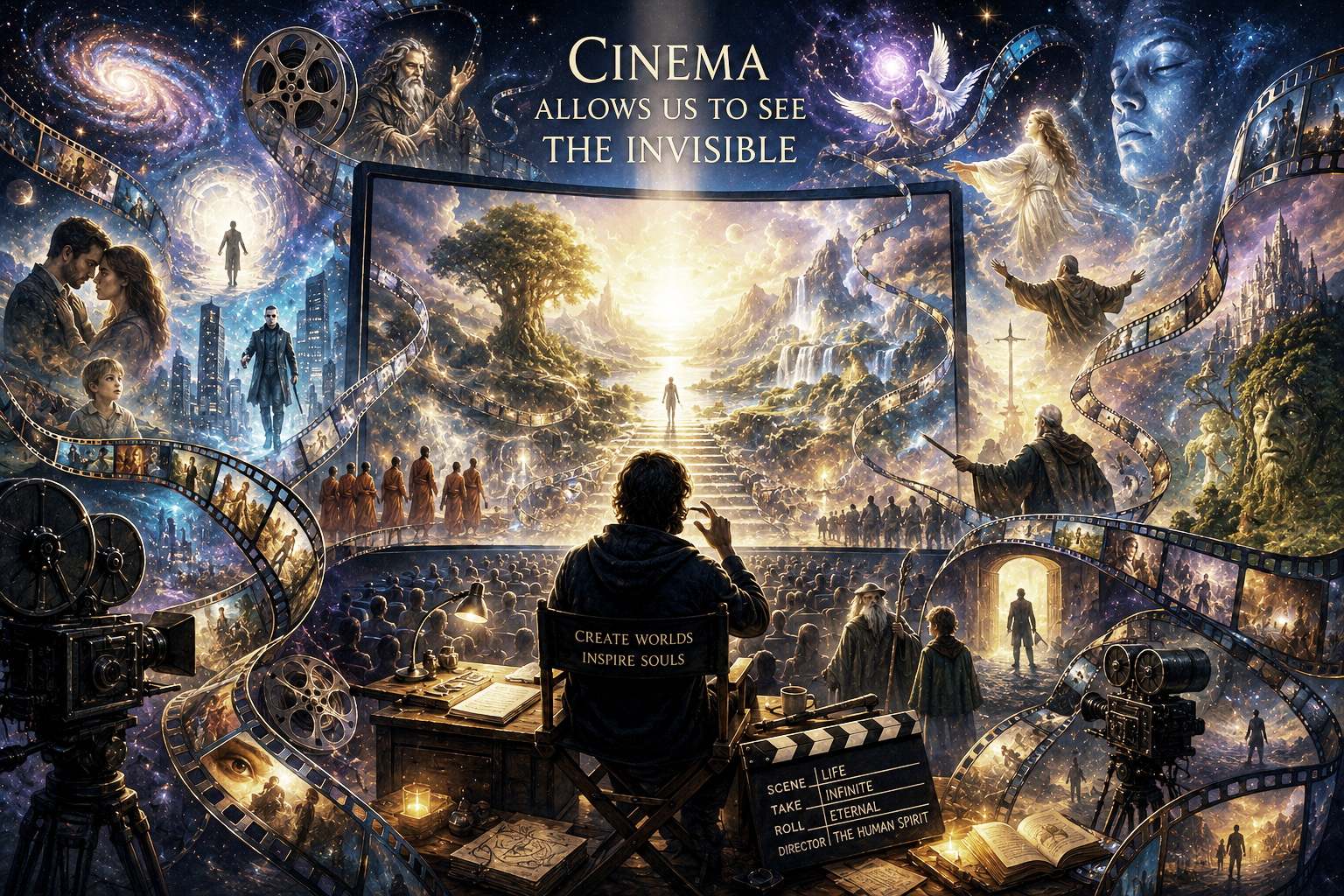
The cinema screen has become a modern storytelling canvas upon which humanity projects its hopes, fears, dreams and questions.
Like the storytellers of old, filmmakers create worlds populated by heroes, mentors, seekers, villains, visionaries and guides.
Through their stories, audiences are invited to embark upon journeys of discovery, transformation and meaning.
Many films follow a pattern that has appeared throughout spiritual traditions for centuries.
A character leaves the familiar world.
They encounter challenges and uncertainty.
They are tested.
They grow.
They gain insight.
And they return transformed.
This structure appears so frequently because it reflects something fundamental about human experience.
Spiritual growth often involves a journey into the unknown.
Cinema provides a powerful way of exploring that process.
Film possesses a remarkable ability to visualise experiences that are difficult to describe through words alone.
Dreams.
Memories.
Visions.
Mythology.
Consciousness.
Life after death.
Alternate realities.
Spiritual awakening.
Through image, sound, music and performance, filmmakers can create experiences that allow audiences to engage directly with abstract ideas and inner realities.
Cinema enables us to see what would otherwise remain invisible.
Many of the most memorable films ever created are ultimately concerned with spiritual questions.
Who am I?
Why am I here?
What gives life meaning?
What happens when we die?
Is there something beyond the material world?
What does it mean to love, forgive, sacrifice or transcend our limitations?
Different films offer different answers.
Some offer no answers at all.
Yet the questions themselves remain central to the cinematic experience.
Like ancient myths and sacred stories, films often communicate through symbolism and archetypes.
Heroes, journeys, rebirth, sacrifice, redemption, wisdom and transformation appear repeatedly throughout cinema.
Audiences may not consciously recognise these patterns, yet they often respond to them instinctively.
Such stories resonate because they reflect universal aspects of human experience.
The language may be modern.
The underlying themes are timeless.
Many films explore spiritual ideas directly.
Others do so indirectly.
Some examine questions of destiny and free will.
Others explore consciousness, morality, transcendence or the nature of reality itself.
Films such as What Dreams May Come, The Tree of Life, The Green Mile, Groundhog Day, Field of Dreams, The Shack and many others have introduced audiences to spiritual themes through compelling storytelling.
Even works not traditionally considered "spiritual" often explore profound questions about identity, purpose, sacrifice and transformation.
The spiritual arts can be found in many unexpected places.
While mainstream cinema occasionally explores spiritual themes, many spiritually inspired filmmakers operate outside the commercial film industry.
Independent filmmakers often produce thoughtful and imaginative works that struggle to find audiences within traditional distribution systems.
As a result, important voices can remain unheard.
One of the aims of The Spiritual Arts Foundation is to help identify, support and promote filmmakers whose work explores spirituality, consciousness, meaning and human experience through the medium of film.
Unlike many art forms, cinema is often experienced collectively.
People gather together to laugh, cry, reflect and imagine.
For a short period, they share a story.
A perspective.
A possibility.
In doing so, film can create moments of connection that transcend differences of age, background, culture and belief.
Few artistic mediums possess this power.
Film continues to evolve.
New technologies, new platforms and new generations of filmmakers are constantly expanding the possibilities of cinematic storytelling.
Yet despite these changes, the deeper purpose remains remarkably familiar.
Human beings continue to use stories to explore the mysteries of existence.
They continue to seek meaning.
They continue to imagine realities beyond the ordinary.
And they continue to use film to bring those visions to life.
In this sense, cinema is not merely entertainment.
It is one of the most important spiritual art forms of the modern world.

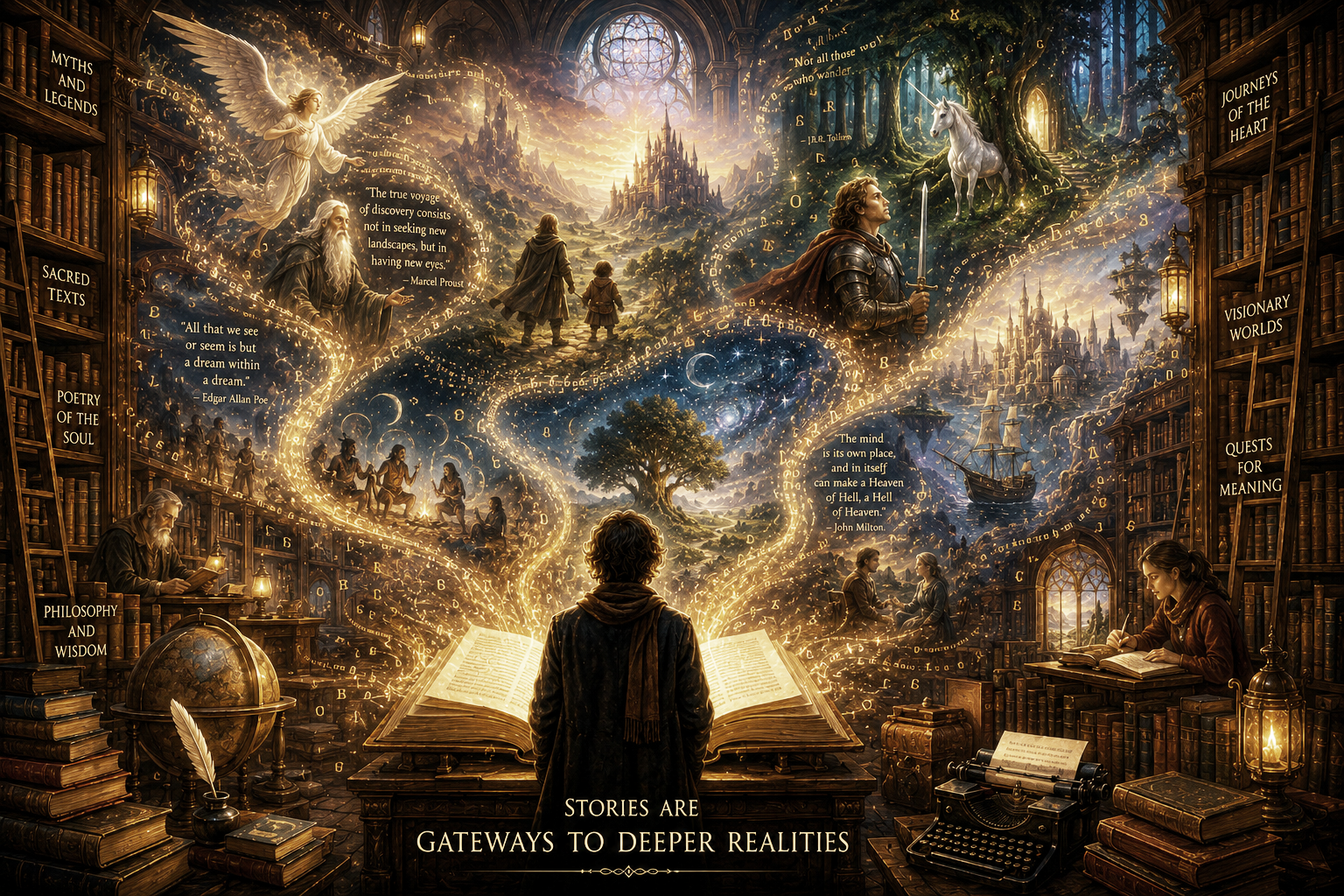
Stories have always helped human beings make sense of the world.
Long before the arrival of film, television and the internet, people gathered around fires, in temples, in homes and in public squares to share tales of heroes, seekers, visionaries and mysteries.
Through stories, humanity explored its deepest questions.
Who are we?
Why are we here?
What is good and evil?
What happens after death?
What lies beyond the visible world?
These questions continue to shape literature today.
Stories allow us to explore possibilities.
They help us imagine lives beyond our own experience and consider perspectives that might otherwise remain inaccessible.
Spiritual literature often uses narrative as a means of examining profound questions about existence, meaning, morality and transformation.
Rather than offering simple answers, great literature frequently invites readers into a journey of discovery.
Many of humanity's oldest surviving texts are spiritual in nature.
Ancient myths, epics and sacred stories sought to explain the origins of the world, the nature of humanity and the relationship between the human and the divine.
Although cultures differed greatly, many myths explored remarkably similar themes.
The hero's journey.
The struggle between darkness and light.
Death and rebirth.
Wisdom and transformation.
The search for truth.
These themes continue to appear in literature today because they reflect enduring aspects of human experience.
Poetry has long been one of humanity's most intimate forms of spiritual expression.
Through rhythm, symbolism and metaphor, poets have attempted to express experiences that often lie beyond ordinary language.
Love.
Wonder.
Loss.
Mystery.
Transcendence.
The finest spiritual poetry does not simply describe such experiences.
It evokes them.
Many of the world's greatest writers have wrestled with spiritual questions.
Some approached them through religion.
Others through philosophy, psychology, nature or imagination.
Yet regardless of their conclusions, they shared a desire to understand what it means to be human.
Literature provides a unique space where complex ideas can be explored in depth, allowing readers to reflect upon questions that have occupied humanity for centuries.
Some writers have sought to create worlds that extend beyond ordinary reality.
Through fantasy, allegory, speculative fiction and visionary literature, authors have explored alternate worlds, symbolic landscapes and metaphysical ideas.
Such works often allow readers to examine spiritual concepts indirectly, through story rather than doctrine.
In doing so, they encourage curiosity, imagination and reflection.
Unlike visual art or music, literature unfolds within the reader's imagination.
The images are not supplied by the artist.
They are co-created by the reader.
This intimate collaboration between writer and reader gives literature a unique capacity to explore inner experience.
A book can become a private conversation across centuries.
A meeting of minds.
A journey of discovery.
The spiritual dimension of literature remains alive today.
Contemporary authors continue to explore consciousness, personal growth, mythology, symbolism, ecology, spirituality and the search for meaning.
New voices emerge with every generation.
New questions are asked.
New stories are told.
Yet the underlying impulse remains familiar.
Human beings continue to seek understanding through words.
From ancient myths and sacred texts to modern novels and poetry, literature has played a central role in humanity's spiritual journey.
It preserves wisdom.
Challenges assumptions.
Expands imagination.
And invites us to explore realities beyond the limits of everyday experience.
The technologies may change.
The formats may evolve.
But the power of story endures.
For as long as human beings seek meaning, literature will remain one of the great spiritual arts.

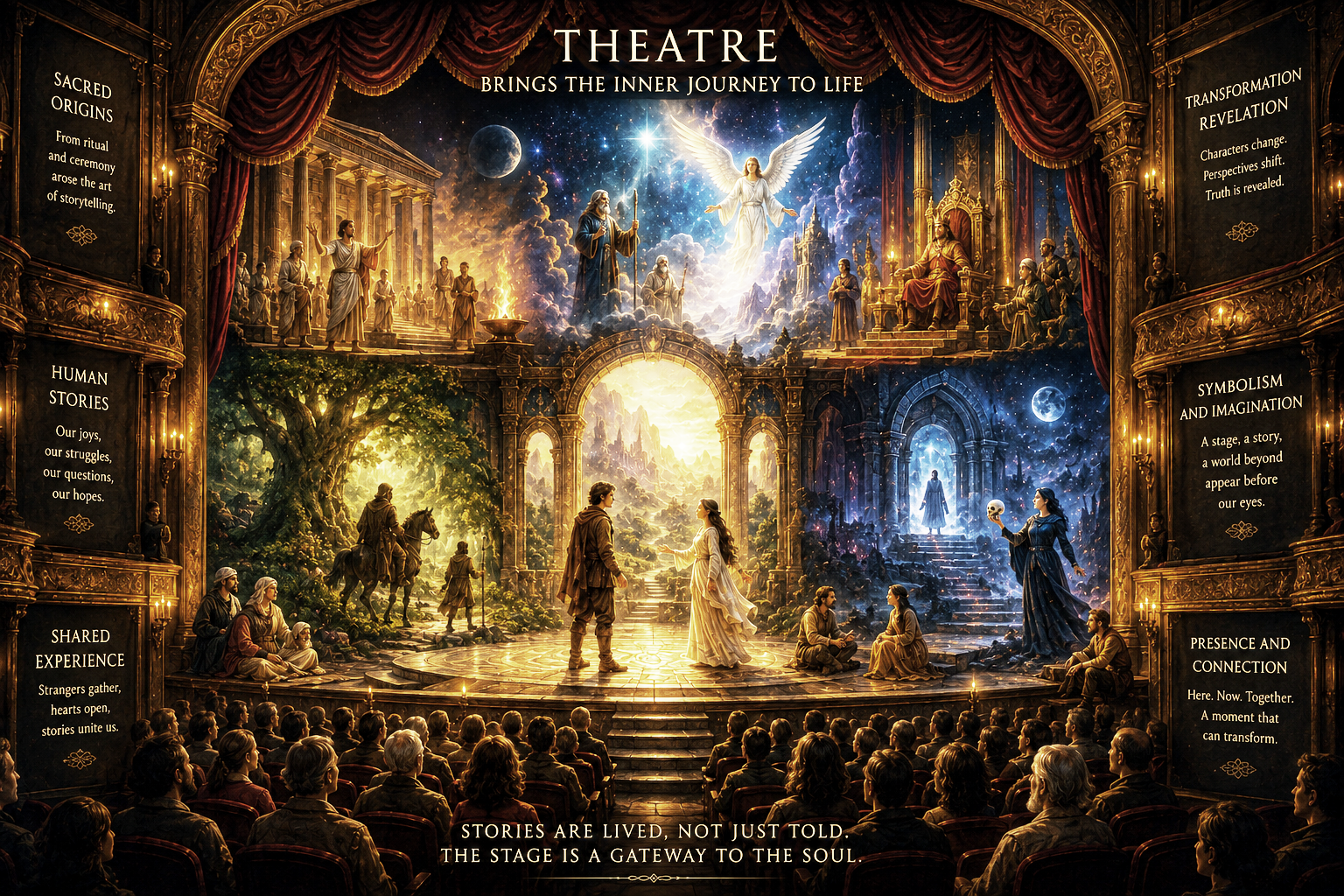
Theatre is one of humanity's oldest artistic traditions.
Long before cinemas, concert halls and digital media, people gathered together to witness stories brought to life through performance.
Actors became heroes, gods, kings, seekers, fools and visionaries.
Audiences laughed, wept, reflected and imagined.
Through theatre, communities explored the deepest questions of human existence.
In many ways, theatre has always been a spiritual art.
The roots of theatre can be found in ritual, ceremony and communal storytelling.
Across the world, ancient cultures used performance to preserve myths, celebrate seasonal cycles, honour ancestors and explore humanity's relationship with the divine.
These early performances were often more than entertainment.
They were shared experiences designed to educate, unite and transform.
The boundary between art, ritual and spirituality was often difficult to separate.
At its heart, theatre is concerned with human experience.
Love and loss.
Hope and despair.
Conflict and reconciliation.
Life and death.
Meaning and purpose.
The same questions that occupy spiritual traditions have long occupied playwrights, actors and audiences.
Through drama, people are invited to examine themselves and the world around them.
Many theatrical stories follow journeys of transformation.
Characters encounter challenges, confront their limitations and emerge changed by their experiences.
These narratives mirror patterns found throughout mythology, religion and spiritual traditions.
The stage becomes a place where inner struggles are made visible.
Audiences witness not only what happens to a character, but what happens within them.
Unlike film, theatre unfolds in real time.
Actors and audience share the same space.
The same moment.
The same experience.
This immediacy creates a unique sense of presence.
No performance is ever exactly repeated.
Each becomes a living encounter between performer and audience.
Many people describe powerful theatrical experiences in language that is strikingly similar to spiritual experience: connection, insight, communion, transformation and wonder.
Theatre often achieves extraordinary effects with remarkably simple means.
A stage.
A few props.
A handful of performers.
Yet entire worlds emerge.
This reliance upon imagination allows theatre to explore symbolic and spiritual ideas in particularly effective ways.
A journey may represent an inner quest.
A kingdom may represent the human mind.
A battle may represent a moral struggle.
The physical performance becomes a gateway to deeper meanings.
One of theatre's greatest strengths is its communal nature.
Stories are experienced together.
Strangers gather in a shared space and participate in the same emotional journey.
This creates a sense of connection that has always been central to both theatre and spirituality.
For a brief time, individual experiences become collective experience.
Today, playwrights, directors and performers continue to explore themes of meaning, consciousness, identity, belief, morality and transcendence.
Some productions address spiritual ideas directly.
Others do so through symbolism, allegory or psychological exploration.
The forms continue to evolve, but the questions remain remarkably familiar.
Theatre reminds us that spirituality is not merely a set of beliefs.
It is also an experience.
A conversation.
A relationship.
A moment of insight.
Through performance, stories come alive before our eyes.
Ideas become embodied.
Questions become tangible.
And audiences are invited to participate in humanity's ongoing search for meaning.
In this way, theatre remains one of the most immediate and powerful expressions of the spiritual arts.

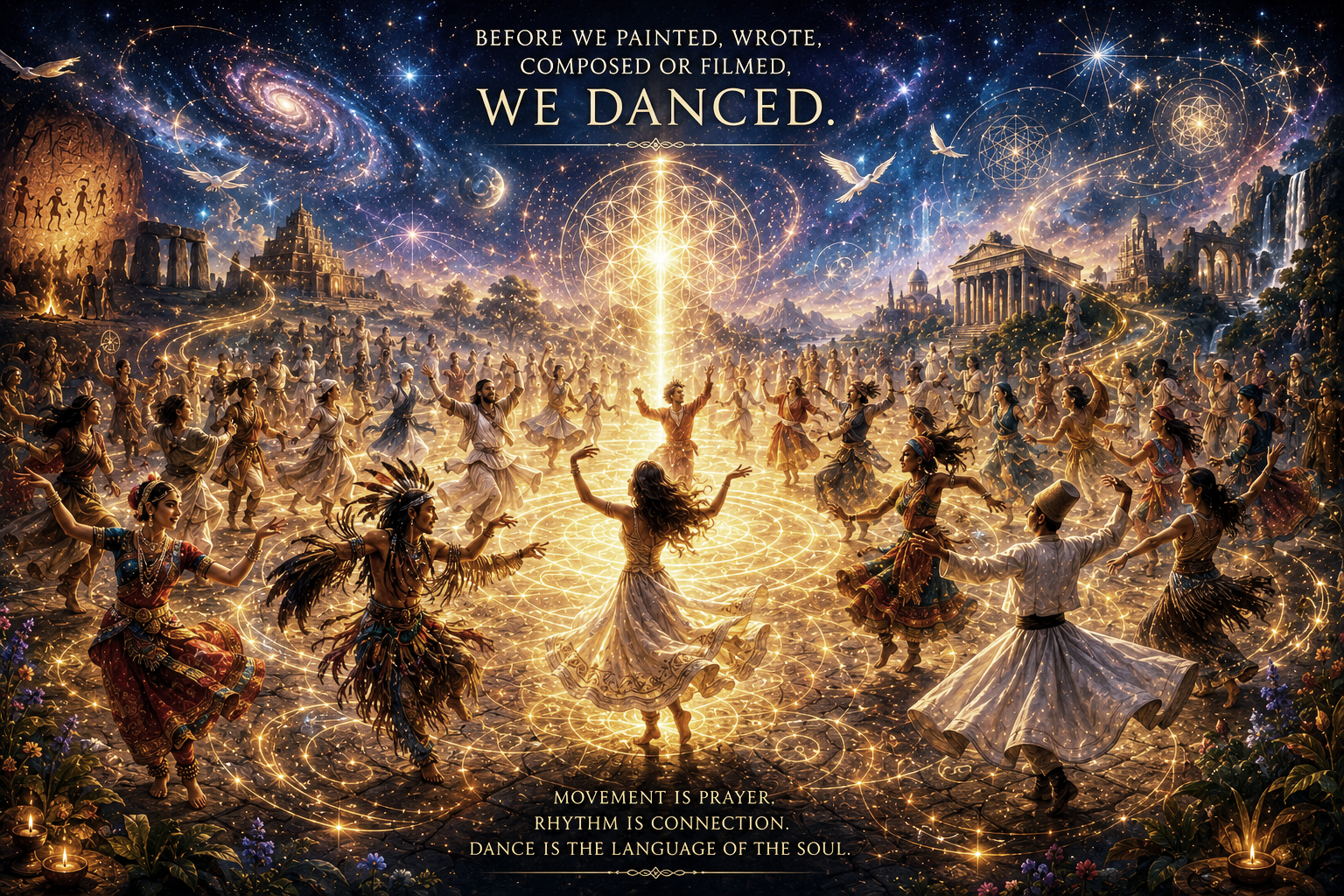
Dance is one of humanity's oldest forms of expression.
Long before written language, books, theatres or concert halls, people gathered together to move, celebrate, communicate and participate in communal rituals through dance.
Across cultures and throughout history, dance has been used to express joy, grief, gratitude, devotion, transformation and connection.
For this reason, dance has often occupied a unique place within humanity's spiritual life.
It is not simply something we watch.
It is something we experience.
Dance communicates through movement rather than words.
Emotions, ideas and experiences that may be difficult to describe can be expressed physically through gesture, rhythm and motion.
In this way, dance often reaches beyond intellectual understanding and speaks directly to human experience.
It allows feelings to become visible.
Thoughts become embodied.
Stories become lived.
Throughout history, dance has played a central role in religious, ceremonial and spiritual traditions around the world.
Many cultures developed sacred dances intended to celebrate life, honour ancestors, mark important events or create a sense of connection with the divine.
Some traditions emphasised discipline and precision.
Others encouraged spontaneity and ecstasy.
Yet all recognised movement as a powerful means of expression and transformation.
Spirituality is often associated with the mind or soul, yet many traditions recognise that human beings experience life through the body as well.
Dance reminds us that spirituality is not merely something we think about.
It is something we experience.
Through movement, people can develop greater awareness, presence and connection with themselves, others and their surroundings.
For many practitioners, dance becomes a form of meditation in motion.
Music and dance have long been intertwined.
Rhythm has the remarkable ability to unite groups of people within a shared experience.
Whether in celebration, ceremony or performance, dancers often move together in ways that create a powerful sense of community.
The individual becomes part of something larger.
This experience of connection lies at the heart of both dance and spirituality.
Like theatre, dance often tells stories of challenge, growth, love, sacrifice and transformation.
Yet it does so without relying upon spoken language.
Through movement alone, dancers can express profound emotional and symbolic journeys.
Audiences frequently describe being deeply moved by performances even when no words are spoken.
The body becomes the storyteller.
One of the most remarkable qualities of dance is its immediacy.
It exists entirely in the present moment.
Each movement appears and disappears.
Nothing can be held.
Nothing can be repeated exactly.
This quality encourages attention, awareness and presence.
Many spiritual traditions place great importance upon these same qualities.
Today, dancers and choreographers continue to explore themes of identity, consciousness, nature, mythology, healing and human connection.
Some draw inspiration from established spiritual traditions.
Others develop entirely new approaches.
What unites them is a recognition that movement can communicate dimensions of human experience that words alone cannot capture.
Dance reminds us that spirituality is not confined to books, ideas or beliefs.
It can be expressed through movement, rhythm and embodied experience.
For thousands of years, people have danced to celebrate life, seek meaning, strengthen community and express their deepest emotions.
The forms have changed.
The cultures have evolved.
Yet the impulse remains.
To move.
To connect.
To express.
To transcend.
In this way, dance remains one of the most immediate and universal expressions of the spiritual arts.