

Many of the world's most important works of art, music, literature and film began as simple ideas.
Yet for every creative project that reaches completion, countless others never move beyond the imagination of their creators. Lack of funding, limited opportunities, insufficient resources, professional isolation and practical constraints prevent many talented individuals from realising their full creative potential.
The Spiritual Arts Foundation was created in part because we believe creativity represents a valuable public good. Creative work enriches culture, inspires communities, preserves knowledge, encourages reflection and contributes to human wellbeing.
For this reason, one of the Foundation's long-term ambitions is to help make creativity possible.
The word Foundation was chosen deliberately.
While the organisation's immediate work focuses on community building, knowledge sharing and cultural development, our longer-term vision extends beyond these activities.
We hope to create an organisation capable of supporting artists, writers, musicians, filmmakers and creative practitioners in practical and meaningful ways.
Many worthwhile creative projects never come into existence because their creators lack access to funding, audiences, networks or opportunities. One of the Foundation's aspirations is to help address that challenge.
Our goal is not simply to celebrate creativity, but to help create the conditions in which creativity can flourish.
Support often begins with visibility.
Many talented creators struggle not because their work lacks quality, but because it remains unseen.
The Foundation hopes to help artists and creative practitioners reach wider audiences through publications, directories, exhibitions, media projects, events and digital platforms.
By increasing visibility, we can help ensure that creative voices with something valuable to contribute have a greater opportunity to be discovered, appreciated and supported.
Creative work can be deeply rewarding, but it is often pursued in isolation.
Writers, musicians, artists and filmmakers frequently have limited opportunities to connect with others who share their interests, understand their challenges or can contribute to their development.
The Foundation hopes to strengthen creative communities by creating opportunities for collaboration, networking, peer support and shared learning.
Such connections can be as valuable as financial assistance. They create environments in which ideas are exchanged, partnerships emerge and creative work gains momentum.
Many creative practitioners benefit from guidance, encouragement and opportunities to develop their skills.
As the organisation grows, we hope to explore mentoring, workshops, training programmes and other forms of knowledge sharing that help artists pursue their ambitions with greater confidence and capability.
The aim is not to shape creative direction, but to provide support that enables individuals to realise their own vision more effectively.
Creating work is only one part of the challenge.
Finding an audience is often equally difficult.
The Foundation hopes to support creative practitioners by helping promote worthwhile projects through its networks, publications, events and media activities.
By connecting creators with audiences, we can help increase both the reach and the cultural contribution of creative work.
In the future, the Foundation hopes to develop opportunities for commissioned work and collaborative projects.
Such initiatives could encourage the creation of original music, writing, visual art, film and other creative works that contribute to the wider field of the spiritual arts.
Commissioning has the potential to support both emerging and established creators while helping bring new cultural projects into existence that might not otherwise be realised.
One of the Foundation's most ambitious long-term goals is the creation of funding programmes that directly support creative activity.
Subject to available resources, this may include grants, bursaries, production funding and other forms of financial assistance.
Such programmes could help artists and creative practitioners overcome practical barriers and devote more time and energy to developing significant projects.
While these initiatives remain part of the Foundation's longer-term vision, they reflect an important principle: worthwhile creative work should not be limited solely by lack of opportunity or resources.
The Foundation also hopes to explore opportunities for fellowships, residencies and retreat-based programmes that provide dedicated time and space for creative development.
Such opportunities could allow artists, writers, musicians and filmmakers to focus on ambitious projects while benefiting from supportive environments and creative communities.
Throughout history, some of the most influential creative work has emerged when talented individuals were given the freedom, resources and encouragement to concentrate on their craft. Creating the conditions in which creativity can flourish is often as valuable as supporting the work itself.
The Foundation does not believe creativity belongs only to a privileged few.
Across society there are countless individuals with stories to tell, ideas to explore and creative gifts to share. Many simply lack opportunity, encouragement or support.
Our long-term vision is to help unlock that potential.
We imagine a future in which more artists are connected to audiences, more creative projects reach completion and more people have the opportunity to contribute to cultural life. The result is not merely individual success, but a richer and more diverse cultural landscape from which society as a whole benefits.
The programmes described on this page represent long-term aspirations rather than immediate commitments. Building the resources, partnerships and expertise required to support artists effectively will take time.
Yet every work of art begins as unrealised potential. Whether it flourishes or fades often depends upon the opportunities available to the person carrying it. The books that are written, the films that are made, the music that is heard and the ideas that enter public culture all begin with individuals who are given the chance to create.
The Spiritual Arts Foundation's long-term ambition is to help create those opportunities.
Not simply to support artists, but to help bring new cultural works into existence; works capable of enriching lives, strengthening communities and contributing to the ongoing cultural inheritance passed from one generation to the next.

The Spiritual Arts Foundation began with a simple observation: creativity flourishes most readily when it is shared.
While artistic work often emerges from individual imagination, creative lives are rarely shaped in isolation. Artists, writers, musicians, filmmakers and other practitioners develop through conversation, collaboration, encouragement and the exchange of ideas. Communities provide the environment in which creative practice can grow beyond the limits of any single individual.
For this reason, community building sits at the heart of the Foundation's long-term vision.
The Foundation is not beginning this work from scratch. Through our Spiritual Creatives community, professional membership, public events, volunteers, subscribers and online engagement, a substantial network has already begun to emerge. Within it are professional practitioners, enthusiastic amateurs, researchers, supporters and individuals drawn by a shared interest in creativity, spirituality and culture.
These early communities provide the foundations for something larger.
Our ambition is not to build a single centralised community. Rather, it is to cultivate a network of interconnected communities, each serving different interests, disciplines and forms of participation while remaining linked through shared values and purpose.
Some people may engage through local gatherings. Others may participate primarily online. Some will join as artists, writers, musicians or filmmakers. Others may become volunteers, supporters, educators, researchers or lifelong learners. The strength of the network lies not in uniformity, but in the relationships that connect its different parts.
One long-term aspiration is the development of local Spiritual Creatives communities across the United Kingdom. These groups could provide opportunities for discussion, collaboration, learning and creative participation within people's own towns and cities. Local communities transform an organisation from a digital presence into a lived social reality, creating spaces where relationships can deepen over time.
Alongside this, the Foundation hopes to strengthen professional networks connecting artists, musicians, writers, filmmakers, performers and other creative practitioners. Such relationships often generate opportunities, collaborations and knowledge that no formal programme could easily replicate. Many of the most valuable developments in creative life begin with a conversation between people who discover a shared interest or ambition.
Digital platforms will remain equally important. Online communities allow individuals separated by geography to participate in discussions, exchange ideas and access opportunities that might otherwise remain out of reach. They enable local activity to connect with a wider national network and help ensure that knowledge and experience can circulate freely throughout the community.
As the network grows, leadership will become increasingly important. No community develops through central direction alone. It depends upon individuals willing to organise events, welcome newcomers, facilitate conversations and create opportunities for others. The Foundation therefore hopes to support community leaders and facilitators who can help nurture activity within their own localities and areas of interest.
Over time, we hope these various strands will develop into a national ecosystem of communities connected by a shared interest in creativity, spirituality and human flourishing. Local groups, professional networks, digital communities, publications, festivals and creative projects would remain distinct while contributing to a larger cultural landscape. Participation would take many forms, but all would contribute to the same underlying objective: strengthening the relationships through which creativity and culture are sustained.
At its deepest level, community is not measured by membership numbers or event attendance. It is measured by the quality of connection it creates. In an age often characterised by loneliness, fragmentation and social distance, opportunities for genuine participation and belonging carry increasing value.
The Foundation believes that creativity can do more than produce cultural work. It can create the conditions in which people encounter one another, form relationships and discover a sense of shared purpose.
Building such communities will take time. It requires trust, participation and sustained commitment across many years. Yet the foundations already exist. The communities that have already emerged around the Foundation's work demonstrate that there is a genuine appetite for spaces where creativity, spirituality and human connection can meet.
Our long-term vision is to help those communities grow, strengthen and connect; not as isolated groups, but as part of a wider cultural ecosystem capable of enriching lives, supporting creativity and contributing to a more connected society.
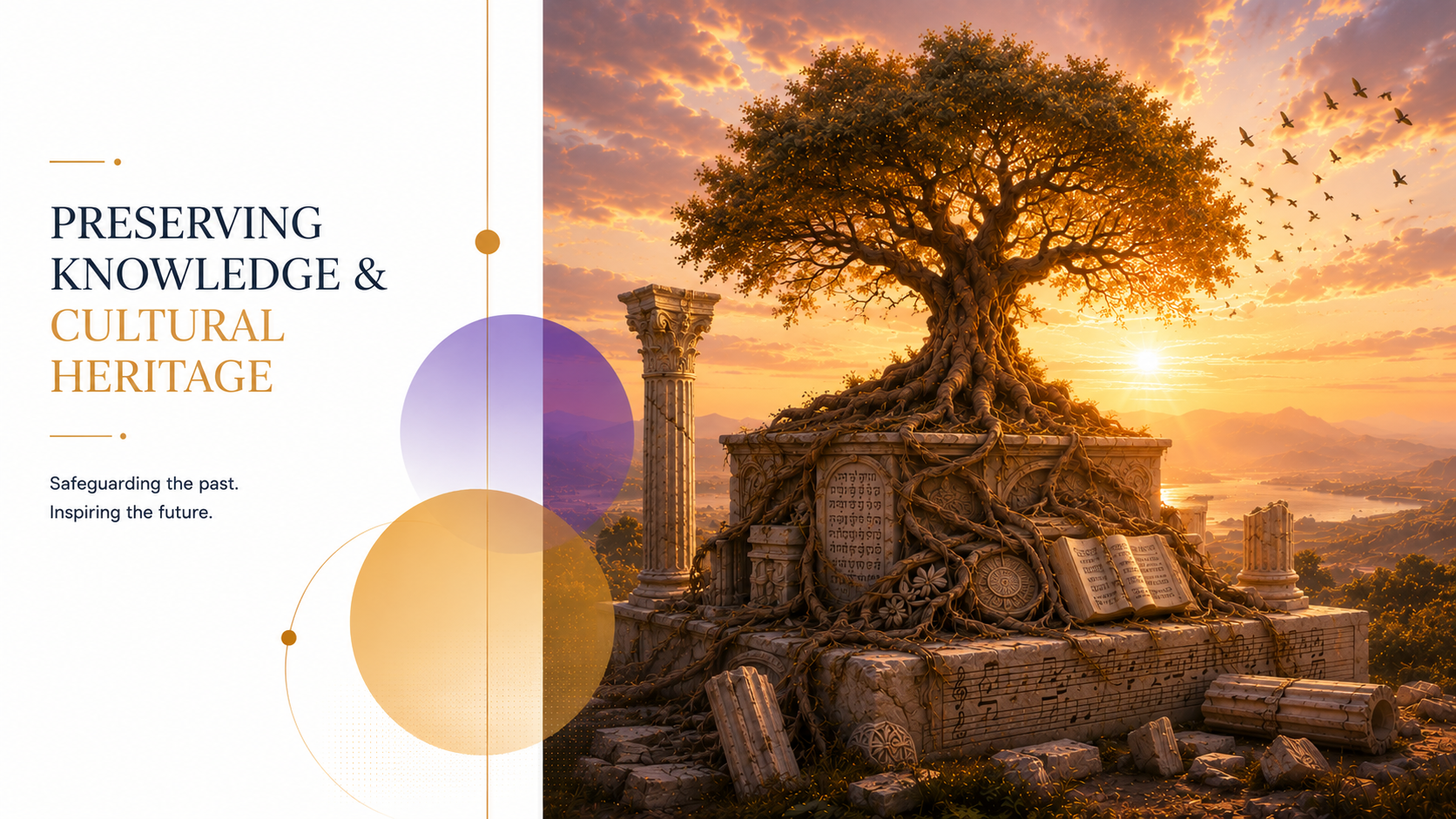
The Spiritual Arts Foundation was created not only to support contemporary creativity, but also to help preserve, develop and share knowledge relating to the spiritual arts.
Across centuries and cultures, spirituality has influenced artists, writers, musicians, filmmakers, poets, thinkers and creative practitioners of every kind. Some of humanity's most enduring cultural achievements emerged from attempts to explore meaning, beauty, transcendence, consciousness and the deeper dimensions of human experience.
Yet much of the knowledge surrounding this tradition remains fragmented. Important stories go untold. Influential figures fade from public awareness. Research is dispersed across disciplines, while valuable archives and resources often remain inaccessible to those who might benefit from them.
The Foundation believes there is an opportunity not only to preserve this heritage, but also to develop a richer understanding of the relationship between spirituality and creativity and make that understanding more widely available.
The influence of spirituality on creative expression extends across continents, cultures and historical periods. It can be found in sacred architecture, devotional music, visionary art, mystical poetry, storytelling and contemporary creative practice.
Despite its scale and significance, this tradition often remains hidden in plain sight. Artists are frequently celebrated for their creative achievements while the spiritual ideas, experiences and questions that shaped their work receive comparatively little attention. Important movements and traditions can become separated from the wider cultural story to which they belong.
One of the Foundation's long-term aims is to help bring these connections into clearer view, preserving knowledge that might otherwise be overlooked while revealing the broader cultural landscape of which it forms a part.
Preservation is only the beginning.
The Foundation also hopes to contribute to the continuing development of knowledge relating to creativity, spirituality and human flourishing. Areas of interest may include creativity and wellbeing, community and social connection, artistic practice, education, cultural participation, heritage and the role of meaning in human life.
Rather than treating these subjects as isolated fields, we hope to encourage a more integrated understanding of the ways creativity and spirituality intersect within culture and society.
By bringing together existing knowledge, identifying connections and supporting new enquiry, the Foundation aims to contribute to a growing body of work that can benefit artists, educators, researchers, communities and the wider public.
Many resources relevant to the spiritual arts remain scattered across personal collections, websites, recordings, publications and private archives. Without active preservation, some of this material may eventually disappear.
The Foundation hopes to develop digital archives and knowledge resources capable of preserving and organising materials for future generations. These may include publications, interviews, recordings, films, photographs, historical documents, creative works, organisational histories and other culturally significant resources.
Our ambition is not simply to accumulate information, but to create a coherent and accessible body of knowledge that encourages exploration, learning and discovery. Digital technology offers unprecedented opportunities to connect people with ideas, histories and creative traditions that might otherwise remain difficult to find.
Some of the most valuable knowledge exists not in archives, but in people.
Artists, writers, musicians, filmmakers and creative practitioners often carry insights shaped by decades of creative work and lived experience. When these voices are lost, perspectives disappear that can never be fully recovered through documents alone.
The Foundation hopes to develop oral history and life-story projects that preserve these experiences for future generations. By recording creative journeys, reflections and personal accounts, it becomes possible to preserve not only cultural artefacts but also the human stories that give them context and meaning.
Knowledge achieves its greatest value when it can be shared.
For this reason, public education forms an essential part of the Foundation's long-term vision. Research, archives and heritage resources should not exist solely for specialists. They should be accessible to artists, students, educators, communities and anyone with an interest in the spiritual arts.
Through publications, talks, exhibitions, digital resources and other educational activities, we hope to make knowledge more widely available while encouraging deeper engagement with the relationship between spirituality and creativity.
Research and heritage are often viewed as activities concerned primarily with the past. The Foundation takes a broader view.
Every generation inherits more than buildings, artefacts and archives. It inherits ideas, stories, influences and ways of understanding the world. The knowledge preserved today becomes part of the cultural inheritance available to future artists, writers, musicians, filmmakers, researchers and thinkers.
In this sense, research and creativity are not separate pursuits. They are part of the same cultural continuum. The past informs the present; the present shapes the future.
Our long-term ambition is to create a recognised centre of knowledge for the spiritual arts: a place where research, heritage, education and contemporary creativity can inform one another rather than exist in isolation.
We hope to help recover overlooked stories, preserve valuable knowledge and create opportunities for new understanding to emerge. By connecting cultural memory with contemporary enquiry, the Foundation seeks to strengthen a tradition that continues to influence creative life across the world.
Knowledge is not preserved merely so that it can be remembered. It is preserved so that it can remain active within culture, informing new ideas, inspiring new work and helping future generations build upon what came before.
That, ultimately, is the purpose of this work: not simply to safeguard a heritage, but to ensure that its influence continues to live, evolve and contribute to the cultural life of the future.

The Spiritual Arts Foundation was created from the belief that meaningful cultural change rarely emerges from a single organisation acting alone.
The relationship between spirituality, creativity, culture and community is broad, interconnected and shaped by many different forms of expertise. Artists, educators, researchers, cultural organisations, community groups, funders and audiences all contribute to the wider ecosystem in which creative work develops and flourishes. For this reason, collaboration sits at the heart of the Foundation's long-term vision.
Our ambition is not to build an organisation that operates in isolation, but to become part of a wider network of people and institutions working towards shared cultural goals. Knowledge, resources, audiences and expertise are rarely found in one place. Partnerships create opportunities to bring them together, extending what can be achieved and creating possibilities that might otherwise remain beyond reach.
Relationships with arts organisations, galleries, theatres, festivals, creative networks and cultural institutions have the potential to play a central role in the Foundation's future development.
Such collaborations may include joint events, exhibitions, creative productions, artist development initiatives, audience engagement activities and shared learning. Beyond the practical benefits, these partnerships help strengthen the wider cultural landscape by creating connections between organisations that share an interest in creativity, culture and human flourishing.
As the spiritual arts become more widely recognised, cooperation between cultural organisations will be essential to expanding opportunities for artists and audiences alike.
Partnerships with universities, colleges, libraries, researchers and educational organisations could help advance the Foundation's work in research, knowledge development, heritage preservation and public education.
The relationship between spirituality and creativity touches a wide range of academic disciplines, yet much of the existing knowledge remains dispersed across different fields of study. Collaborative relationships can help connect these areas of expertise while making research more accessible to wider audiences.
Over time, such partnerships may contribute to a deeper understanding of creativity, wellbeing, community, culture and human development, while helping ensure that valuable knowledge reaches beyond specialist circles.
The Foundation also seeks to work alongside community groups and local organisations that bring people together through creativity, learning and shared experience.
These partnerships can help extend participation, strengthen local engagement and create opportunities for individuals who may not otherwise encounter the spiritual arts. Some collaborations may take the form of small local initiatives, while others may develop into larger regional or national programmes.
Whatever their scale, community partnerships help ensure that cultural participation remains rooted in real places, relationships and lived experience.
Much of humanity's cultural memory survives because organisations have dedicated themselves to preserving knowledge, collections and historical records.
The Foundation hopes to collaborate with archives, museums, libraries, heritage organisations and specialist collections to help preserve and share knowledge relating to the spiritual arts. Such partnerships may support documentation projects, oral histories, exhibitions, research initiatives and public engagement activities.
By working together, organisations can help ensure that valuable cultural resources remain accessible to future generations rather than becoming fragmented, overlooked or lost.
Publishing and media play a vital role in shaping public understanding and cultural awareness.
Relationships with publishers, magazines, broadcasters, podcasters and other media organisations may help bring creative work, research and cultural stories to wider audiences. These collaborations could support publications, interviews, documentaries, educational resources and other forms of cultural production.
Ideas achieve their greatest influence when they can be shared. Effective media partnerships can help ensure that important voices, projects and perspectives reach beyond existing communities.
Businesses also have an important role to play in supporting culture and creativity.
Future partnerships may involve sponsorship, skills sharing, professional expertise, employee engagement programmes or collaborative projects that create mutual benefit. Organisations that recognise the value of creativity, community and cultural development can often contribute resources and opportunities that help expand public benefit.
When approached thoughtfully, such relationships demonstrate how cultural and commercial interests can work together in support of wider social and cultural goals.
Not all partnerships involve institutions.
Throughout its development, the Foundation hopes to attract artists, writers, musicians, filmmakers, academics, educators, charity specialists, fundraisers and other professionals willing to contribute their knowledge and experience.
Many organisations are shaped as much by the insight of individuals as by formal institutional relationships. Guidance, expertise and constructive challenge can help strengthen decision-making, refine ideas and open new opportunities. These contributions are often less visible than organisational partnerships, but they can be equally influential.
Successful collaboration depends upon more than the exchange of resources. It requires trust, mutual respect and a genuine sense of shared purpose.
Organisations may differ in their structures, priorities and areas of expertise, yet many are motivated by common interests: creativity, learning, culture, community and human development. These shared concerns provide a foundation for cooperation while allowing each partner to retain its own identity and perspective.
The strongest partnerships are not transactional. They are relationships that enable all parties to contribute something valuable while advancing goals that none could achieve as effectively alone.
The Foundation's long-term ambition extends beyond the growth of any single organisation. We hope to help strengthen a wider ecosystem in which artists, educators, researchers, cultural institutions, community organisations, businesses and supporters contribute to a shared cultural endeavour.
If the spiritual arts are to become a recognised and enduring part of cultural life, they are unlikely to emerge through isolated effort. They will grow through networks of cooperation, knowledge sharing and mutual support, with each organisation building upon the work of others.
The partnerships formed along that journey may ultimately become one of the Foundation's most enduring contributions.

The Spiritual Arts Foundation was established with a long-term vision.
Our ambition is not simply to organise events, publish articles or support individual projects. We seek to build an enduring cultural institution dedicated to exploring, preserving, developing and promoting the relationship between spirituality, creativity and human flourishing.
Institutions of lasting value are not created through ideas and enthusiasm alone. They require stable foundations, resilient structures and the capacity to adapt and grow over time. For this reason, sustainability sits at the heart of the Foundation's development strategy.
The goal is not merely to fund current activities. It is to create an organisation capable of serving artists, communities and future generations for decades to come.
The Foundation's commitment to sustainability has shaped not only its long-term ambitions but also the way it has developed from the very beginning.
Rather than seeking significant external funding at the earliest opportunity, the Foundation chose first to establish the value of its work through practical delivery. Communities were built, public events organised, knowledge resources developed, governance established and organisational systems created largely through voluntary effort, careful stewardship and the long-term commitment of those closest to the organisation.
Much of the Foundation's early infrastructure has been supported through the continued generosity of its Founder and the practical assistance of 21st Century New Media Ltd., allowing the Foundation to develop its digital platforms, websites and technical systems while keeping direct organisational expenditure to a minimum. Together with the voluntary contribution of Directors, advisers and many volunteers, this approach has enabled the Foundation to build strong organisational foundations before seeking significant external investment.
The Foundation believes this gradual approach has reduced organisational risk, encouraged learning and ensured that future investment will build upon demonstrated public value rather than untested ambition. Funding is therefore viewed not as a means of proving the idea, but as a way of accelerating work that has already established firm foundations.
Many organisations remain closely tied to the individuals who establish them. Their success, energy and direction often depend heavily upon a small number of people.
The Foundation's long-term ambition is different.
From the outset, we have sought to build an organisation capable of thriving beyond the involvement of any individual founder, leader or generation of supporters. True sustainability means creating systems, resources, partnerships and sources of income that allow the organisation to continue fulfilling its mission regardless of changes in leadership or circumstance.
Achieving this requires patience, careful planning and a willingness to prioritise long-term resilience over short-term growth. The aim is not simply to create a successful organisation, but one capable of enduring.
One of the most important principles guiding the Foundation's development is the belief that no organisation should depend too heavily upon a single source of support.
Funding landscapes change. Economic conditions shift. Public priorities evolve. Organisations that rely exclusively on one income stream can quickly become vulnerable when circumstances change.
For this reason, the Foundation seeks to develop a balanced portfolio of income sources that complement one another and contribute to long-term stability. This approach provides greater resilience while allowing the organisation to pursue its mission with confidence and independence.
Charitable trusts, foundations, public funding bodies, philanthropists and major donors are expected to play an important role in the Foundation's development, particularly during its formative years.
As the Foundation moves from its formative years into its next phase of development, grant funding can help build organisational capacity, support research and heritage initiatives, strengthen community programmes and create the foundations from which future activities can grow.
Throughout the cultural sector, philanthropy has often played a vital role in helping new institutions move from aspiration to reality. The Foundation hopes to attract supporters who recognise the long-term value of investing in cultural development.
A thriving organisation is strengthened not only by major funders, but also by the collective support of the communities it serves.
Over time, the Foundation hopes to develop a growing network of members, supporters and subscribers who contribute financially towards its work. Such support provides reliable income while creating deeper relationships between the organisation and the people who believe in its mission.
Membership is therefore about more than financial contribution. It is also a form of participation and shared ownership in the future development of the spiritual arts.
One of the Foundation's distinctive opportunities lies in the creation of knowledge resources, publications and intellectual property that support both public benefit and organisational sustainability.
Books, magazines, educational resources, research publications and digital content can contribute to the Foundation's mission while creating assets that continue generating value long after their initial creation.
Rather than existing separately from the Foundation's purpose, these activities sit directly at its centre, helping to preserve knowledge, encourage learning and expand public engagement while contributing to long-term resilience.
The Foundation also hopes to generate income through music, film, publishing and other forms of creative production.
Initiatives such as the Spiritsongs label illustrate how cultural production can simultaneously advance mission objectives and contribute to sustainability. Recordings, publishing rights, licensing arrangements, distribution and other creative activities all have the potential to support the wider development of the organisation.
Unlike many conventional funding sources, creative production allows the Foundation to generate resources through the very activities it exists to encourage.
Future events, festivals, workshops and retreats may also become an important part of the Foundation's long-term sustainability model.
These activities create opportunities for participation, learning, creative development and community building while generating income that can be reinvested into the organisation's wider work.
As programmes mature, they have the potential to become both cultural assets and sustainable sources of support for future initiatives.
Partnerships provide more than financial assistance. They can also bring expertise, visibility, networks and opportunities that help organisations develop more effectively.
The Foundation hopes to work with businesses, sponsors and strategic partners who recognise the value of creativity, culture and community. Such relationships may support specific programmes, publications, events or organisational development while creating mutual benefit.
Strong partnerships often contribute as much through shared knowledge and collaboration as they do through direct funding.
Financial sustainability is ultimately valuable because of what it makes possible.
Securing resources allows organisations to recruit expertise, strengthen governance, improve systems, invest in infrastructure and expand their reach. Without organisational capacity, even the most compelling ideas can struggle to achieve their potential.
For this reason, investment in capacity building remains one of the Foundation's most important priorities. Sustainable growth depends not only on generating income, but on developing the structures required to use that income effectively.
Every enduring institution reaches a point where it becomes larger than the circumstances that first brought it into existence.
The Foundation remains at an early stage in that journey. Many of the income streams described here are still developing and will take time to mature. Yet the principle behind them is straightforward. If the spiritual arts are to become a recognised and enduring part of cultural life, they require institutions capable of supporting them over the long term.
Financial sustainability is not an end in itself. It is the means by which the work can continue.
By building resilient foundations today, the Foundation hopes to create an organisation capable of serving artists, communities and future generations long into the future.

The Spiritual Arts Foundation was established to explore, preserve, develop and promote the relationship between spirituality and creativity. Our work is founded upon the belief that this relationship has played an important role throughout human history and continues to make a valuable contribution to contemporary cultural life.
Like many cultural organisations, our purpose extends beyond the activities we undertake. Publishing articles, organising events, supporting artists and building communities are valuable in themselves, but they are not our ultimate objective. They are the means through which we seek to create wider public benefit.
This article explains how we believe that change takes place, who benefits from our work and how we assess whether we are making a meaningful contribution.
The relationship between spirituality and creativity has influenced art, music, literature, architecture, film and many other forms of cultural expression for thousands of years. Despite its significance, it is rarely recognised as a field in its own right. Knowledge is dispersed across disciplines, artists and researchers often work in isolation, and members of the public encounter only fragments of a much larger cultural tradition.
At the same time, research increasingly demonstrates that creative participation, cultural engagement and opportunities for reflection contribute positively to learning, wellbeing, community participation and quality of life. These wider benefits arise not simply from consuming culture, but from participating in it, discussing it and using it to explore questions of meaning, identity and human experience.
The Foundation exists at the point where these two observations meet. We seek both to strengthen understanding of the spiritual arts as an important cultural tradition and to increase opportunities for people to engage with that tradition in meaningful and accessible ways.
The Foundation believes that lasting cultural development is cumulative. It is created through many small contributions that reinforce one another over time.
Research increases understanding. Understanding encourages curiosity. Curiosity leads to participation. Participation brings people together through shared interests and creative activity. Communities, in turn, support new ideas, new relationships and new creative work, which enrich the wider cultural landscape and encourage further participation.
No single event, publication or project is likely to produce significant change on its own. However, sustained activity across many years can gradually strengthen a field, connect people who might otherwise remain isolated and create opportunities that did not previously exist.
Our work is therefore designed as an interconnected programme rather than a collection of independent activities. Research informs publishing. Publishing supports education. Education encourages participation. Participation builds communities. Communities support artists, researchers and creative practitioners. Together, these activities strengthen the wider ecosystem surrounding the spiritual arts.
The Foundation's work is intended to benefit a wide range of people and organisations.
Creative practitioners benefit from increased visibility, opportunities for collaboration and access to communities that share their interests.
Researchers, educators and students benefit from the development of accessible resources that bring together knowledge from multiple disciplines.
Members of the public benefit from opportunities to discover new ideas, participate in cultural activities and explore creativity within a welcoming and inclusive environment.
Communities benefit from opportunities for shared learning, creative exchange and meaningful conversation across artistic, cultural and spiritual traditions.
Future generations benefit from the preservation and continued development of an important area of cultural heritage that might otherwise remain fragmented or overlooked.
Although these groups engage with the Foundation in different ways, each contributes to the development of a stronger, more connected cultural community.
Some aspects of the Foundation's work can be measured directly. Growth in audiences, participation in events, engagement with educational resources, collaborations with partner organisations and support for creative practitioners all provide evidence that our activities are reaching people.
Other forms of impact develop more gradually and require a broader perspective. We therefore look not only at levels of activity but also at the quality of engagement, the strength of relationships that develop within our communities and the opportunities that emerge through collaboration.
We recognise that cultural organisations rarely create change in isolation. Progress is usually achieved through the combined efforts of many organisations, artists, educators and communities working over long periods of time. Our objective is therefore not to claim sole responsibility for cultural change, but to make a meaningful and measurable contribution towards it.
As the Foundation develops, our approach to evaluation will continue to evolve. We are committed to learning from experience, gathering evidence, listening to participants and using that knowledge to improve the effectiveness of our work.
The Spiritual Arts Foundation was established with a long-term perspective. We recognise that building knowledge, communities and cultural institutions takes time, and that meaningful public benefit is often the result of sustained effort rather than immediate results.
Our ambition is to create an organisation that continues to increase opportunities for creativity, learning, participation and cultural understanding for many years to come. By strengthening the relationship between spirituality and creativity, we hope to contribute to a richer cultural life, stronger creative communities and a deeper appreciation of one of humanity's oldest and most enduring sources of artistic inspiration.

Every organisation begins with an idea. Some remain aspirations; others gradually develop into lasting institutions that continue serving the public long after their founders have departed. The difference rarely lies in the quality of the original idea alone. It depends upon leadership, persistence, the willingness to learn, the confidence of supporters and the ability to build patiently upon firm foundations.
The Spiritual Arts Foundation remains a young organisation, and we recognise that much of our long-term vision has yet to be realised. Building a recognised cultural institution cannot be achieved quickly, nor can it be accomplished by ambition alone. It requires sustained effort, responsible stewardship and the confidence of those who choose to support its work.
We nevertheless believe the Foundation is well placed to succeed. That confidence does not arise from optimism alone, but from the progress already achieved and the approach that has guided our development from the beginning.
Many organisations seek to improve the world through the arts, education, community development or heritage. Each performs an important role. The Spiritual Arts Foundation was established to address something more specific: the relationship between spirituality and creativity itself.
This relationship has influenced human culture for thousands of years, yet it has rarely been recognised as a field in its own right. Rather than duplicating the work of existing organisations, the Foundation seeks to strengthen the connections between disciplines, communities and traditions that have often developed independently of one another.
A clear and distinctive purpose provides direction. It enables decisions to be guided by a consistent long-term vision rather than by short-term opportunities alone.
Since its establishment in 2021, the Foundation has deliberately prioritised building public value before seeking significant financial support.
During this period, we have developed a substantial body of freely accessible educational resources, created an international audience, established an active public community, delivered more than one hundred public events and demonstrated sustained interest in the Foundation's work despite operating with limited financial resources and relying largely upon voluntary effort.
These achievements do not represent the completion of our work. They demonstrate that the Foundation's ideas can be translated into practical activity and that meaningful public engagement can be achieved before substantial external investment has been secured.
This approach reflects an important principle. We believe confidence should be earned through delivery rather than assumed through aspiration.
Many worthwhile organisations begin with enthusiasm but struggle to sustain momentum. The Foundation has consciously adopted a different approach.
Rather than pursuing rapid expansion, we have focused upon establishing strong foundations. Knowledge resources have been developed before large-scale programmes. Communities have been built before ambitious national initiatives. Organisational learning has been valued alongside organisational growth.
This gradual approach inevitably requires patience, yet it reduces risk and creates a stronger platform for future development. Each stage has been intended to prepare the Foundation for the next rather than extending beyond our current capacity.
We believe enduring cultural institutions are rarely created through rapid growth. They are built through consistency, careful stewardship and a willingness to think beyond immediate opportunities.
The Foundation has benefited from clear and consistent leadership since its inception. Decisions have been guided by a long-term vision of creating an organisation capable of serving artists, researchers, educators and the wider public for many decades.
An important characteristic of the Foundation's development has been its emphasis upon creating lasting assets rather than short-term activity. Time and voluntary effort have been invested in developing knowledge, communities, partnerships and public resources that will continue providing value long after they were first created.
At every stage, the organisation has sought to balance ambition with realism. New initiatives have been introduced gradually, tested in practice and refined through experience before further expansion has been considered.
As the Foundation grows, leadership will increasingly become a shared responsibility. Strengthening governance, broadening expertise, expanding professional capacity and developing new partnerships form an important part of the Foundation's next stage of development.
The Foundation does not assume that every decision will prove correct. Like every developing organisation, we expect to learn continuously from experience.
Programmes will evolve. New opportunities will emerge. Some ideas will prove more successful than others. Evidence, feedback and changing circumstances will all influence future priorities.
We regard this willingness to learn as one of the organisation's greatest strengths. Long-term success depends not upon rigid adherence to original plans, but upon remaining faithful to the Foundation's purpose while continually improving the ways in which that purpose is pursued.
The Foundation does not seek to become the sole voice within the spiritual arts, nor could it.
Meaningful cultural development depends upon collaboration between artists, educators, researchers, cultural organisations, charities, universities, communities, supporters and funders. The Foundation's ambition is to strengthen this wider ecosystem by encouraging cooperation, sharing knowledge and creating opportunities for others as well as for itself.
Success will therefore be measured not simply by the Foundation's own growth, but by the extent to which it helps others contribute to the development of the field.
Every established institution was once an uncertain beginning.
Museums, libraries, universities and cultural organisations that are now regarded as permanent features of public life all depended, at some point, upon individuals who believed that something valuable deserved to be preserved, developed and shared.
The Spiritual Arts Foundation remains at an early stage in that journey. We cannot know precisely what the organisation will become over the coming decades, nor should we claim certainty where none exists.
What we can demonstrate is a clear purpose, a coherent long-term vision, evidence of sustained public engagement, a growing body of work already delivered and a commitment to building patiently, responsibly and collaboratively.
For these reasons, we believe the Foundation has every opportunity to become a lasting cultural institution, contributing not only to the preservation of the spiritual arts but also to the continued enrichment of cultural life for future generations.
The Spiritual Arts Foundation was established to explore, preserve, develop and promote the relationship between spirituality and creativity.
Since its origins in 2021, the Foundation has grown from a small volunteer-led initiative into an international cultural platform with a substantial public audience, a growing creative community and an extensive body of educational and cultural resources.
This document explains why the Foundation represents a compelling opportunity for philanthropic investment.
It outlines the progress already achieved, the opportunities that lie ahead and the role that funding can play in accelerating the Foundation's development and long-term impact.
Throughout history, spirituality has inspired some of humanity's most enduring achievements in art, music, literature, architecture, film and culture.
Yet despite its significance, the relationship between spirituality and creativity remains fragmented across disciplines, organisations and communities. Artists, researchers, educators and audiences often encounter this subject through isolated projects and institutions rather than as part of a recognised field.
The Spiritual Arts Foundation was created to help address that gap.
Its purpose is not to replace existing organisations but to provide a focal point around which knowledge, communities, creative practice and public engagement can develop.
This represents a rare opportunity.
Many charities operate within established sectors supported by mature infrastructures and recognised institutions. The spiritual arts remain comparatively underserved despite their historical significance and continuing relevance.
The Foundation therefore occupies a distinctive position within the cultural landscape, working within a field that is both ancient and largely unexplored in institutional terms.
The Foundation's development demonstrates that public interest in this subject already exists.
Since 2021 the Foundation has:
These achievements have been realised largely through volunteer effort and limited financial resources.
They provide evidence not only of organisational activity but of genuine public demand.
The Foundation is not attempting to create interest where none exists. It is responding to interest that has already demonstrated itself through participation, engagement and community growth.
Funders are often asked to support ideas that exist primarily as plans.
The Spiritual Arts Foundation offers something different.
A functioning organisation already exists.
Communities have already formed.
Audiences have already been reached.
Resources have already been created.
Programmes have already been delivered.
The Foundation's knowledge library, public events programme, creator network, educational resources and community platforms represent tangible assets developed over several years of sustained effort.
Future investment would therefore build upon existing foundations rather than fund an entirely speculative initiative.
The Foundation's achievements demonstrate what can be accomplished with limited resources.
They also reveal the limitations of the current model.
Most activities have been developed through voluntary effort alongside competing professional and personal commitments.
While this approach has enabled the Foundation to establish itself, it also constrains future growth.
Opportunities frequently exceed available capacity.
Projects take longer to deliver than they otherwise might.
Potential partnerships cannot always be pursued.
Fundraising capacity remains limited.
Strategic development competes with day-to-day operational requirements.
The challenge facing the Foundation is therefore not a lack of ideas, public interest or activity.
It is a lack of organisational capacity.
Investment allows organisations to move from survival to development.
For the Spiritual Arts Foundation, funding would help create the conditions required for sustainable growth.
Potential areas of development include:
These developments would not change the Foundation's mission. They would increase its ability to fulfil that mission effectively.
The Foundation has reached an important stage in its development.
The core infrastructure exists.
Public demand has been demonstrated.
Communities have formed.
Resources have been created.
A clear strategic direction has emerged.
The question is no longer whether the Foundation can attract audiences or build meaningful programmes.
The evidence suggests that it can.
The question is how quickly and effectively those foundations can now be developed into a sustainable long-term institution.
Support at this stage has the potential to produce disproportionate impact because it strengthens an organisation during a critical period of growth.
The Foundation's ambitions extend beyond individual projects and programmes.
Its long-term objective is to help establish lasting cultural infrastructure for the spiritual arts.
Cultural institutions are rarely built quickly. They emerge through years of patient development, community participation and sustained support.
The Spiritual Arts Foundation remains at an early stage of that journey.
Yet the foundations are already visible.
Communities have been created.
Knowledge has been preserved.
Public interest has been demonstrated.
Creative practitioners have been engaged.
A field that has long existed without a recognised centre has begun to acquire one.
Investment in the Foundation is therefore not simply support for a single organisation.
It is an opportunity to help shape the future development of a cultural field that has influenced human creativity for centuries and continues to enrich lives today.
The Spiritual Arts Foundation has demonstrated that meaningful progress is possible even with limited resources.
It has built audiences, communities, knowledge resources and programmes that provide evidence of both public demand and organisational capability.
The next stage of development depends not on proving that the work matters, but on creating the capacity required to realise its potential.
For funders interested in culture, creativity, community, wellbeing, education and the long-term development of cultural life, the Foundation offers an opportunity to support an organisation that has already demonstrated commitment, resilience and achievement.
The work has begun.
The opportunity now is to help it grow.

The Spiritual Arts Foundation was established with a long-term ambition: to help create a recognised cultural institution dedicated to exploring, preserving, developing and promoting the relationship between spirituality, creativity and human flourishing.
Our purpose extends beyond organising events, publishing articles or supporting individual projects. We seek to build knowledge resources, creative platforms, communities, partnerships and cultural programmes capable of generating value for many years to come.
Achieving that vision will require more than enthusiasm and goodwill. It will depend upon sustained collaboration, expertise, investment and the support of people who believe that the spiritual arts deserve greater recognition within cultural life.
For this reason, we welcome conversations with individuals, organisations and funders who share an interest in helping build something lasting.
Many charitable and cultural organisations focus primarily on delivering projects or programmes. While such activities remain essential, the Foundation's ambitions extend beyond individual initiatives.
We are seeking to create infrastructure that can support artists, preserve knowledge, strengthen communities, encourage participation and contribute to cultural life over the long term. The value of such work often becomes most apparent over time, as organisations mature, resources accumulate and networks of relationships develop.
Support received during the Foundation's formative years has the potential to influence its future direction, reach and impact for decades to come. For those interested in helping create a lasting cultural legacy, there is a unique opportunity to contribute while the institution is still taking shape.
Many of the world's most enduring cultural institutions were built through the collective support of individuals who recognised their value before their significance was widely understood.
The Foundation welcomes donations from supporters who wish to contribute towards the development of its programmes, resources, communities and future opportunities. Regular giving can be particularly valuable, providing predictable income that allows organisations to plan confidently and invest in long-term development.
We also recognise the special role played by those who choose to support the Foundation during its early years. Founding supporters help create the conditions that make future growth possible. Their contribution extends beyond current activities, helping establish the foundations upon which future programmes, partnerships and cultural initiatives may be built.
Some individuals, organisations and philanthropic supporters choose to make more substantial contributions towards causes they consider worthy of long-term investment.
The Foundation hopes to develop relationships with patrons, major donors and strategic supporters who share its vision and wish to play a meaningful role in the future development of the spiritual arts. Such support may contribute towards organisational growth, research initiatives, heritage projects, creative programmes, community development or the creation of entirely new opportunities.
Beyond financial assistance, many major supporters bring valuable experience, professional networks and strategic insight. These contributions can help shape the development of an organisation just as profoundly as funding itself.
The Foundation's work intersects with a number of areas commonly supported by grant-making organisations, including arts and culture, education, heritage, research, wellbeing, community development and creative participation.
As the organisation develops, we hope to establish relationships with trusts and foundations whose objectives align with these areas of work. Grant funding can accelerate development, strengthen organisational capacity and enable projects capable of creating substantial public benefit.
Institutional support will play an important role in helping the Foundation move from aspiration to implementation as larger programmes begin to emerge.
Businesses also have an important role to play in supporting culture, creativity and community life.
The Foundation welcomes discussions with organisations interested in sponsorship, strategic partnerships or collaborative initiatives. Such relationships may support events, publications, educational resources, research projects or broader organisational development while creating value for all parties involved.
We are particularly interested in partnerships that recognise the wider contribution creativity can make to cultural life, wellbeing, learning and social connection.
Not all meaningful contributions take the form of funding.
Many organisations benefit enormously from professional expertise, mentoring, strategic advice, introductions, donated services and practical assistance. Throughout its development, the Foundation hopes to attract individuals willing to contribute their knowledge, skills and experience in support of its mission.
In many cases, these forms of support can be as valuable as direct financial contributions, particularly during periods of organisational growth and development.
Some supporters choose to contribute through their estate planning, helping ensure that causes they value continue beyond their own lifetime.
Legacy gifts have helped establish and sustain many of the world's most respected cultural, educational and charitable institutions. For those who believe in the long-term importance of the spiritual arts, such gifts offer an opportunity to contribute towards a vision that extends beyond the present generation and helps create opportunities for those yet to come.
Every enduring cultural institution begins as an idea supported by people who recognise its potential before its significance is widely understood.
The Spiritual Arts Foundation remains at an early stage in its development. Many of the ambitions described throughout this website—research, heritage preservation, community building, creative production, artist support, education and public engagement—will require time, expertise and sustained commitment to realise.
Yet the principle behind them is straightforward. Culture does not flourish by accident. It grows because individuals, organisations and communities choose to invest in the ideas, institutions and creative traditions they believe are worth preserving and developing.
If the spiritual arts are to occupy a more visible and recognised place within cultural life, that future will be shaped by those willing to help build it. We invite you to become part of that journey.
