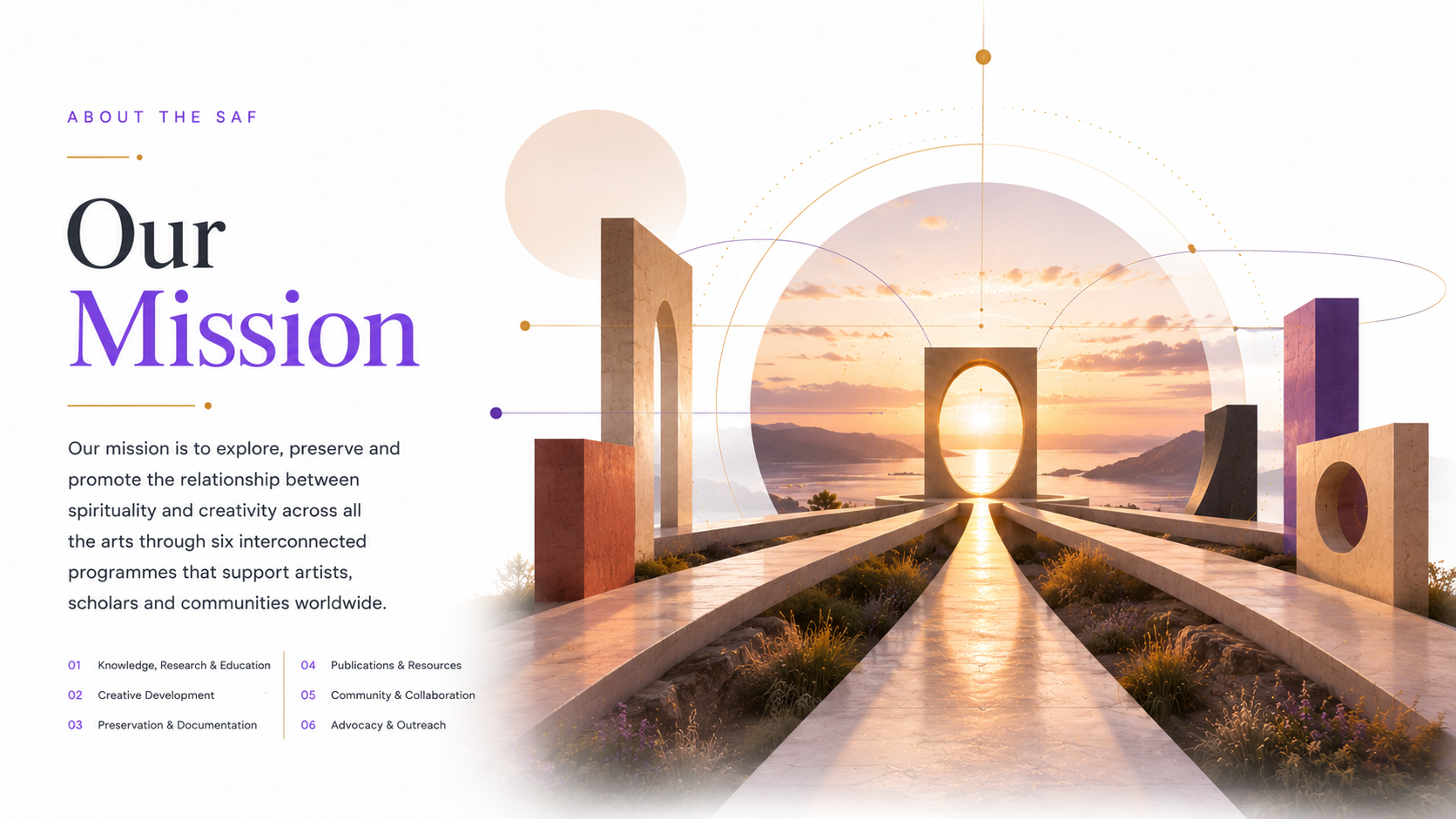
The Spiritual Arts Foundation exists to explore, preserve, develop and promote the relationship between spirituality and creativity.
We believe this relationship represents an important yet often overlooked area of cultural life. Across centuries and cultures, spiritual ideas, experiences and questions have inspired artists, musicians, writers, filmmakers, performers and creative communities. Yet the traditions, knowledge, creative works and communities connected to this field often remain fragmented across disciplines and institutions.
Our mission is to help strengthen the connections between them.
The Foundation seeks not only to preserve and document the cultural heritage of the spiritual arts, but also to support its continuing development. We believe that traditions remain vital not simply because they are remembered, but because each generation contributes new voices, new ideas and new creative works of its own.
For this reason, our work is concerned with both stewardship and creation. We aim to preserve knowledge, encourage public understanding and celebrate the achievements of the past while also supporting contemporary creativity and helping create the conditions from which future cultural activity can emerge.
We pursue this mission through research, publishing, education, cultural production, community building and public engagement.
Research and education help expand understanding of the relationship between spirituality and creativity while preserving knowledge for future generations. Publishing enables ideas, stories, creative works and cultural conversations to reach wider audiences. Community building creates opportunities for people to meet, collaborate, learn from one another and develop meaningful connections through shared interests. Cultural production contributes new works to the field and helps ensure that the spiritual arts remain a living and evolving tradition rather than simply a subject of historical interest.
A central part of our mission is supporting the people who contribute to this tradition today. Artists, writers, musicians, filmmakers, researchers, educators and community leaders all play an important role in shaping the future of cultural life. We seek to help strengthen the networks, opportunities and resources that allow creative practitioners and communities to flourish.
We are equally committed to widening public awareness of this field. Many people remain unaware of the extraordinary range of creative work, cultural heritage and historical influence connected to the relationship between spirituality and creativity. By improving access to knowledge, resources and cultural experiences, we hope to make this wider tradition more visible, accessible and widely understood.
Ultimately, our mission is not simply to preserve what already exists, nor solely to create what comes next. It is to help connect heritage, creativity and community in ways that allow this tradition to continue evolving.
By preserving the past, supporting the present and helping to create the future, we aim to contribute to a richer, more connected and more culturally vibrant society.
The Foundation's long-term ambitions are explored through a series of strategic programmes and initiatives that will guide its future development. These are described in greater detail within The Future of The SAF section.

The Spiritual Arts Foundation did not begin as an organisation. It began as a community.
In September 2021, Spiritual Creatives was established to bring together people interested in creativity, spirituality, culture and human experience. At the time, the intention was relatively simple: to create opportunities for meaningful conversation, connection and community among people whose interests often sat between established categories and disciplines.
What quickly became apparent was that many people were looking for more than social connection alone.
Artists, writers, musicians, filmmakers, educators, researchers and members of the public repeatedly expressed a desire for opportunities to learn, collaborate, share ideas and explore questions that connected creativity with deeper aspects of human experience. Although these interests were widely shared, the resources, communities and opportunities available to support them often appeared fragmented and difficult to access.
As Spiritual Creatives grew, it became increasingly clear that a wider need existed.
The conversations taking place within the community pointed towards something larger than a Meetup group or programme of events. They suggested the presence of a broad cultural tradition that could be found throughout the arts, yet rarely existed as a recognised field in its own right.
This realisation became one of the foundations upon which The Spiritual Arts Foundation would later be built.
Throughout history, spirituality has inspired some of humanity's most enduring achievements in art, music, literature, architecture, theatre, film and culture. Yet despite its influence, the relationship between spirituality and creativity often remains dispersed across disciplines, institutions and communities.
Artists explore spiritual themes. Researchers investigate related subjects. Educational resources exist in many forms. Communities gather around particular interests, traditions or creative practices. However, there are relatively few places where these different strands are brought together and understood as part of a larger cultural landscape.
As this picture became clearer, so too did the need for an organisation capable of exploring, preserving, developing and promoting this relationship more deliberately.
The idea of The Spiritual Arts Foundation emerged from this recognition.
What began as a community initiative gradually expanded into a broader programme of activity.
Educational resources were developed. Articles and research summaries were published. Artists and creative practitioners were profiled. New opportunities for learning, discussion and public engagement emerged. Over time, a growing body of knowledge, relationships and organisational infrastructure began to take shape.
These developments reflected a growing conviction that the relationship between spirituality and creativity deserved greater visibility, recognition and support as an important area of cultural life.
In April 2023, The Spiritual Arts Foundation was formally incorporated as a Company Limited by Guarantee, marking an important step in its development from community initiative to cultural organisation.
Since its incorporation, the Foundation has continued to expand its activities and resources.
Communities have grown. Educational materials have been developed. Hundreds of articles, biographies and knowledge resources have been published. Relationships have been established with artists, educators, researchers and cultural practitioners. Media coverage and public engagement have helped introduce the Foundation's work to wider audiences.
Much of this progress has been achieved through voluntary effort, community participation and a shared belief in the value of creativity, culture and human connection.
The foundations now exist for the next stage of development.
The Spiritual Arts Foundation remains a relatively young organisation. Much of its long-term vision remains ahead.
However, the question facing the Foundation today is no longer whether interest exists. The communities, resources, partnerships and audiences that have emerged over recent years have already demonstrated that it does.
The challenge now is how best to build upon these foundations and develop the capacity required to fulfil the Foundation's wider mission.
The journey from community to organisation has already begun. The task ahead is to continue developing the knowledge, relationships, cultural activity and institutional capacity required to help the spiritual arts flourish in the years and decades to come.

Knowledge plays an essential role in cultural life.
Every generation inherits ideas, stories, creative works and traditions from those who came before it. Through education, documentation and research, these inheritances are preserved, interpreted and passed on. Without such efforts, important aspects of cultural memory can gradually become fragmented, overlooked or lost.
The Spiritual Arts Foundation believes this is particularly true of the relationship between spirituality and creativity.
Throughout history, spiritual ideas, experiences and traditions have inspired some of humanity's most significant achievements in art, music, literature, architecture, theatre, film and culture. Yet despite its influence, this relationship is rarely explored as a field in its own right. Knowledge relating to it is often dispersed across different disciplines, institutions and communities, making it difficult to see the wider picture.
For this reason, knowledge, research and education form an important part of the Foundation's mission.
The relationship between spirituality and creativity forms part of humanity's shared cultural inheritance.
Across centuries and civilisations, artists, musicians, writers, filmmakers and creative practitioners have used their work to explore questions of meaning, imagination, beauty, identity and human experience. Together, these contributions represent a rich and diverse cultural tradition.
The Foundation seeks to help preserve and promote knowledge of this heritage through documentation, publishing, education and public engagement. By doing so, we hope to ensure that important creative achievements remain accessible to future generations while encouraging a deeper understanding of the role spirituality has played in cultural life.
Preservation involves more than recording the past.
The Foundation is equally interested in documenting the present.
Alongside historical resources, the Foundation has developed an extensive collection of artist profiles, biographies, interviews and educational materials exploring contemporary creative practice. Many of these contributions have been written by artists and creative practitioners themselves, providing valuable first-hand accounts of their work, ideas, influences and creative journeys.
Such material serves not only as a resource for today's audiences, but also as a record of a cultural field that remains under-documented. In some cases, these articles represent the most substantial publicly available accounts of the individuals concerned.
The Foundation believes that documenting artists, ideas and creative activity is an important contribution to the future understanding of this field.
Knowledge has little value if it remains inaccessible.
A central aim of the Foundation is therefore to make information about spirituality and creativity available to the widest possible audience.
Through articles, biographies, educational resources, historical studies and public-interest content, we seek to present complex ideas in ways that are engaging, understandable and relevant to people from many different backgrounds.
This work supports artists, educators, students, researchers and members of the public who wish to explore the spiritual arts in greater depth, while helping make a largely overlooked cultural tradition more visible and better understood.
While the Foundation is not an academic research institution, it recognises the importance of evidence and informed enquiry.
A growing body of research suggests that creativity can contribute to wellbeing, learning, social connection, community participation and personal development. Research also provides valuable insight into the role culture plays in shaping individual and collective experience.
The Foundation therefore seeks to collect, curate and share relevant research that may inform public understanding, support practitioners and contribute to wider cultural conversations.
As the organisation develops, we hope to expand our research activities through partnerships, surveys, consultations and other forms of enquiry that can help deepen understanding of the relationship between spirituality and creativity.
One of the Foundation's most significant achievements to date has been the creation of an extensive digital knowledge library dedicated to spirituality and creativity.
Containing hundreds of articles, biographies, educational resources and research materials, the Library continues to grow as a publicly accessible resource for anyone interested in exploring this field.
Its purpose is not simply to store information, but to make knowledge discoverable, understandable and useful.
The Foundation believes that learning should not be restricted to academic institutions or specialist audiences. Knowledge becomes most valuable when it can be shared, explored and applied by the wider public.
The Foundation's commitment to knowledge, research and education is rooted in a simple belief: understanding enriches participation.
The more we learn about creativity, culture and human experience, the better equipped we are to appreciate their value, preserve their achievements and contribute to their future development.
By preserving cultural memory, documenting contemporary creative practice, sharing knowledge and encouraging informed enquiry, the Foundation hopes to help ensure that the relationship between spirituality and creativity remains accessible, visible and alive for future generations.

The Spiritual Arts Foundation was established to explore the relationship between spirituality and creativity, but from its earliest days it became clear that the organisation was about something more than ideas alone.
People are naturally drawn towards community. We seek places where our interests are understood, where meaningful conversations can take place and where we can share experiences with others who are curious about similar questions. Yet many people interested in creativity, culture, spirituality and human experience discover that opportunities for these kinds of connections can be surprisingly difficult to find.
Artists often work in isolation. Creative practitioners may spend years developing their work without ever meeting others exploring similar themes. Those interested in spirituality frequently encounter communities centred around particular traditions or belief systems, while people interested in the arts often find themselves in environments where deeper questions of meaning and human experience are rarely discussed.
The Spiritual Arts Foundation exists, in part, to bridge this gap.
Community has played a particularly important role in the Foundation's development. The conversations, relationships and experiences that emerged through Spiritual Creatives helped reveal a wider need for resources, knowledge, opportunities and cultural activity dedicated to the relationship between spirituality and creativity. In this sense, the community provided the environment in which the Foundation's wider vision first began to take shape.
Our community brings together people from many different backgrounds, professions and perspectives. Some are artists, musicians, writers or filmmakers. Others are educators, researchers, therapists, volunteers or lifelong learners. Some participate because they are interested in spirituality. Others are drawn primarily by creativity, culture, wellbeing, history or community. What unites them is not a shared ideology or profession, but a shared curiosity about the role creativity plays in helping us understand ourselves, one another and the world around us.
This diversity is one of the community's greatest strengths. Conversations become richer when different experiences and perspectives are welcomed. New ideas emerge when people from different disciplines meet. Creative collaborations often begin through unexpected connections between individuals who might otherwise never have crossed paths.
The Foundation is intentionally inclusive. We are not aligned with a particular religion, denomination, political movement or philosophical position. People from many traditions and worldviews participate in our activities, alongside those who identify with none. The aim is not to promote a single way of thinking, but to create an environment in which dialogue, creativity and mutual understanding can flourish.
Much of this activity takes place through Spiritual Creatives, our Meetup-based community which has grown steadily since its first event in September 2021. Through discussions, talks, workshops, social gatherings and creative events, Spiritual Creatives has become an important meeting place for people seeking meaningful connection through creativity and culture. For many participants, it provides their first introduction to the wider work of the Foundation.
What has emerged over time is not simply a network of contacts or a programme of events, but a genuine community. Friendships have formed. Collaborations have developed. Ideas have been exchanged. People have discovered opportunities, inspiration and support that might otherwise never have existed.
As the Foundation grows, we hope this sense of connection will grow with it. New programmes, partnerships and initiatives will create new opportunities for participation, but the principle at the heart of the community will remain unchanged.
The Spiritual Arts Foundation exists because creativity is not merely a personal activity. It is also a social one. Culture is created collectively, knowledge grows through exchange and communities are built through participation. By bringing people together around shared interests in creativity, culture and human experience, we hope to create a place where individuals can learn from one another, contribute their own perspectives and become part of something larger than themselves.

The Spiritual Arts Foundation remains a relatively young organisation. Much of its long-term vision still lies ahead.
However, the Foundation is not starting from scratch.
Since its beginnings in 2021, a substantial body of knowledge, relationships, communities, resources and organisational infrastructure has already been created. Together, these foundations provide a platform upon which future programmes, partnerships and cultural initiatives can be built.
While individual projects and activities may change over time, these underlying assets represent some of the Foundation's most important achievements to date.
At the heart of the Foundation is a growing community of people who share an interest in creativity, culture, spirituality and human experience.
Through Spiritual Creatives and related activities, more than 2,500 people have participated in events, discussions, workshops, talks and community gatherings. These participants come from many different backgrounds and include artists, musicians, writers, filmmakers, educators, researchers, therapists, entrepreneurs and members of the public.
More than a network of contacts, this community represents a growing ecosystem of relationships, shared interests and creative exchange.
It provides the Foundation with one of its most valuable assets: people who care about the ideas and opportunities the organisation exists to support.
Alongside its wider community, the Foundation has developed a professional network of more than 200 artists, musicians, writers, filmmakers and creative practitioners.
These individuals contribute not only creative work, but also experience, knowledge and diverse perspectives on the relationship between spirituality and creativity.
Many have shared personal stories, creative journeys, professional insights and reflections on their work through the Foundation's publishing activities. Collectively, these contributions form an important body of first-hand cultural documentation that may prove valuable to future audiences, researchers and historians interested in this field.
This network represents one of the Foundation's most distinctive and difficult-to-replace assets.
The Foundation has created an extensive digital library dedicated to spirituality and creativity.
Containing hundreds of articles, biographies, educational resources, historical studies and research materials, the Library seeks to make knowledge about the spiritual arts accessible to the widest possible audience.
Particular emphasis has been placed on documenting artists, creative practitioners and cultural traditions that are often overlooked or underrepresented within mainstream cultural discourse.
As a result, the Library has become more than a collection of articles. It represents a growing public resource dedicated to preserving and sharing knowledge about an important area of cultural life.
Community develops through participation.
Since its formation, the Foundation has organised more than one hundred events and community gatherings designed to encourage learning, discussion, connection and creative exchange.
These activities have provided opportunities for people to meet, collaborate, develop friendships and explore shared interests within a welcoming and inclusive environment.
They have also helped demonstrate the public appetite for dedicated spaces where creativity, culture and questions of meaning can be explored together.
Alongside its public-facing activities, the Foundation has invested significant effort in developing the infrastructure required to support long-term growth.
This includes its website, publishing platforms, knowledge library, membership systems, communication channels and organisational resources.
Much of this work takes place behind the scenes, but it provides the practical foundations that enable the organisation to operate effectively and serve audiences across the United Kingdom and beyond.
The Foundation's audience has grown steadily through publishing, events, community activity and public engagement.
Thousands of people now engage with its work each month through its website, digital resources and community platforms. Media coverage, professional relationships and partnerships have further increased awareness of the organisation and its mission.
This growing visibility provides an important platform from which future programmes and initiatives can be developed.
The assets described on this page represent more than statistics or organisational outputs.
They represent relationships, knowledge, trust, experience and momentum.
Most importantly, they demonstrate that the Foundation's vision is already supported by a growing community of people who believe in the value of creativity, culture and human connection.
The work of building the future remains ongoing, but the foundations are already in place.
The opportunity now is to build upon them.

The Spiritual Arts Foundation was created in response to a simple idea: that the relationship between spirituality and creativity deserves greater recognition, support and visibility within cultural life.
Everything the Foundation has achieved so far has been made possible through the contributions of artists, volunteers, members, participants, partners and supporters who have chosen to become involved in that vision.
The work of building a cultural field is not something any single individual or organisation can achieve alone.
It requires communities, creative practitioners, educators, researchers, supporters, organisations and audiences working together over time to create the conditions in which new ideas, new projects and new opportunities can emerge.
For this reason, there are many ways to contribute to the Foundation's work.
Community remains at the heart of the Foundation.
Through events, discussions, workshops and community activities, people from many different backgrounds come together to explore creativity, culture, spirituality and human experience.
Some attend occasionally. Others become regular participants. Many discover new friendships, collaborations and opportunities through the relationships they build.
Simply taking part helps strengthen the wider community and contributes to the growth of a cultural environment in which creativity and meaningful dialogue can flourish.
Artists, musicians, writers, filmmakers and creative practitioners play a central role in the future of the spiritual arts.
The Foundation's membership network helps connect creative practitioners with wider audiences, professional relationships, opportunities and sources of support.
Members contribute not only through the work they create, but through the ideas, knowledge and experience they bring to the wider community.
By participating in the Foundation, members help strengthen a growing creative ecosystem dedicated to the relationship between spirituality and creativity.
Many of the Foundation's achievements have been made possible through voluntary effort.
People have contributed expertise in administration, technology, communications, publishing, events, marketing, fundraising, governance and organisational development.
As the Foundation continues to grow, opportunities remain for individuals who wish to contribute professional skills, practical assistance or specialist knowledge.
Volunteering is one of the most direct ways to help accelerate the organisation's development while contributing to a wider cultural purpose.
Not every contribution requires a formal role.
Many important developments begin with a conversation, an introduction or a shared idea.
People regularly help by recommending speakers, introducing potential partners, identifying opportunities, sharing research, suggesting projects or helping raise awareness of the Foundation's work.
The Foundation welcomes these contributions and recognises that some of its most valuable opportunities may emerge through collaboration and shared knowledge.
The opportunities and challenges that inspire the Foundation's work extend far beyond any single organisation.
We therefore welcome partnerships with arts organisations, educational institutions, cultural bodies, community groups, researchers, charities, businesses and others who share an interest in creativity, culture, learning and public benefit.
Partnerships help create opportunities that would be difficult to achieve alone while strengthening the wider ecosystem surrounding spirituality and creativity.
The Foundation has already established strong foundations through voluntary effort, community participation and limited resources.
However, many of its long-term ambitions will require additional investment.
Financial support helps create new opportunities for artists, expand educational resources, strengthen community activity, preserve cultural knowledge and increase the Foundation's capacity to serve the public.
Support may take many forms, including donations, patronage, sponsorship, grant funding, legacy giving and other forms of philanthropic support.
Every contribution helps create possibilities that might otherwise remain unrealised.
The Spiritual Arts Foundation remains a young organisation, but the opportunity it seeks to address is much larger than the organisation itself.
Throughout history, spirituality and creativity have shaped culture in profound ways. Yet the relationship between them remains surprisingly under-recognised as a distinct area of cultural life.
The Foundation exists to help change that.
Whether through participation, membership, volunteering, partnership or financial support, everyone who becomes involved contributes to a wider effort to preserve an important cultural tradition, support contemporary creative practice and help create the next chapter of the spiritual arts.
We invite you to become part of that journey.
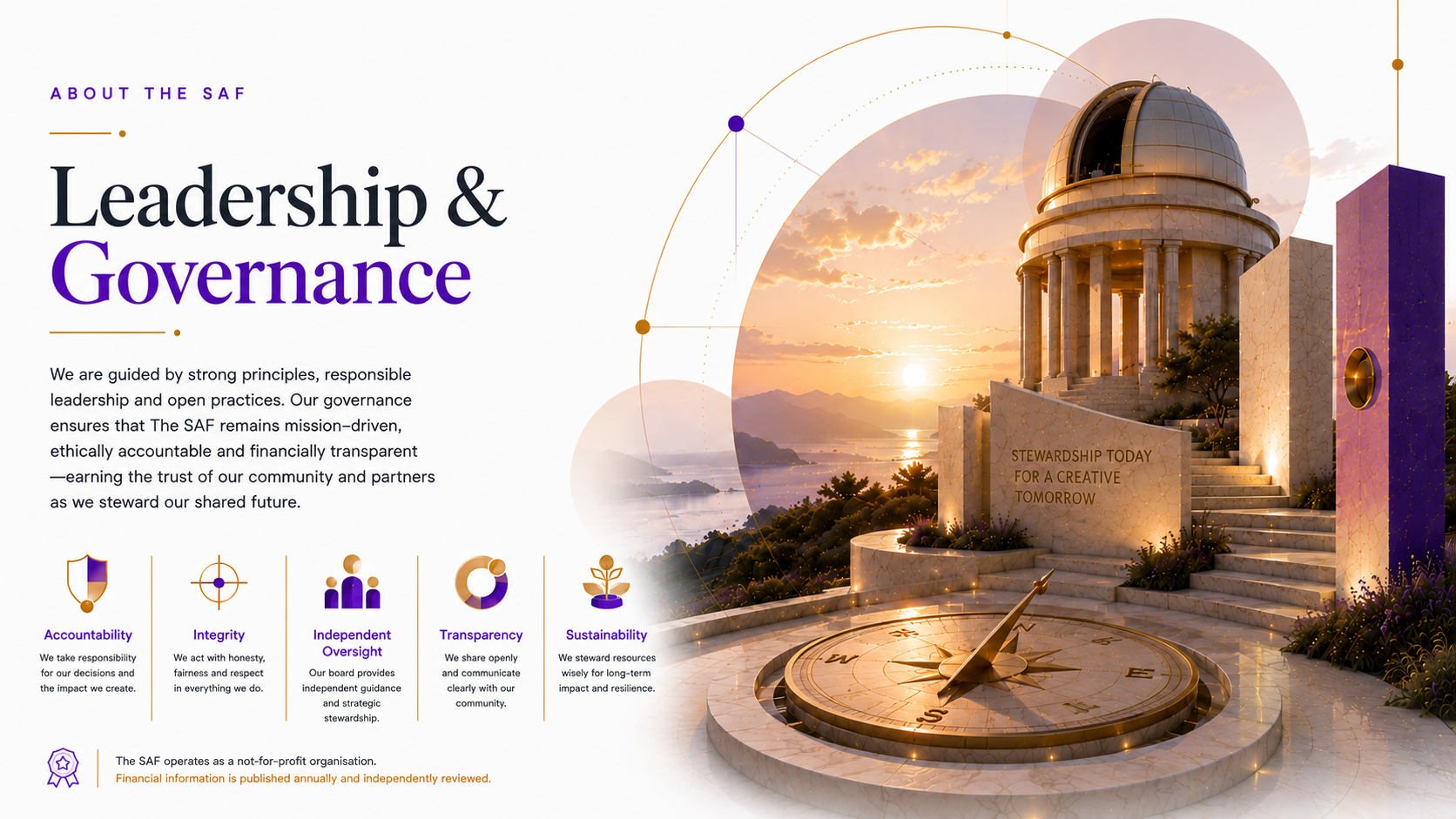
The Spiritual Arts Foundation was established to explore, preserve, develop and promote the relationship between spirituality and creativity as an important field of cultural life. Achieving that mission requires not only vision and creativity, but also strong leadership, sound governance and responsible stewardship.
The Foundation believes that good governance is fundamental to public trust. It provides the framework through which decisions are made, resources are managed, risks are considered and the organisation remains accountable to its supporters, partners and the wider public.
As a young organisation, the Foundation has developed its governance in step with its growth. Rather than creating complex structures prematurely, it has sought to build carefully, ensuring that governance arrangements remain appropriate to its scale while laying the foundations for future expansion.
The following overview explains the Foundation's legal structure, leadership, governance arrangements and plans for continued organisational development.
Legal Structure
The Spiritual Arts Foundation was incorporated as a Company Limited by Guarantee on 27 April 2023.
The organisation is governed by a Board of Directors with collective responsibility for strategic leadership, financial stewardship, legal compliance, governance and the long-term fulfilment of the Foundation's charitable mission and objectives.
The Board brings together experience spanning the arts, creative industries, publishing, education, business management, finance, administration and community development. This combination of creative and professional expertise supports informed decision-making while helping to ensure that artistic ambition is matched by sound organisational practice.
Our Approach to Governance
The Foundation views governance as an ongoing process rather than a fixed organisational structure.
Strong governance is not measured simply by policies or procedures, but by the quality of leadership, thoughtful decision-making, financial responsibility and a willingness to learn and improve over time.
From its inception, the Foundation has adopted a measured approach to organisational development. During its early years, priority was given to demonstrating public value, building communities, developing knowledge resources and testing ideas through practical delivery. Governance arrangements have evolved alongside this growth, ensuring that the organisation remains proportionate, effective and sustainable.
As the Foundation continues to expand, its governance will continue to mature through the recruitment of additional expertise, the development of independent advisory capacity and the ongoing strengthening of organisational systems and oversight.
Decision Making
The Board of Directors is responsible for the Foundation's overall strategic direction and governance.
Its responsibilities include:
Responsibility for day-to-day management and programme delivery is delegated to the leadership team, operating within the strategic framework established by the Board.
This distinction allows operational decisions to be made efficiently while ensuring that overall accountability remains with the Directors.
Leadership
The Foundation has been developed through a combination of voluntary leadership, professional expertise and community participation.
Since its origins in 2021, the organisation has grown from a small volunteer-led initiative into an international cultural platform supporting a community of more than 2,500 members, delivering public events, developing an extensive online knowledge resource and building relationships with artists, researchers, educators and creative practitioners around the world.
This progress has been achieved through careful planning, incremental growth and a deliberate commitment to building strong organisational foundations before pursuing significant external investment.
The Board meets regularly to review organisational progress, finances, strategic priorities, risks and future opportunities, ensuring that development remains consistent with the Foundation's mission and long-term vision.
Board of Directors
Clifford White - Founder & Director
Clifford White is the founder of The Spiritual Arts Foundation and brings more than forty years of experience across the music, media, education and creative sectors.
His career has included leadership roles in music production, publishing, digital media, education, training and programme development. He founded and managed a London-based recording studio and independent record label, established a specialist training company and film school at Elstree Film Studios, and has worked with organisations including the BBC, ITV, Channel 4, British Telecom and Comic Relief.
Throughout his career he has created and managed businesses, educational initiatives and creative organisations, developing experience in organisational leadership, publishing, marketing, partnerships, events, audience development and strategic planning.
As Founder and Director of The Spiritual Arts Foundation, Clifford leads organisational strategy, programme development, publishing, fundraising, partnerships, communications and audience development. Under his leadership the Foundation has grown into an internationally recognised cultural platform with a substantial knowledge library, an active public community and a growing network of creative contributors and supporters.
Barry Posener - Director & Treasurer
Barry Posener is an artist, entrepreneur and strategic adviser.
He holds a degree in the arts from the University of Hertfordshire and combines creative practice with extensive commercial experience. Barry founded and successfully managed Great Value Jewellery, bringing significant expertise in business management, financial oversight, investment and strategic planning.
As Treasurer, he provides oversight of the Foundation's financial stewardship, budgeting, sustainability planning and long-term organisational development.
Elaine White - Director & Company Secretary
Elaine White is an experienced administrator with a long-standing commitment to both the arts and the charitable sector.
She currently provides bookkeeping services for one charity and administrative support for another, bringing practical experience in financial administration, organisational systems and day-to-day operational management.
Alongside her professional work, Elaine maintained many years of involvement with the amateur dramatic group Spotlighters, reflecting her longstanding interest in community arts and cultural participation.
As Company Secretary, she supports the Foundation's governance, administration, record keeping and organisational development.
Advisory Network
Alongside its Board, the Foundation benefits from the support of a growing network of volunteers, creative practitioners, researchers and professional advisers who contribute knowledge, experience and practical assistance across a wide range of activities.
This wider community reflects the interdisciplinary nature of the spiritual arts. Expertise is drawn from multiple creative and professional fields, enriching the Foundation's work while strengthening its ability to develop partnerships, programmes and new initiatives.
Current areas of expertise represented within the Foundation's wider network include:
As the Foundation develops, this network will continue to grow alongside the organisation itself.
Specialist Advisory Circle
The Foundation is progressively developing a Specialist Advisory Circle to complement the expertise of its Board.
The purpose of the Advisory Circle is to provide independent specialist knowledge across areas relevant to the Foundation's mission, helping to inform strategic thinking, programme development, publishing, partnerships and organisational growth.
Unlike the Board of Directors, whose responsibilities include governance and legal accountability, members of the Advisory Circle contribute professional expertise within their respective fields.
The Foundation expects this network to become an increasingly important part of its organisational development as new programmes and partnerships emerge.
Nigel Peace - Publishing Adviser
Nigel Peace is the founder and publisher of Local Legend, an independent publishing house established in 2012 specialising in spirituality, philosophy and related subjects.
Holding degrees in both Science and Philosophy, Nigel has overseen the publication of more than forty paperback titles and twenty-five eBooks by over thirty authors. He also founded and manages the biannual National Spiritual Writing Competition, which has led to the publication of multiple award-winning books, with several Local Legend publications receiving national literary awards.
As Publishing Adviser to The Spiritual Arts Foundation, Nigel provides guidance on publishing strategy, editorial development, production, distribution and the long-term development of the Foundation's publishing programme.
Future Governance Development
The Foundation recognises that governance must evolve alongside organisational growth.
As capacity increases, priorities include:
The Foundation's philosophy is to build carefully and sustainably. By allowing governance structures to develop alongside organisational maturity, it seeks to create an organisation that is resilient, accountable and well positioned to serve artists, communities and the wider public for many years to come.

The Spiritual Arts Foundation was founded by Clifford White, a publisher, entrepreneur, composer and community builder whose work has long centred on creativity, communication and human potential.
While his professional experience spans business, technology, publishing, music and community development, the origins of the Foundation can be traced much further back to a lifelong fascination with the relationship between creativity and the deeper dimensions of human experience.
From an early age, Clifford was drawn to the power of music and imagination.
Works by artists such as Mike Oldfield, Jean-Michel Jarre and later Vangelis suggested worlds that seemed to extend beyond everyday experience, opening spaces for wonder, reflection and exploration through creativity itself. Long before he encountered the language of spirituality, he was fascinated by the ability of music and the arts to evoke meaning, mystery and imagination.
This interest remained a constant thread throughout his life and would eventually become one of the inspirations behind The Spiritual Arts Foundation.
Alongside his professional activities, creativity has remained an important part of Clifford's life.
As a composer and musician, he has released more than twenty music albums and experienced many of the opportunities and challenges that accompany a creative career. Like many artists, he has navigated questions of audience-building, collaboration, visibility, creative development and long-term sustainability.
This experience has strongly influenced the Foundation's outlook. The SAF views artists not simply as beneficiaries of support, but as essential contributors to cultural life whose work deserves greater visibility, recognition and appreciation.
The Foundation's commitment to artists is therefore informed not only by research and public benefit objectives, but also by first-hand experience of the creative journey itself.
A recurring theme throughout Clifford's work has been community building.
Over several decades he developed projects, businesses, websites, publications and communities designed to connect people around shared interests, encourage participation and create opportunities for collaboration. His experience includes work associated with major publishing organisations such as Condé Nast, involvement in professional music-production environments including Elstree Studios, and the creation of numerous online and offline communities.
These experiences provided valuable insight into how communities form, grow and sustain themselves over time.
In September 2021, this experience led to the creation of Spiritual Creatives, a community bringing together people interested in spirituality, creativity, culture and human experience. What began as a single Meetup group gradually developed into a thriving community of more than 2,500 participants.
As Spiritual Creatives grew, a wider pattern began to emerge.
Many artists, writers, musicians, filmmakers, educators and members of the public shared a common interest in the relationship between spirituality and creativity. Yet there appeared to be few organisations dedicated to exploring, preserving, developing and promoting this relationship as a field in its own right.
The more this landscape was explored, the clearer the opportunity became.
The idea of The Spiritual Arts Foundation emerged from a recognition that an important cultural tradition existed, but lacked a dedicated home.
What began as community building gradually evolved into a broader vision encompassing publishing, education, research, cultural preservation, artist development and creative production.
In April 2023, that vision took organisational form through the incorporation of The Spiritual Arts Foundation.
Although the Foundation was initiated by its founder, its ambitions extend far beyond any individual contribution.
The long-term success of the organisation will depend upon the artists, volunteers, members, supporters, partners, advisers and future leaders who choose to contribute to its development.
The aim is not to build an organisation around a single person, but to help create an enduring institution capable of supporting creativity, culture and community for generations to come.
The Spiritual Arts Foundation represents the convergence of many strands of experience gathered over a lifetime. More importantly, it represents a belief that the relationship between spirituality and creativity deserves greater recognition, understanding and support within contemporary cultural life.

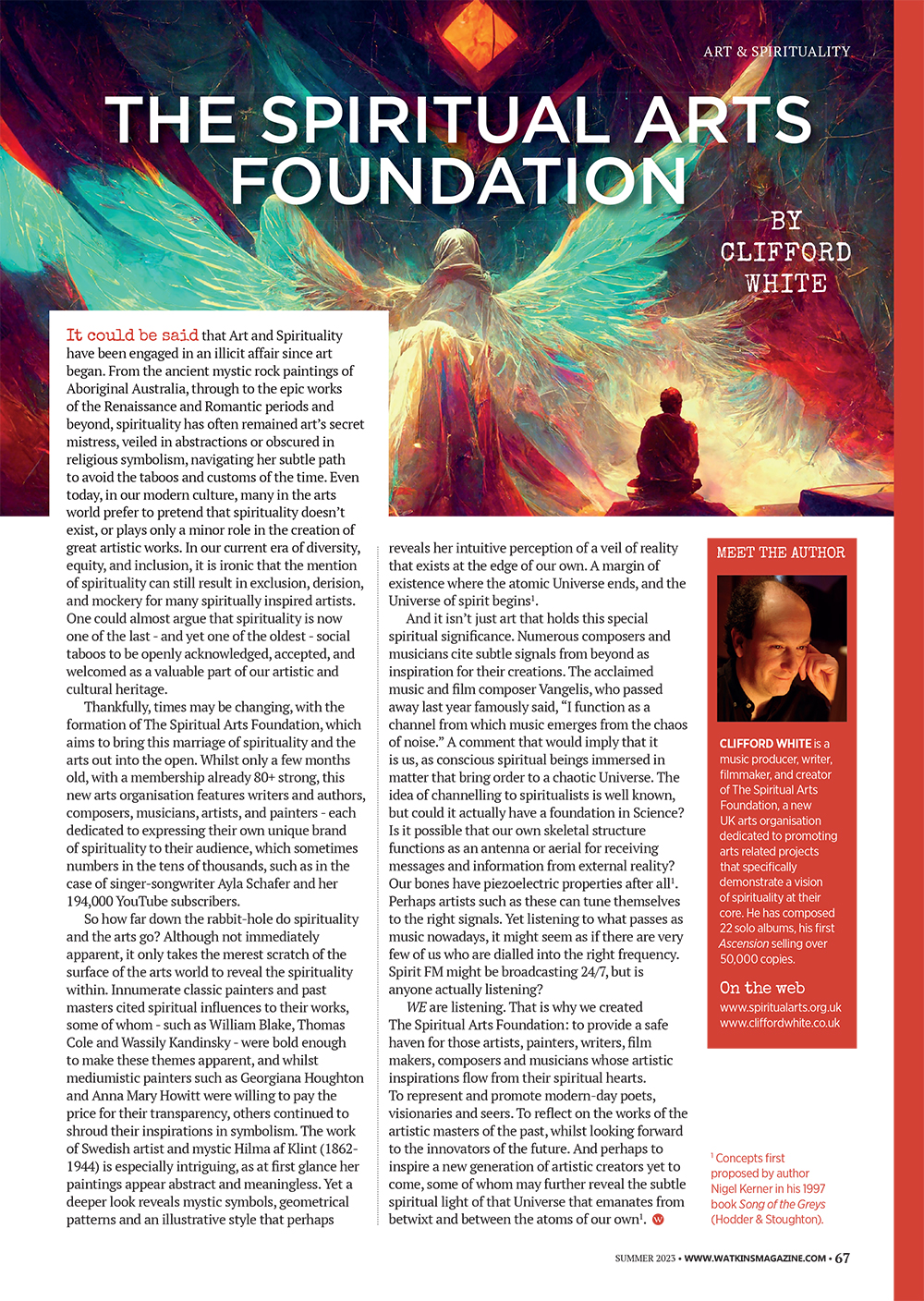
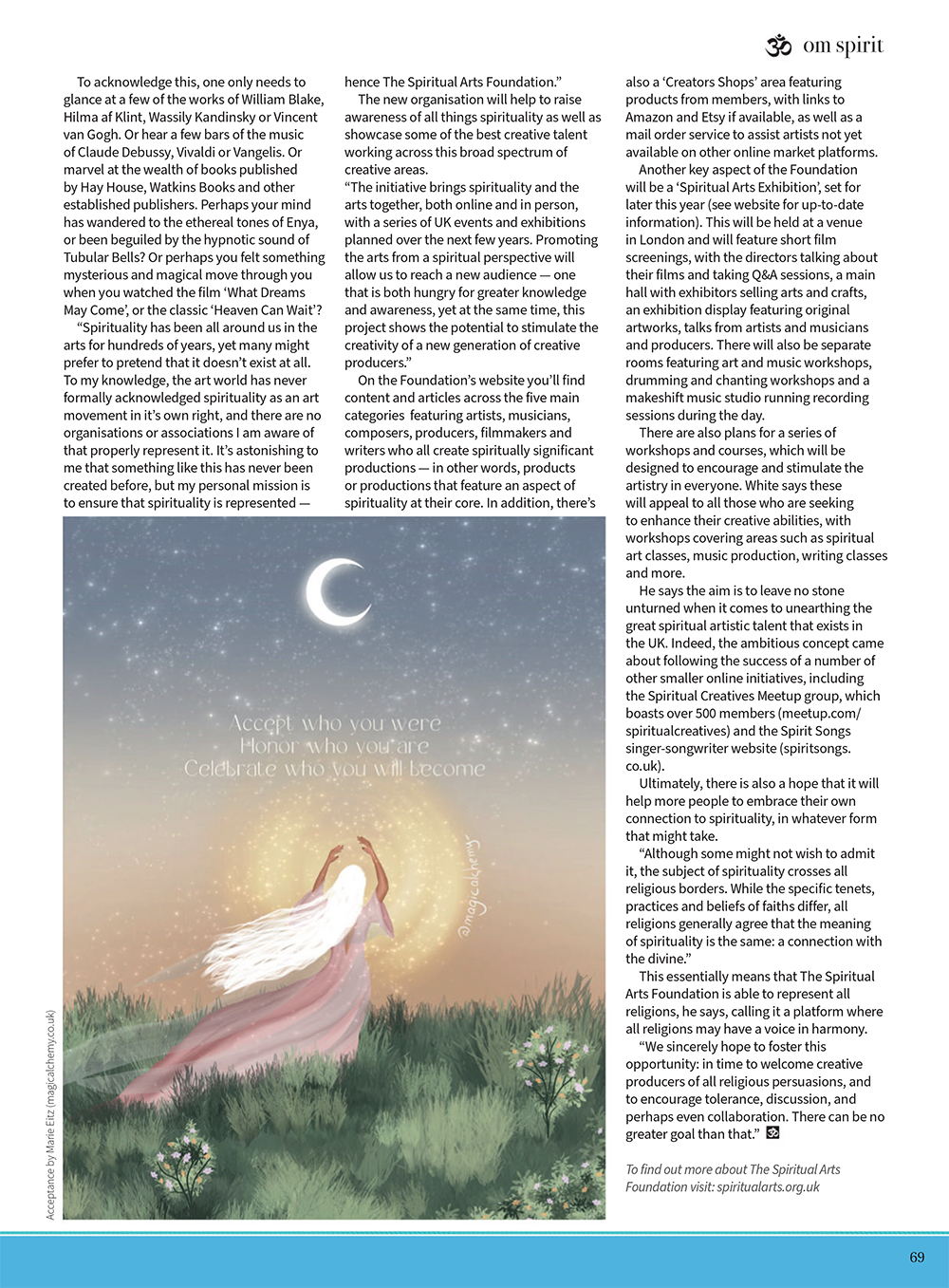
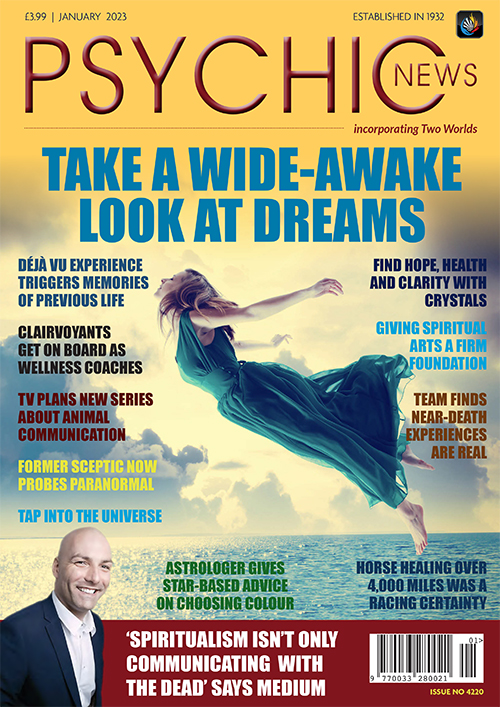
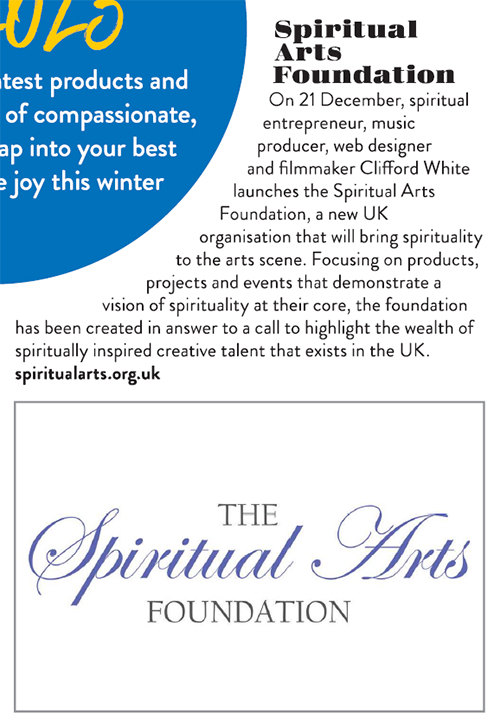
Since its formation, The Spiritual Arts Foundation has attracted coverage from a range of publications serving audiences interested in spirituality, wellbeing, creativity, culture and personal development.
This coverage has helped introduce the Foundation's work to new audiences while contributing to wider awareness of the relationship between spirituality and creativity.
The articles, interviews and features below provide an independent perspective on the Foundation's activities, mission and development. Together they provide an independent perspective on the Foundation's activities and reflect growing interest in the relationship between spirituality and creativity.
For media enquiries, interview requests or press information, please contact The Spiritual Arts Foundation directly.



The Spiritual Arts Foundation was created in response to a simple observation: while spirituality has helped shape human creativity throughout history, there is no widely recognised cultural institution devoted to exploring, preserving, developing and promoting this relationship as a field in its own right.
The Foundation remains a young organisation, but the idea that inspires it is larger than any single project, programme or period of growth.
Our ambition is not merely to build an organisation. It is to help create a culture in which the spiritual arts are more visible, more accessible and more fully recognised as part of our shared cultural life.
For centuries, spirituality and creativity have combined to produce some of humanity's most enduring achievements in art, music, literature, architecture and culture. They have helped people express their deepest experiences, explore questions of meaning and connect across generations and traditions. Yet the structures that support these activities often remain fragmented. Artists work in isolation, communities struggle with disconnection, cultural knowledge is dispersed, and creative work is frequently undervalued despite its contribution to wellbeing, learning and social life.
The Foundation's long-term purpose is to help strengthen the ecosystem within which spirituality and creativity can flourish.
Central to that vision is the creation of a recognised home for the spiritual arts: a lasting institution capable of serving artists, researchers, educators, cultural organisations and the wider public. Such a place would not simply preserve knowledge. It would encourage participation, support collaboration, nurture creative development and provide a focal point for a field that has long existed without a centre of gravity.
We hope, over time, to become a trusted source of knowledge, a respected cultural voice and a place where people can discover, explore and contribute to this tradition.
Artists will always remain at the heart of that work. The Foundation seeks a future in which creative practitioners exploring spirituality, meaning and human experience have greater opportunities to connect with one another, develop audiences and share their work. Through publishing, cultural production, partnerships and community-building initiatives, we hope to help create conditions in which such work can be recognised, supported and celebrated.
The benefits extend beyond artists themselves. Creative activity has a rare capacity to bring people together through shared experiences, conversation and participation. In a society often characterised by loneliness, fragmentation and rapid change, the arts can help foster belonging and strengthen the ties that hold communities together. We hope to encourage networks, events and initiatives that enable people to connect through culture, creativity and thoughtful exchange.
Preserving cultural memory forms another part of the vision. Across thousands of years, spiritual ideas have inspired countless works of art, music, literature and philosophy. Much of this history remains scattered across disciplines and institutions, making it difficult to appreciate as a coherent tradition. Through research, publications, archives and educational resources, we hope to make this inheritance more visible, accessible and better understood.
At the same time, cultural traditions survive only because each generation renews them. The Foundation is therefore concerned not only with preservation but with creation. Books, magazines, films, music, podcasts, educational resources and other creative works all offer opportunities to explore enduring questions in contemporary forms. Supporting new work is one way of ensuring that the conversation continues rather than becoming solely a matter of history.
None of this can be achieved alone. Meaningful progress depends upon collaboration between artists, educators, researchers, cultural organisations, charities, businesses, funders and supporters. The future of the spiritual arts will be shaped through partnership, shared effort and a recognition that cultural life is strengthened when diverse people contribute to it together.
The vision described here is ambitious, and its full realisation may take many years. Some elements are already present in the Foundation's work; others remain aspirations that will require patience, resources and sustained commitment.
Yet every enduring institution begins as an idea, and every cultural movement begins with people who recognise something valuable and decide it is worth nurturing.
The Spiritual Arts Foundation exists because we believe the relationship between spirituality and creativity remains one of the great, often overlooked forces in human culture. Our hope is to help create the conditions in which that tradition can be more clearly seen, more widely shared and more confidently carried forward.
The future we seek is not one in which the spiritual arts are rediscovered, but one in which their place within cultural life is finally recognised.

The Spiritual Arts Foundation has been built through gradual and deliberate development rather than rapid expansion.
Since its origins in 2021, the Foundation has focused on establishing strong foundations, building communities, developing knowledge resources and testing ideas before pursuing significant growth. This approach reflects a simple belief: enduring institutions are built in stages. Each phase creates the conditions necessary for the next.
The exact path will inevitably evolve. New opportunities will emerge, priorities will shift and the Foundation itself will continue to learn through experience. Yet the overall direction remains consistent.
The long-term ambition is not simply to grow an organisation, but to help establish the spiritual arts as a recognised field of cultural life while creating an institution capable of serving artists, communities and future generations.
Status: Largely Complete
The first phase focused on transforming an idea into a functioning organisation.
Key achievements include:
• Launching Spiritual Creatives in 2021.
• Establishing The Spiritual Arts Foundation.
• Incorporating as a Company Limited by Guarantee.
• Developing the Foundation's digital infrastructure and public presence.
• Creating a substantial and growing knowledge library.
• Building professional and public communities around the spiritual arts.
• Establishing the Foundation's mission, vision and strategic direction.
• Demonstrating public interest in the relationship between spirituality and creativity.
This phase established the platform upon which all future development depends.
Current Phase
The Foundation's immediate priority is to strengthen its organisational capacity and create the conditions required for long-term sustainability.
While substantial progress has been achieved through voluntary effort, future growth requires additional expertise, leadership capacity and financial resilience.
Key objectives include:
• Securing core operational funding.
• Recruiting specialist fundraising capacity.
• Strengthening governance and strategic oversight.
• Expanding leadership and operational support.
• Developing sustainable income streams.
• Growing membership, supporter and donor communities.
• Building strategic partnerships.
• Improving systems, processes and organisational resilience.
The purpose of this phase is straightforward: to create an organisation capable of supporting ambitions that extend far beyond its current scale.
With stronger foundations in place, the Foundation intends to expand its public programmes and cultural activities.
This phase marks the transition from organisational development to public delivery.
Areas of development may include:
• Artist support and development initiatives.
• Publishing and media projects.
• Research and heritage programmes.
• Educational resources and learning opportunities.
• Community networks and participation activities.
• Events, festivals and public engagement programmes.
• New creative productions across multiple disciplines.
The objective is to create meaningful opportunities for participation while demonstrating the wider value of the spiritual arts.
As programmes mature, the Foundation aims to help strengthen the wider ecosystem surrounding spirituality and creativity.
This phase is concerned less with organisational growth than with cultural influence and connectivity.
The Foundation seeks to encourage collaboration between artists, researchers, educators, cultural organisations, communities and audiences across the United Kingdom and beyond.
This may include:
• National and international partnerships.
• Specialist professional networks.
• Cross-sector collaborations.
• Research and knowledge exchange.
• Greater visibility within public and cultural discourse.
• Recognition of the spiritual arts as a distinct area of cultural activity.
The ambition is to help create a stronger, more connected and more visible field.
As the field develops, the Foundation hopes to establish permanent assets capable of serving future generations.
This phase represents the transition from organisation to institution.
Potential developments may include:
• Major archives and knowledge resources.
• Fellowship, scholarship and grant programmes.
• Artist residencies and development opportunities.
• Awards recognising excellence within the spiritual arts.
• Publishing platforms and media channels.
• Research centres and specialist collections.
• National festivals and flagship cultural events.
• Permanent facilities dedicated to the spiritual arts.
The objective is to create structures capable of preserving knowledge, supporting creativity and sustaining public engagement over the long term.
The Foundation's ultimate ambition is not simply to endure, but to serve as a trusted steward of the spiritual arts.
At this stage, the organisation would function as a recognised cultural institution with responsibilities extending beyond any individual programme, project or generation of leadership.
Its role would include:
• Preserving cultural heritage.
• Supporting future generations of artists and practitioners.
• Maintaining significant archives, collections and knowledge resources.
• Sustaining diverse programmes and public activities.
• Nurturing national and international partnerships.
• Providing long-term leadership within the field.
• Ensuring continuity beyond the involvement of any single founder or generation.
The aim is to help ensure that the spiritual arts remain visible, accessible and culturally relevant for decades to come.
The Foundation's vision is ambitious, but its approach remains practical.
Institutions are not created overnight. They emerge through sustained effort, careful stewardship and the gradual accumulation of trust, knowledge, relationships and public value.
Each phase builds upon the one before it. Capacity enables programmes. Programmes create impact. Impact strengthens the field. A stronger field creates the conditions from which institutions emerge.
The future we seek is not one in which the spiritual arts are rediscovered, but one in which their place within cultural life is finally and fully recognised.
This roadmap is therefore more than a plan for organisational growth. It is a pathway towards creating an enduring institution dedicated to one of humanity's oldest and most influential creative traditions.

The Spiritual Arts Foundation was established not only to explore and preserve the relationship between spirituality and creativity, but also to help ensure that this tradition continues to evolve through the creation of new cultural work.
Throughout history, spiritual ideas, experiences and questions of meaning have inspired some of humanity's most enduring achievements in art, music, literature, architecture and culture. These achievements survived because each generation added something of its own. The spiritual arts remain alive not through preservation alone, but through continual acts of creation.
For this reason, creative production forms a central part of the Foundation's long-term vision. Our ambition is not merely to document and interpret the spiritual arts, but to contribute to their ongoing development through new works, new platforms and new opportunities for creative expression.
Publishing represents one of the Foundation's most natural areas of development and is already an area of active exploration.
Over time, we aim to establish a publishing programme capable of producing books, magazines, journals, educational resources and other works exploring creativity, spirituality and human experience. Current plans include a range of book concepts and editorial projects designed both to preserve important knowledge and to make the spiritual arts more accessible to contemporary audiences.
These publications may encompass original research, biographies, interviews, essays, historical studies, educational materials and creative works intended for both specialist and general readers.
The broader objective is to create publishing platforms that encourage new voices, support creative practitioners and contribute to a growing body of knowledge surrounding the spiritual arts.
Film has become one of the defining storytelling mediums of the modern era.
The Foundation intends to develop a programme of film and video production exploring spirituality, creativity and human experience through documentaries, interviews, educational content and original productions. Longer term ambitions include supporting feature films inspired by themes that sit at the heart of the spiritual arts.
Stories shape culture. Film offers a unique ability to bring those stories to wide audiences, combining image, sound and narrative in ways few other forms can achieve.
Music has occupied a central place within spiritual and cultural life throughout history.
From sacred traditions and devotional works to contemporary compositions inspired by questions of meaning and transcendence, music remains one of humanity's most powerful creative languages.
Through the Spiritsongs record label, the Foundation seeks to support music that explores creativity, spirituality and human experience while providing opportunities for artists whose work contributes to the wider field of the spiritual arts.
Several artists and projects are already under consideration as part of the label's early development. Although still at a formative stage, Spiritsongs represents an example of how the Foundation intends to move beyond discussion and actively contribute to the creation of new cultural work.
The long-term ambition is to establish a respected platform capable of supporting recordings, collaborations, performances and original creative projects across a wide range of genres and styles.
The Foundation also envisions larger cultural events capable of bringing together artists, audiences, researchers, educators and communities.
One long-term aspiration is the creation of an annual Spiritual Arts Festival: a gathering that could encompass performances, exhibitions, screenings, talks, workshops, discussions and participatory experiences across multiple disciplines.
Such events would provide opportunities for collaboration, public engagement and cultural exchange while demonstrating the richness and diversity of the spiritual arts. Over time, they could become recognised meeting places for people interested in creativity, culture, meaning and human flourishing.
Some of the most valuable creative work emerges not from constant activity, but from periods of reflection, concentration and renewal.
For this reason, the Foundation hopes to develop residential retreats that combine creativity, learning, community and contemplation within inspiring natural settings.
These retreats could bring together artists, writers, musicians, filmmakers and other practitioners for focused periods of creative development, while also encouraging collaboration, dialogue and personal growth.
The aim is simple: to create environments in which creativity can flourish away from the distractions and pressures of everyday life.
Individual projects matter. Yet the Foundation's longer-term vision extends beyond any single book, album, film or event.
What endures are the structures that make ongoing creation possible.
A publishing programme creates opportunities beyond one publication. A record label extends beyond a single recording. A festival becomes more valuable with each successive year. Communities generate possibilities that no individual project can achieve alone.
For this reason, the Foundation seeks to build lasting cultural platforms rather than isolated productions. The objective is to create frameworks capable of supporting creativity, participation and cultural development over many years.
The initiatives described here represent long-term ambitions rather than immediate objectives. Some may take years to realise. Others will evolve in response to opportunities that cannot yet be anticipated.
Yet elements of this vision are already beginning to emerge through publishing concepts, music projects and creative initiatives currently under exploration.
Underlying each ambition is a simple conviction: culture remains alive only when people continue to create.
The Foundation therefore seeks not only to preserve the spiritual arts, but to help generate the conditions from which future works can emerge. Books, music, films, festivals, retreats and other creative projects are valuable in themselves, but their deeper significance lies elsewhere. They ensure that the conversation between spirituality and creativity remains active, evolving and open to new voices.
A tradition survives not because it is remembered, but because it continues to produce new work. The future of the spiritual arts will be shaped by what is created next.