Valerie Georgeson was a very successful writer and actress, always interested in religion and spirituality. She was on the original writing team of EastEnders and appeared in Coronation Street and other drama series before writing adult novels (The Shadow of the Elephant quartet) and well-loved childrens' TV (Jonny Briggs, Simon & the Witch, Animals of Farthing Wood). But her spiritual journey was cut short after she unwittingly fell under the influence of a group whose charismatic leader wielded god-like power and control over her followers.
In "God, the Devil and Me" Valerie explains how she got caught up with the Sahaja Yoga movement and how it affected her career and inflicted long term psychological trauma.
Q: Valerie, after a successful career as a TV script writer, - and writing eight novels, you threw in your career and disappeared. And then, for twenty years you wrote nothing – and then this new book of yours came along – God, the Devil and Me – It's an autobiography and it's had some cracking reviews by the way – 'searingly honest', 'a gripping read', 'astonishing'. You've obviously not lost your touch! But twenty years on – what on earth happened?
A: It's a long story! I was always what you could call a seeker. In fact, the sub title of the book is The Chronicles of a Seeker of God. Even as a child there was always that cry in the depth of my heart, that sense of something missing. And it only got stronger as I got older. I taught myself to meditate, and later benefitted from the Alexander Technique, which freed me up, left me open to inspiration - and - I was experiencing God's presence in my life.
Q: God's presence? In what way?
A: Well, I was in Canterbury, in a play – you know- I was an actress too – the play was Alfie. It was a difficult time. My marriage was in trouble. So between the matinee and evening shows I took to going into the cathedral to find some peace. And I was sitting there in the empty church, wondering what it really was all about – my life, everything, when I heard a voice, clear as a bell. And it said, 'One day you will write a book for God'.

Q: So, you're saying God told you to write this book?
A: Well, a book. But of course I had no idea what the book would be about.
Q: So, what happened?
A: You'll have to read the book!! But I will tell you, after my divorce, I was drawn into a sect. You'll find the whole story in the book, it's called God the Devil and Me. The title tells you a good deal. I became their battleground .
Q: I see. So, which sect? There are a good many.
A: It was Sahaja Yoga. And the guru was called, Mataji, or 'Mother', an Indian lady who had based her teachings on Hindu foundations. When she discovered I was a writer, she gave me special attention. And at first I felt like I was getting closer to God. But I wasn't. A trap was closing. Mataji knew about the book. And she knew what it would be about. She knew it better than I did.
Q: Tell me about the trap. How were you trapped?
A: Every sect works the same way. Bit by bit you are made dependent on the guru. You are married to a Sahaja Yogi.

Q: Were you ?
A: Yes. He was the leader of the movement in the UK no less. Then you find your finances bound up in SY in some way. And if you have children, they aren't yours, they're Mataji's. So the bonds that tie you are emotional, financial and mental. The guru is the sole master of all three. Your time is given over to SY meetings, with celebrations all over the world, until you have no time to work to earn your living. It all happens bit by bit, slowly the bonds tighten. And your spiritual freedom is stifled. I saw children taken from their mothers, women accused of immorality and sent away 'to get better', their children told to forget them because they were 'no good.' For me, the worst was that I felt my connection with God was slipping. So, I sent Mataji a telepathic message, 'Please give me back my desire for God.' It triggered a catastrophe.
Q: What happened?
A: I was banished. My husband was told to leave me. He refused, but his little daughter was taken from him. And so, I began to write the book. I was going to sell it to the newspapers to pay for a court case. We wanted her back. But when a solicitor's letter reached the kidnappers, suddenly she was thrown back at us, as traumatised as we were. Our family never really recovered.
Q: But the book?
A: Yes, the book. I remember looking at what I'd already written, outlining our history, thinking, 'Is there any point going on with it?' when suddenly I recognised it as the book I was always going to write.
Q: How long ago was this?
A: Thirty years or so.

Q: Why has it taken so long?
A: Mataji had said to my husband, 'I can stop her writing'. And she threw everything she had at it. There were malevolent occult attacks, all my writing was attacked, things went wrong, projects fell apart. Mataji's hostility was unrelenting. Again, I have to say read all about it in the book. Mataji wanted to destroy me as a writer.
Q: What kept you going?
A: God had not deserted me. Mary rescued us – she came to us in Venice, sweeping her love like a cloak around us and eventually taking us to her Son. I started keeping a diary of everything, both God's action and Mataji's reactions. And then I wrote them up into the book. In some ways, I could honestly say that I didn't write this book. God wrote the book in my life. All I had to do was write it down! So as long as the story continued, I had to keep on writing. I had to chronicle everything so I could help all those others still trapped in Sahaja Yoga, and in all the other sects. I had to show them there is a way out.
Q: Valerie, you did it, against all the odds. And I must say, it is an inspiring read. A real page turner too. Thank You.
Coming out of a cult is always difficult. But neither religious nor secular organisations set up to help victims of cults seem to recognize the all encompassing nature of the spiritual battles faced by true seekers. This is a chronicle of that seeking, showing the pitfalls and the helpful indicators on that stony path while discovering the power of the spirit to learn and evolve through trial and error, and the vital importance of forgiveness. Writing God, the Devil and Me turned out to be an important part of the battle it describes. This is a deeply researched piece of investigative journalism, a grown-up enquiry into the collective psyche.
Born in South Shields in 1945, Valerie Georgeson has in the course of her career been a member of Equity, the Samaritans, International Dance Teachers Association, The Writers’ Guild, BAFTA, Society of Authors and the British Association of Iconographers. She has a UK degree in Drama & Theatre Arts and English Literature, and a French degree in Theological Studies. She now lives in France, a European Geordie expat.

I suppose the God Squad started it when they came calling at university and the atheist me saying that it wasn’t about being ‘persuaded’ or ‘reasoned with’, it was simply that they saw one side of the coin and I saw the other… until the coin was tossed and flipped and there was no point in arguing. Yet my curiosity was awakened and it kept me open and enquiring.
In my childhood, Christianity had seemed too black and white: do good and get rewarded or be bad and get punished. This sounded like a dim version of karma but one that was pretty irrelevant, hardly ever played out in the real world. On the other hand, the intellectual Marxist view that I pretended to embrace was equally fraught with inner contradiction and unproven belief. So there I was – wandering, wondering, seeking.
From the American poets and writers that I was discovering, such as the wonderful free verse of Charles Olson or the declamatory voice of Allen Ginsberg, I picked up an interest in Zen. And, like so many of my contemporaries, I flirted with its playfulness. Its definite attraction was that it offered the freedom and individuality of spirituality without the supposed rigidity and self-declared certainty of religion.
This fitted in well with my degree course in French and Philosophy, particularly in the study of Sartre’s existentialism (‘You are what you make yourself’) and the linguistic philosophy of Wittgenstein. At the same time, I was beginning to muse on these subjects in my poetry and in my attempts at song-writing!
But then the coin did, indeed, flip.
When my daughter was born, I took to giving her the night-time feeds. Remarkably, as I held her in my arms with the night quiet and cold outside, I felt that I too was being held within the loving arms of the Divine, and that same presence was also holding the whole created order of the universe within that same love. For me, this was the very presence of a loving God. It hardly mattered what name was used, it was the direct experience, this personal encounter, that was important.
Well, I wondered, where do I go from here? The only route that seemed sensible was to visit the local church and I walked around it a couple of times; it was dark and rather uninviting, and I began to doubt whether this was the right thing to do. I took the next step anyway and rang the vicar, explaining that I felt I had to ‘return’ to the Church but... We met in the knave and he said, pointing to the altar, “See that man on the cross? His arms are open wide, accepting all who come. So come along and see!”
This was not the welcome I expected. The church I had left in my youth had seemed judgemental, rigid, backward-looking and sure of its own superiority. What I found now was a church with a wide range of spirituality, where it was safe to ask questions and to express doubts, and to be an individual rather than a cypher. That was, in short, the beginning of a new path that led me to undergo selection and then training to be ordained as a Church of England priest.

Yet within that experience I came to appreciate a breadth of spirituality in my visits to mosques, Sikh gurdwaras and Buddhist temples; and always I found ways in which my own Christian faith could be deepened by these encounters. For instance, the Hindu-Buddhist tradition discovers ‘God’ within human consciousness, in much the same way that silent contemplation and meditation in the Christian tradition reveal the divine within us (‘Blessed are the pure in heart for they shall see God’).
The source of being found in the Father, the consciousness of the Logos found in the Son and the joy that flows from the Spirit, are equally paralleled in the Being, Consciousness and Bliss of the Upanishads. This is close to the spirituality of St John of the Cross:
‘That you may know everything,
seek to know nothing.
That you may possess all things,
seek to possess nothing.
That you may be everything,
seek to be nothing.’
By this path, it is faith that teaches us truths beyond the rational, beyond the empirical. It is the silent contemplation, the bleak mystery of the despair of the Cross, the dark night of faith that, instead of teaching us facts, leads us to the unknowable. As the vicar had said to me, we are loved unconditionally despite everything we have done (or not done) and those who are searching or feeling despair may find this mystical experience by developing that silent contemplation.
And it was not lost on me that so many of the phrases at the heart of my faith – ‘Christ has died, Christ is risen’ or ‘The Word became flesh’ – held echoes of the Zen that I had played with. When we consider them silently, enter into their mystery, just maybe we arrive at a wordless moment of intuition, the satori.
So it is all of this that I attempt to deal with in my poetry!
Although I began writing at fifteen, it took a while to move beyond the typical youthful concerns and begin to attempt to grapple with spirituality. I came to experience the mysticism of the spirit in the natural world and in people, with all their frailty, strength and resilience.
I was particularly inspired by the rugged coastline, clear skies and wide vistas of North Wales. There are many places often called ‘thin’, where Earth and Heaven seem to touch, and it was there in the blood-red sunsets and the quiet dawns that the Divine seemed truly palpable. I met an old priest who said he had only encountered God once, when he drove over the mountains to take an early service and the mist lay low in the valley beneath, larks rising and singing in the limpid blue sky above. And, as hospital chaplain, when I asked a severely disabled stroke victim (who would pass the next day) what I could do for her, she reached across to me with her good hand, touched my arm and throatily whispered “Pray”.
The only way I know how to express my experience is in language, however beyond words the truth of our consciousness often seems to be. And so was born The House of Being, written in language that we seek to understand whilst hoping the reader may move beyond language. It is not a religious book, but rather a collection that looks beneath the surface of life in all its earthly forms. Naturally, several pieces are inspired by my ministry (such as Reading the Creed, The Llangystennin Bell) but there is a focus throughout on our everyday life (My Beard, Why I Hate Mushrooms).
With every phrase, every pause, every exact choice of word, the book hopes to lead the reader into that silent contemplation that may be both the beginning and the end of belief.
The House of Being is the winner of the Local Legend national Spiritual Writing Competition.

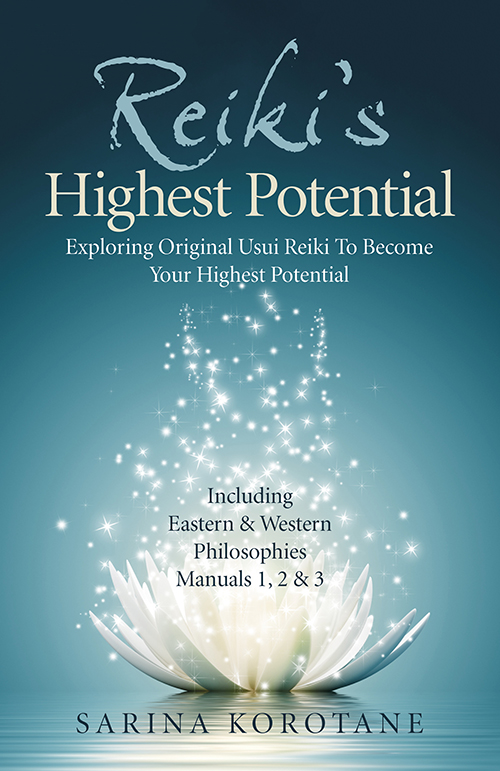
Writing Reiki’s Highest Potential took me on a journey which guided me to explore and establish my foundation with my spiritual beliefs. It took me on a journey where I visited my past and saw my inspirations, my trauma, and the evolution into the woman I am now. The process of remembering and writing gave me an insight, a different perspective on me and my spiritual growth through the five decades I’ve been here in this life, and beyond, into my soul’s lifepath. I never knew I needed this, but it led me to build a bridge that connected my different spiritual personalities. When I first started writing Reiki’s Highest Potential, I had no idea of how grounding the journey would be, or that I would even see it as a journey. Who knew that writing a manual would result in a journey, and a spiritual grounding?
Reiki’s Highest Potential is a manual on Original Usui Reiki including the Eastern and Western philosophies and all three degrees. It is an informative guide into Reiki with all the basic information a novice or a Reiki Master may require. But what makes it more than an actual manual is that I write about my experiences and the spiritual growth I went through with each Reiki Degree.
I am 50 years old, of Indian Hindu heritage, born and bred in England, and a witch. My spirituality has had many teachers from many different cultures and backgrounds. I was lucky to grow up in a multi-cultural city where I was encouraged to ask questions to learn different perspectives on life and spirit. I was bought up in an environment where we as a community were encouraged to celebrate each other’s cultures. But one thing that was greatly missing was any positive guidance, mentors or knowledge available to a little brown kid on what it was to be a witch.
I always knew I was a witch. As a child it felt very natural, but it was also something that I found hard to get information on. All that was available about witches was from stories on TV or books that took on a satanic angle. It was in my early teens that I discovered that most witches do not worship Satan, and I was able to finally get reading material on all the different types of witches there are. It’s hard to find your spiritual foundations as a child when there’s no one to guide you, when you feel different, and no one understands you. It’s lonely. But it was my journey, and that journey has made me who I am.

Writing my book allowed me to find a way to connect all my different spiritual personalities and find a true balance between them. I’ve always found that I would keep many aspects of my life separate from each other. I would put them in their separate boxes, and they would never mix. Much like different groups of friends. Writing my book made me see how I kept my different spiritual aspects separate as well. When communing with Hindu gods or goddesses, that would be separate to any witchy communing I did. I also kind of kept my witch and Hindu beliefs from my Reiki. I had different rituals for each and so kept them separate. But that changed whilst I was writing my book. It was as if I was relearning Reiki from a different spiritual angle and everything merged. I can be all at the same time. I feel more ‘one’ instead of lots of different sides of my spirituality. I have evolved and grown and found my balance with all the things that conflicted me growing up, as if I’ve built a bridge to myself, to all my different spiritual personalities. Writing my book has made my Reiki connection stronger because my connection to myself and all my different and sometimes conflicting personalities, is stronger and more balanced. They share the same foundation.
I also found that when I was first exploring my past and how each degree cleansed me and connected me to the universe, to spirit, I feared being so open about my life, my beliefs, and my personal trauma. There was a part of me that didn’t want to be judged. I feared being judged. But writing Reiki’s Highest Potential had to be an honest account of my spiritual growth, so the reader could really relate to my words.

I found that I needed to be honest with myself and the reader, and that was spiritually healing for me. Putting down in words my spiritual beliefs gave me a spiritual freedom I hadn’t felt before. It was like cementing my spiritual foundation with the knowledge that I will keep evolving. I began to find my direction and felt more comfortable about giving details about my life and healing journey that were personal and important to me. My honest recollection of my Reiki cleansing allowed me to build a bridge to the reader, to build a connection that I needed. And that had a very positive effect on my spirit. It was very much a case of telling the world, this is me, and I’m proud of me and my journey.
Reiki itself is not strictly spiritual. It is a tool that allows the universal energy to cleanse and heal our energy, our spirit if you will. Some may take a scientific view of Reiki, and for others it is a spiritual experience, a way of connecting to the universe and the energy vibrations that make up the universe. But for me, Reiki, though it has a place in both, and I can see the science behind it, the pull to it has always been the spiritual connection to the universe. It reminds me to heal myself and keep a balance on my spiritual health, which in turn effects my mental, emotional or physical well-being. Reiki is medicine for the soul.
It has been a couple of years now that I finished writing Reiki’s Highest Potential and looking back to see how the process influenced my spirituality surprises me a little. I didn’t realise at the time that exploring all the different aspects of me would result in cementing my spiritual foundation. Now I see this little book as a spiritual companion, a disciplined friend, one that is firm, kind and full of wisdom. My book inspires me, it reminds me of what is healthy not only for my spirit, but also my mind, my emotions and my physical health. I read my book when I’m looking for guidance or when I’ve forgotten something due to brain fog. I read my words, remember and find inspiration to pick myself up and carry on. I hold my book sometimes when I need a little spiritual comfort because I know the wisdom of many before me is written there. The process of writing this book took me on an unexpected journey that really established my spiritual roots and ended up being my little friend in book form.

The plants wanted me to write this book. It is becoming recognised that plants are so much more than green living structures that provide oxygen, food and chemicals for future medicines. They are beings of power with a history of their own, with folklore and stories to tell. They communicate with one another and with us, if we can hear them, and they have friends that they like to live close to.
I have often noticed that plants that work together, live together. Within my herb garden, I note with amusement that, under the cloak of winter darkness, it seems that some plants uproot themselves and sneak across the garden to nestle in with their friends! Evening primrose has rooted in with Black Cohosh and they both help to rebalance female hormones. Valerian and St John’s wort have moved in together too, entwining their roots like a lovers’ knot, and they help to soothe our nervous system.
I can only conclude that plant medicine is a precious gift to the creatures of this Earth. For what other purpose has a plant with antispasmodic constituents in its bark, or nerve-restoring properties in its flowers, or hormonal balancing biochemicals in its roots?
The Spirit of the Hedgerow is a journey through the countryside and the wheel of the year, where different plants appear on the hedgerow stage for a few weeks, showing off their flowers, fruits and leaves at exactly the time of year that we need them, and then exit the stage as another character enters.
It is profoundly wondrous for me as a medical herbalist, when I collect these leaves, flowers and berries, turn them into a medicine, use them to heal my patients, and then return the spent plant matter back to the earth. In this brief tiny flash of light that is my life, and to my small consciousness, this is a very magical cycle.
Through my fascination with the hedgerows, an ancient calling drifted into my awareness, at first so very faint that I could barely recognise it. Then over the years it crystalised into a feeling of the ancient druids calling to me down the hedgerows of time – that is how I saw it. Eventually I joined the Order of Bards, Ovates and Druids, studied Celtic mythology and, in particular, the Celtic wheel of the year and the Ogham tree calendar.
I was born to be a herbalist. Even as a child, growing up in the suburbs of Cape Town, I longed to be a herbalist even though, in those days, there was no such thing in our society. It was a mediaeval concept and, even if I had known about it, the idea of studying for four years in England was a pinnacle that I could never aspire to. I became a horticulturist instead with the thought that, if I couldn’t heal with herbs, I could at least grow them; what I might be growing them for was an undeveloped idea.

My life journey actually did take me to England where I was a head gardener for a grand estate. To my great good fortune, the owner of the estate and his landscape architect sent me on a tour of all the great gardens of the country so that I could absorb ideas. One day I was driving through London when I came across the Chelsea Flower Show. A parking place was available right outside the gate so I flung my car into the space. And as I walked towards the gate someone asked if I wanted their ticket. Inside, to my left, my eye was instantly drawn to the stand of The National Institute of Medical Herbalists, and my fate was sealed. I don’t remember anything of the beautiful gardens on display that day!
I see nature as an expression of the numinous. It is innocent, amoral, unashamedly wild and free, and despite everything that we have inflicted upon our beautiful Earth it is still profoundly generous and compassionate to us. If you open your heart and really look, it is impossible to tread this planet without humble reverence. Thus, to be able to use her plants as a way of making my living and to change the lives of those that I help, is an honour beyond words. I have no words for that, and can only try to offer back to her.
A long time ago, as a twenty year-old, I was looking for the elusive elephants in the last vestiges of the primeval Knysna forest. Of course, I didn’t find them but, as I sat down on a fallen tree, the trees overhead groaned and I heard them say to me, “Help ussss.” I was distraught because I felt small and powerless to change acid rain and the non-stop encroachment of human development. The Spirit of the Hedgerow is my gift to the plants. They asked me to tell their stories, to help humans fall in love with them again. I wanted to show the reader that they are so much more than useful green things, important for holding back climate change.
The book celebrates the plants of the countryside in their various cloaks of seasonality. As the wheel of the year turns, so too do the pages of the book, filled with folklore, Celtic festivals, medicinal uses of the plants and home herbal remedies. It forges an intimacy with the grand circular dance of plant seasons and in doing so hopes to deepen the reader’s experience of the natural world and our place in it as friends of nature.
Plants want to help us. Every day in my apothecary, they urgently tell me which among them really needs to be in a certain prescription. I always listen and my clients get well. Plants are beings of intelligence, power and compassion.
Jo Dunbar’s bestselling book The Spirit of the Hedgerow is published by Local Legend and available worldwide.

Like most people, my creative journey began as a child. Drawing, painting, and playing on a mini keyboard, I would follow my creative bliss. But when I entered my pre-teens, my creative impulses got snuffed out by a belief that what I was creating was stupid, so I stopped all forms of creative expression.
Several decades later, and with a devastating personal loss, I engaged with my creativity again. It started with a friend's suggestion that I attend art therapy to help me through the grief I was struggling with. Another friend took me to a weekly Buddhist meditation group. The combination of the creative work and spiritual work rapidly improved my wellbeing and I've continued to notice the inextricable link between the two.
There is something about clearing the mind in a calm, meditative space that opens it to receiving fresh ideas and inspiration for creativity.
My creative projects are generally in the form of science fiction novellas and visual art. These have been my staples since I first started writing and drawing as a child. Although the sources of inspiration have evolved over the years, as have the tools I use, the core process seems to have remained the same:
Clearing the mind makes way for the myriad ideas to fall from the ether.
I like to think of 'the ether' as the great oneness of all things. As philosopher Alan Watts would say: "I am a unique expression of the oneness of all things" and I wholeheartedly agree. I also believe that every creative output (i.e., a story, a chapter, a painting, a piece of music etc.) has its own identity as a unique expression of the great oneness and that anyone can access it.
Silencing the inner critic during those moments of inspiration is essential, to ensure it does not kill the creative expression before it has taken its first breath. But when the creative energy has been completely expunged, it usually helps to invite the inner critic back into the studio, because it can offer guidance on what we can do better.

The creative process is, of course, slightly different for everyone and it can change over time. It never ceases to amaze me how fluid creative energy can be and how people perceive their own creativity. It was from this place of fascination that I asked several creative people in my network to share with me the nuances of their creative practice.
From those interviews, my first solo book was born. Titled: Art for Happiness: Finding your creative process and using it, the book helped me, and my readers, to understand some of the common themes in the lives of professional creatives. Those themes included:
• A regular creative practice was vital to their wellbeing because of the joy, satisfaction, and sense of agency it brought to their lives.
• There was a clear interdependence between: personal wellbeing, spiritual peace, and creativity. Being in nature was consistently mentioned as having the power to elevate all three: wellbeing, connection with spirit, and creativity.
• Other sources of creative inspiration included the work of other artists, musicians, writers, dancers, and poets etc. Childhood memories were also mentioned as a strong source of inspiration. Whether those memories were 'good' or 'bad' did not seem to matter, they were still a source of inspiration.
• A willingness to experiment, coupled with self-belief and a commitment to continuous improvement shone through as enabling factors for the professional creatives I interviewed.
Around the time I published that book, my spiritual practice was evolving, and I became interested in creative visualisation. Although contemporary interpretations of the term focused on visualising one's future success, I was more interested in exploring how the discipline of creative visualisation can enhance a person's creative practice. From the interviews I conducted, and the academic research I undertook, I learned:
• Creative visualisation exercises, like dreams, can reveal our inner guides as they lead us through a scene or experience. Aspects of our own subconscious, these guides can be called upon to provide inspiration for our creative work whenever we need them.

• The act of capturing what we have seen during a creative visualisation exercise can bring an extra layer of texture to the inspiration we've drawn from the exercise. It is the act of writing about it, drawing it, speaking about it etc. that calls forth our own interpretation of what was visualised, and therefore exercises our creative thinking.
• Letting the vision sit alone for a while after we have captured it can give the vision some time to percolate through our conscious mind before we start to bring it to life in our creative practice.
A year or so after publishing Creative Visualisation: Access your Imagination and Enhance your Creative Practice, I found myself reflecting on the life event that had brought me back to my creativity. Finally, I felt ready to confront that phase in my life, to re-acquaint myself with the pain, and write about it.
But writing my own experience was not enough. I was curious to know how other people use their creative practice as a method of recovering from grief and loss. And I wanted to pull those findings into a book that would be useful to anyone struggling with grief. This meant the book had to be short, sweet, and easy to read because people who are in deep grief usually find it difficult to absorb more than a few sentences at a time.

So that's how the book Beyond Blue: Creative Approaches to Releasing Grief and Flying Free was born. Although it's a short book, it offers a summary of the research on grief: the types of grief, the phases of recovery and the possibility of personal growth beyond grief. The people I interviewed for the book included professional writers, artists, and an art therapist. Unsurprisingly, there were several key themes that emerged from our interviews:
• Creative work offers a sense of agency to the person doing the work. The very act of holding a pen, or a paintbrush, or pressing the fingers onto a keyboard can offer the creator a sense of control. That feeling of control can be incredibly therapeutic for someone who is suffering from a loss.
• The sensory and tactile aspect of making music, painting, weaving, or any other artform, offers an embodied mode of accessing difficult feelings. More so than talking about difficult events, expressing the feelings in a non-verbal way can be a faster and more direct route to releasing difficult feelings.
• The experience of being in the moment, fully present to what is being created, allows the creator to gently separate from, and observe, the difficult feelings associated with the grief.
• The subject of the creative work can offer the creator a means of reframing the connection they once had to what has been lost. Reframing has therapeutic value during the process of recovery because it helps the griever to put some distance between the loss and their feelings about it.
Creative work calls upon all aspects of the self - the intellectual, physical, and spiritual - and therefore offers the opportunity for integration between those aspects.
Looking back on the 10-year period in which I conducted all that research, interviewed all those professional creatives, and wrote the books in my Inspiration & Creativity series, I now understand that it helped me to integrate the parts of myself that had been obliterated by grief and trauma. The physical, spiritual, creative, and intellectual dimensions of my psyche were finally reunited, and they continue to work together to help me live my best life while doing what I love.

“Your inner vibration is as intimate and personal to you as your breath. You could say this vibration is you, through which you are connected to a universe as diverse and universal as the gases you breathe and the space beyond them. Through this breath you express the story of that universe.”
So says Anna Parkinson, a healer as well as a writer, and this inner vibration, in herself and anyone or anything she encounters, is now the language she comprehends and addresses for healing. Anna believes that we are all living a story, profound in its connection to our origins but, more importantly, a story that is unique to us and our individual spiritual growth.
“Beyond Sex ad Soup: Living a Spiritual Adventure,” is Anna’s latest book in which she explains how all the events and emotions you experience in your life are helping you to recognize this story, however painful it may feel at the time. “This book is about those parts of us that go beyond our physical experience,” says Anna, “where our mind can go and what it can do. The power of the imagination, fuelled by desire, is immense, so we learn how to channel that for our benefit.”
Anna explains how the different centres of energy in our bodies respond to our personal emotional needs, simultaneously with our physical needs. This sets up a reverberation that has physical consequences in the tangible world. She shows us how we can learn to ‘read’ the language of our bodies and, in responding to it, discover our power to create positive change. Anna confesses that she is fascinated by quantum mechanics. Although she is not a physicist, she believes the truth of such theories as David Bohm’s theory of entanglement, is constantly being demonstrated in simple ways in the story of our everyday lives. As such, when she writes, her personal experience is woven through the descriptions of powerful methods of creating change.
In Beyond Sex and Soup we encounter Anna’s mother, slipping from old age towards dependence and death, but this is ultimately a galvanising story. Author, Donald Van Howten, said “Anna takes you on a journey through a close encounter with death into a richer encounter with life.” and the renowned spiritual teacher, Satish Kumar, described this book as “outstanding and inspiring ….. a guidebook, a handbook, and a book of wisdom.”
How did Anna come to find this language, which she believes is constantly telling her the greatest stories ever told?
As a practising healer, as well as a writer, Anna believes one activity informs the other. The act of healing others, she says, gives her the privilege of being invited to walk into another person’s energy, or internal vibration, restore and rebalance any imbalance she perceives there, and afterwards relate back to them the story their unconscious has been speaking. The process can alter the course of any physical or emotional condition the person is caught up in, but Anna also finds it wonderful because each individual story teaches her so much.

“It’s like looking into a grander, deeper vision of the lives we live and the beings we are connected to - much like the feeling you get when you lie on your back in the spring grass and look up into a clear night sky.”
Anna never wanted to be a healer. For most of her life she knew nothing about healing and had no interest in it. She did want to tell stories, but she says she realizes now that she was looking for a language, and the language she has found that has unlocked her creativity and her access to stories is, it turns out, completely silent!
“It is this inner vibration that I perceive through my own internal radar and then translate into spoken language, or thought. I believe that this is the oldest language, that humans and animals have always used to communicate.”
Anna remembers marvelling at the wit and structure of a Jane Austen tale in her teens, wondering if she could ever emulate it. She studied English literature at university, but wrote about French literature for dissertations, or writers for whom English was a second language, always looking for another language. Then she went to Paris and studied mime, telling stories with no words at all. After several years of mime and street theatre, poverty and creative isolation drove her to put her wits to the service of telling other people’s stories, which she did as a producer for the BBC for 20 years.
But, says Anna, the language of your body is speaking to you constantly and guiding you on the path that makes you happy.
“Your body knows more about you and your journey than you know.”
In her late forties Anna began to experience double vision and a series of crippling headaches. Doctors dismissed this as migraine, but she knew this was something far stronger. Eventually the doctors found a brian tumour, very deep in her head, and began to consider how they would deal with it. While everyone wondered what to do, Anna realised that she herself had to take charge. She dimly understood that her body was speaking to her, and the physical events were only logical results of feelings that she needed to sort out.
Anna says she was lucky to meet a healer who opened her eyes to the language of her body. Martin Brofman, an American who called his method Body Mirror Healing, taught her how to recognize and use her inner language, and how to work with this language to transform her outer experience. Eventually, after working hard with this process, the brain tumour and all its associated symptoms disappeared. And Anna found that she herself had become a healer, able to do for others what Martin had done for her.

This was about 16 years ago. Anna has been practising as a healer ever since, also teaching her readers how to engage with the power of their inner story in their own lives. She remembers vividly the first time she understood how the vibration of your inner emotional language is echoed in your outer experience.
“I was writing my first book when I was diagnosed with a brain tumour. It’s the biography of an apothecary who wrote two extraordinary books in the 17th century about plants and their medicinal properties which I had read and fallen in love with. I discovered that no-one knew his full story, so I began to piece together the evidence to uncover it and a dramatic period of English history that still affects us today. But the reason I knew about this man, John Parkinson, was because he was an ancestor of my father’s, and I had borrowed one of his books from my stepmother to read the day after my father died. I couldn’t quite believe that no one before me had told his story, as he was well known for a long time and admired by many influential people. Still, the business of research and writing was going well, and I was getting stuck in when I was told I had a brain tumour.
By the time I had healing with Martin, I was not much further down the road of physical recovery, but I had finished the first draft of the book in spite of my symptoms. It was the day after the healing, when I sat down to edit the manuscript, that I realised how my inner experience expresses itself through my life all the time. Martin Brofman had told me that the tumour had to do with my feelings about my father. I didn’t think my relationship with my father had any relevance in my adult life. But when I began to edit my manuscript, I read that almost the first line was, “I never lived with my father.”
I wrote this to explain that his possessions, like John Parkinson’s 17th century book, were not as familiar to me as my mother’s. But as I read those words, I understood that all the time I was uncovering the story of this 17th century ancestor, I was also digging for a connection with my father that his death seemed to have deprived me of for ever. I remember looking out of the window, marvelling at guiding power of my unconscious, and realising that I had also moved into a 17th century house, and a tree like the one outside my window was described in detail in John Parkinson’s 17th Century book!”
Anna says that healing is really about understanding this inner emotional memory that your unconscious holds on to, often part of your preverbal experience, and releasing it. Understanding alone can change the inner vibration with profound consequences. Her personal healing began with that understanding, which allowed her to liberate herself from all sorts of beliefs about ‘reality’.
“Such liberation frees up the ever-flowing stream of creativity that is part of your nature to express itself without restraint” she says.

MRI scans eventually showed that the brain tumour had shrunk to scar tissue without surgery or any other medical intervention, and the books Anna has written since about the process of healing oneself have been widely praised. She believes we can all use these methods in our lives to navigate with more joy and purpose, as well as better health.
“It is,” she says, “a kind of double vision, being aware of the impact of your inner life on outer circumstances, and vice versa. Ironically for me, double vision, which no longer troubles me, was the very first symptom of the illness that ultimately freed my creative voice!”
Working frequently in the non-physical world through healing has whetted Anna’s appetite to write about the way ancient experience still vibrates through our material world. These days her creative process is just to get out of her own way.

I guess I’m very lucky in that I class my work as a Regression Therapist as part of my spiritual path, which means that helping my clients to improve their lives and heal from an array of issues that stop them from living life freely is my way of aiming to make a difference in the world. This I view as a spiritual process, in that serving others acknowledges the universal truth that everything is connected and nothing is separate – we are all one.
I expect that like many people my spiritual journey has been a somewhat convoluted one. I rejected Christianity in my teens and it was when I first read about reincarnation that life on earth finally made sense to me. I was immediately drawn to Budhhism and in my early 30’s I became a practising Buddhist, introducing regular meditation into my daily routine. I didn’t think meditating had made much of a difference to how I felt, until one day my wife told me that she had seen a big change in me – “you’re so much less angry than you used to be” were her words. I realised she was right. As I became more serious in my practice I could feel my levels of compassion opening up too, but after several years I became disillusioned with the type of Buddhism I was involved with, which was Tibetan Buddhism. It felt too religious and magical, full of rituals and praying to deities, and of course as it had grown through the early Bon religion of Tibet it had absorbed much of the primitive elements of Bon within its structure.
I left it behind (though I continue to this day to feel strong ties to Tibet and its people) but continued as a non-denominational Buddhist for several years until the re-living of one of my previous lives as a Native American drew me away from Buddhism and into training in Native American shamanism. I liked the connection with Mother Earth, the emphasis on personal development and the sacredness in all things. I took part in ceremonies in nature and in many sweat lodges, but again after a few years felt that something didn’t gel with me so I left the training and for a couple of decades had no spiritual path to follow, other than doing my best to work with my heart with clients in my therapy practice and to live a life centred around kindness. It seems that I was always looking for something that combined compassion for oneself and others, simplicity and a reduction of the ego. I was always repelled by anything that felt too ‘religious.’ I toyed with Zen and Daoism but I realise now that at that time I didn’t truly understand them.

It was in 2020 that a major trauma happened in my life and as a result of a chain of events (which I now understand were meant to happen) I was fired head-first into Non-Duality teachings and, finally, I knew that I had come ‘home.’ It was as if the scales had fallen from my eyes and the Zen Sutras of Sosan finally stopped being gobbledygook and made total sense. Since then my spiritual process has been to focus on being Aware and in One-ness, and thanks to the wonderful Non-Duality teachings of Rupert Spira my way of being in the world has fundamentally changed and I have more peace in me than at any time in my life. The simplicity of being in One-ness and accepting that everything simply is, has allowed me to be less ego-centred and more in my heart.
This has been reflected in a shift in my work as a Hypnotherapist specialising in regression (particularly past life regression) as I am much more able to hold the space from a place of Conscious Presence for my clients in their sessions. This approach in therapy sessions allows their subconscious minds to guide us to the deep roots of their issues and release those roots leaving the client free and healed.
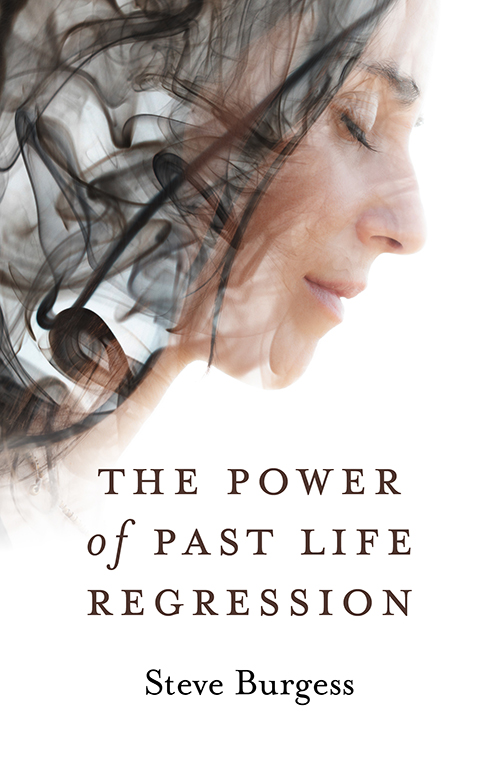
I work every day in past lifetimes, and I am so wrapped up in the concept of reincarnation that I am sometimes shocked when I meet people who don’t believe in the reality of reincarnation. I constantly see the healing power of past life regression with my clients and find it hard to understand why past life therapy is not accepted as a credible psychotherapeutic discipline. This is one reason why I wrote my book ‘The Power of Past Life Regression,’ as an attempt to broadcast to a wider audience. For over 30 years in my career I have done my best to let the world know why past life regression is such an important healing modality, and I am pleased to see how popular it has become in the last decade or so. My inspiration to continue working in this way is the long stream of clients who have benefited from it. My creative process is fuelled by the fascinating stories they tell when they are in trance re-living a former life, and I love to write about their experiences and share them so that more and more people awaken to the possibility of healing their present lives by releasing the traumas from the past.
‘The Power of Past Life Regression’ features some of the incredible experiences some of my clients have had in some of the 15,000 therapy sessions that I have conducted. It describes their experiences in hypnotic trance in which they regressed back into their previous lives in order to heal issues in their present lifetime. These issues include alcoholism, physical problems (including back pain, skin problems, migraines and IBS), panic attacks, anxieties, phobias, lack of confidence, depression, sexual problems and relationship issues.

Just some of the past lives which are featured:
Each of the client’s stories is vividly re-told using the words that they spoke whilst in trance in their regression sessions. They paint exciting pictures and describe in detail the events that took place in the past lives, often giving a fascinating insight into life in former times.
I am conscious of the importance of therapy to the wider world; as my clients heal from their emotional and physical issues and become more balanced they send out a different energy into the world. They become less reactive and live in the world in a more peaceful state; as they send out this peaceful, more balanced energy into the collective unconscious the world becomes a more balanced place for us all to live in. I feel privileged to be part of this energetic healing of the planet.
Steve has been a full-time Hypnotherapist in East Yorkshire, England and Norway since 1992 and in that time has completed over 15,000 one-to-one therapy sessions. He is an internationally acclaimed therapy trainer, running courses for a variety of organisations around the UK and in Norway. Steve is a former Vice-Chair of the UK Guild of Hypnotist Examiners and he is accepted as an authority on hypnotic regression, as well as being an Advanced EFT practitioner and NLP Master. He has completed many thousands of past life regressions with his clients and his books ‘Famous Past Lives’ and ‘The Power of Past Life Regression’ describe some of his experiences in past life therapy. He has appeared on Sky One TV, GMTV and Yorkshire TV, has been regularly featured on BBC Local Radio and his work has appeared frequently in a variety of publications. He runs his own Hypnotherapy training school - Lionheart Training - and he is much in demand with online podcast and radio show hosts for his talks on hypnotherapy and past life regression. His YouTube channel ‘Hypno4all’ contains a variety of Steve’s free hypnotherapy recordings. Steve nowadays does all of his therapy sessions online and he has worked with clients in 22 countries around the world.
For aspiring writer of prose, poetry, philosophy and film, Gordon Collins has sought to discover some inner strength from the raw materials of life’s difficulties. He has always perceived the world from a deep and sensitive place within him and even as a child was often overwhelmed with such seeing to the point of spiritual and emotional shutdown. His first book, ‘Sons of Thunder’(2012) is a gritty novel, set in Glasgow and inspired from his own life experience about the upward struggle of children growing up in a tense environment of fear and shame.

The setting of the book is one where the beauty and innocent seed of a child’s soul finds itself compelled to grow in the dark soil of a home broken by violence, addiction and poverty. Although the novel deals with some raw issues, the deeper message and theme is that there is true hope and that the love we seek in life is not just a dream, but a reality. Spiritual beauty exists in the midst of our most broken, vulnerable and fragile humanity.
“There is far more than meets the eye,
in the worlds which exist within a city.
The soul is a door which can open into manifold worlds of mind and spirit; worlds of darkness and light, some of horror and of joy; worlds of dreams, visions, intuitions and the infinite imaginations of a child…”
( from ‘Sons of Thunder’ Prologue )
Gordon has always intuitively ‘known' a gentle, inner silence and a still, small voice even in the midst of an emotionally noisy and spiritually chaotic world. Yet, his connection to, and awareness of this voice was almost engulfed in his younger years. This connection returned unexpectedly but joyfully in his early adult life, when the vast landscape of the ancient Scottish mountains, and a growing awareness of an eternal Presence which placed intrinsic value on all beings, evoked in him a journey of discovery and love.

Gordon’s second book, ‘The Paradoxical Life: from anxiety to bliss’ began as a calligraphy project to express the sense of integration or connection through which his own consciousness was growing. The book explores the narrative and themes of the ancient Vedic text, ‘The Bhagavad Gita’, from a standpoint which allows both an Eastern and Western perspective and application. Having studied Western philosophy and literature academically, and exploring various aspects of Eastern spirituality in both its practice and philosophy, Gordon came to view the questions of our identity:
“Who, or what are we essentially?” and
“What is it to be human?” as helpful signposts which can point us to the ultimate space of freedom, happiness and well-being. He holds that the road to this spacious ‘place’ is fundamentally one of surrender and letting go of our deeply embedded attachments and identifications. Again, a joyous adventure with many challenges: a paradoxical life.
Mirroring his view on Life’s vastness, richness and variety, Gordon’s creative writing has also branched from prose fiction and non-fiction into poetry and film-making. His first poetry book, ‘Restoration and Redemption’ explores the wide world of spiritual experience from our human position as an emotional and physical creature with pain, longings, hopes and dreams. Gordon feels that poetry arises spontaneously from the struggle to find unity with ourselves, others and our own evolving conception of the Ground of Being.

His second poetry book, ‘The Thin Veil’ moves away slightly, although never completely, from the emotionality of subjective perception to the Simplicity and Stillness of ‘knowing’ the Reality which is simultaneously within, beyond and before mind and matter. This set of poems explore the notion that to ‘know’ is ‘to be’ which is not about information but of having awareness or intuition of some Source of Life in us. This life is our essential, communal existence, the origin of our collective consciousness which binds us together.
Gordon’s most recent poetry book, ‘Beautiful Connection’ continues his paradigm that to be human is to be a being whose very nature is to be in soulful, spiritual and physical relationship with ourselves, others and Nature. The idea that there is an essential unity of Being which connects all things is once again threaded through this work.
His newly formed website and creative brand, www.univocity.co.uk implies and seeks to promote this unicity of being and its manifold voices. As an English teacher for over 20 years, Gordon loved poetry as the most beautiful and condensed form of language which is meant to be heard and felt and not just read. In order to illuminate this poetic experience as one of heart and not of mind alone, he developed ‘Beautiful Connection’ into an audiobook with accompanying music from artist Exit-Omni. The result is a beautiful sentiment with a loving sound intended to reach and help the process of healing in our fragile souls.
Gordon has many upcoming film and writing projects and continues to try in his own small way to share this message of unity, connection and healing through his various creative mediums and creative charity www.reelpeoplescotland.com . He does this in ways which are forms of ‘spirituality’ or love in action. Spirituality and creativity are, to him, shared experiences which express and nurture not only our bliss but the brokenness of our lives. There is light in midst of the darkness.
Angelina Der Arakelian is an author who believes in the magical power of words. More specifically, she sees potential in the written medium to make readers imagine a world that is very far from, yet comprises similar traits to the one we live in. By doing this, she hopes to challenge the reality we’re presented with and allow us to dig the purpose behind some of history’s most prevalent events a bit deeper.

In early 20th century France, Patrick is a man who seems to live an ordinary life with his soon-to-be wife, Josephine. As they frequent a coffee shop one day, Patrick is compelled to pass out after listening to a brief radio broadcast, and wakes up in a different time and space. It is now the 19th century, and he’s in the Ottoman Empire. At first, he thinks he’s dreaming, but soon realizes he has a mysterious ability to time travel each time one of his 5 senses is triggered. Eventually, he begins to question his sanity, and whether he has any control over his perception of reality:
‘Gazing up at the dim lit sky coated with vintage shades, my senses came together to form a ball of haze that sat heavily on the edge of my brain. I was shaking; perhaps a more accurate description would be, electrifying. Electrifying with charged atoms drawing an image before me which I did not necessarily choose to control. For the first time in my life, I began to wholly accept that I was not the writer of my life’s plot.’ - Patrick, from A Week in Berlin.
On a quest to uncover the origin of this superpower, he meets Joseph, an older and wiser man who promises to explain everything if he chooses to cooperate with him. Throughout their encounters, Patrick is reminded of his past, especially the loss of his then-wife, Ruby, and his unborn daughter. He is made to see that he is able to revisit the past and change the course of history, including saving his family, if he does so carefully and by following strict instructions. Otherwise, as he is told, he risks placing humanity in danger.
The story is a reflection of the worlds we’re introduced to in works such as The Matrix or Inception, where the main character’s understanding of the world around him is completely shattered. To better understand the world he faces, he must come to terms with who he truly is, bringing about change by exploring the world within him rather than outside - a core element of spiritual practice and growth.
As is the case with most creatives, Angelina Der Arakelian is inspired by real-life circumstances and experiences, not just her own but of those who are close to her. Mixing elements of historical fiction, science fiction and mysticism, the story of ‘A Week in Berlin’ is loosely based on her great-grandfather’s survival of the Armenian Genocide in 1915.
The character of Patrick embodies the traits of a man who has lost everything during one of the most barbaric events known to humanity, and finds his perspective is shared with other characters who have lost a part of themselves during other historical events over time. Throughout the novel, we are met with the possibility of reality - including the major events that take place within it - being a result of negative energy forces trying to keep positive energy forces at bay. The primary way this happens is through waging wars, genocides, acts of racism, and other incidents that are meant to divide humanity. Ultimately, the story encompasses the presence of a hidden spiritual war that occurs behind the scenes of conflicts we’re used to seeing on the surface.

A young woman wrote a novel that was accepted by a book publisher. Then she heard no more from them, her enquiries ignored. By chance, one day she then found her own work on sale in a shop under another author’s name – so she took the company to court. That case took two years, but she won. By then, having learned so much about the publishing business, she set up her own company with the vision of supporting and protecting new authors. Thus was born Local Legend Publishing.
In our lives we sometimes face huge challenges. Sometimes, these are to do with our health, career or relationships. Sometimes, those who believe they are stronger or somehow more important seek to take advantage of us. Yet Beth proved that we can overcome them when we are determined and have a profound belief in truth and honesty. Not only that, wonderful new opportunities can emerge for us when we refuse to give up on our dreams.
The company passed to the present owner in 2012, renamed Local Legend and focused on the Mind, Body and Spirit genre. Since then it has developed greatly, expanding its marketing outreach, developing excellent relationships with others in the MBS community and running biannual spiritual writing competitions to attract new talent. We are proud to represent around thirty authors, forty paperbacks and twenty digital books, both fiction and non-fiction, whilst still abiding by exactly the same original ethical and non-profit motives.
Local Legend is now an independent MBS publisher with a friendly and personal approach, dedicated to supporting fine new authors especially (though not exclusively) whose writing contributes to greater awareness and understanding of human consciousness and of the natural world.
We know very well that the journey to publication can be a daunting experience, however deserving the author and their work, especially in these days of economic stringency. The established, traditional publishers are often unwilling to take risks, particularly in a specialised genre like ours, and offer far less editing and marketing support than in the past. Even finding a helpful agent can be stressful, with no guarantee of success, and many authors become disillusioned.
But then, writing has always been a challenging path. Agatha Christie was rejected for five years, and now only Shakespeare has sold more copies. J K Rowling was rejected twelve times and advised to “get a day job”. Stephen King, James Joyce, George Orwell… there’s a long list proving that triumph over rejection is possible.
And whilst most authors will never join that celebrated company, we believe in giving those with genuine talent and something important to say a chance. At the very least, they will have the deep personal satisfaction of seeing their work professionally and beautifully designed, edited and marketed, and available at any book store worldwide. We have received national praise for the quality of our books, several of which have won prizes. Importantly, our printers are part of the international Ingram Group with facilities across North and South America, Europe, India, the Far East and Australia, with distribution by the market leaders Gardners.
So, exactly what kind of books are we talking about here? Mind, Body and Spirit is a genre that embraces and supports the wellbeing of people and of nature. Thus our books should all, in some way, encourage their readers to be the best that they can be and offer guidance on their personal spiritual paths. They enlighten our relationships with one another and with our home, the Earth.
Some of the deepest and most important questions in life are posed by paranormal and psychic phenomena, by mystery and mysticism, by the psychological and the spiritual.
We explore these themes, for example, in the stories of those with very special gifts such as Glynis Amy Allen. Her #1 online bestseller Ghosts of the NHS gives one astonishing true story after another of spirit beings alongside her during her decades as an A&E nurse. Then there’s the eye-opening and funny autobiography of international clairvoyant Alison Wynne-Ryder, The Quirky Medium, co-host of the TV series Rescue Mediums.
Back down to earth, literally, we have the beautiful, fully colour illustrated The Spirit of the Hedgerow by professional herbalist Jo Dunbar who describes the medicinal properties and folklore of our common plants and trees. Another author of vision and deep experience is Ann Bridge Davies, a professional artist and teacher, who spent over fifteen years researching her book The Art of Spirit, illustrated by photographs of some of the most enigmatic artworks ever created, many seen here for the first time.
These and many other special titles offer readers guidance, inspiration and knowledge for the spiritual journey. Yet it’s not just the type of work that makes Local Legend a beacon of MBS, it’s our relationships with and the personal care shown to our authors. We talk to one another regularly, our contracts are generous and written in plain English, and our royalties are about three times higher than any other publisher we know of.
That’s because we’re actually not in this business to make money for ourselves. All administration and editing is given free and the owner even receives no payment. Local Legend simply wants to support the Mind, Body and Spirit.
Poltergeists are often regarded as being mischievous and sometimes malevolent spirits. These may be of those who have departed the earthly form, or those such as 'elementals' who never had that 'earthly' form to begin with. In either case perhaps something which is best avoided.

But what if that we regard as poltergeist phenomena is simply an aspect of our own frustrated spirituality? The minds hidden powers rebelling against the stresses and dullness of everyday life? In John Frasers 2nd book Poltergeist A New Investigating into Destructive Hauntings (2019) he sets off to further explore this intriguing possibility.
This idea we discover is not a new one. In fact, the rather long title indicates it is something of a critique and a tribute to the work of the writer, philosopher, and occasionally paranormal researcher Colin Wilson. Wilson, as far back as 1981, was author of the book 'Poltergeist- A Study in Destructive Haunting ' The similarity in the title is not entirely coincidental!
Wilson in many of his books showed a belief in a power that he termed as 'Factor X', innate in us all but perhaps only active in some. Those that we might refer to as mediums, magicians, and mystics, or in diverse cultures to us as shamans or seers. He defined 'Factor X' as being:
'The key not to only the so-called occult experience but to the whole future evolution of the human race'
(Colin Wilson, the Occult p77)
Wilson also believed as well as being available to the more spiritually gifted, it was something that could also occur when the mind perceived a real or imaginary crisis. In his 'Poltergeist' book, he gives the example of the hunter James Corbett who had inexplicably changed his walking route one day and the next day found when retracting his footsteps that:
‘In the sandy bed of the culvert, on the left-hand side, he discovered the pug marks of a tiger that had been lying there.’
(Colin Wilson, Poltergeist… p195).

This it seems could well be seen as a heightened state of consciousness using not fully explained powers to avoid life threatening danger.
We are not all of course pursued by real life tigers, but the stresses of everyday life can certainly be 'ferocious' in their own way and John explores the real possibility that such stresses can provoke such hidden powers in surprisingly many of us in a far less focused and untrained way.
John's latest book takes us on a journey both geographically and within our minds to let the reader decide if in fact this is the case. He includes the fascinating encounters of a young teenage girl called Voirrey, who lived in the most desolate farm house there ever could be at Cashens Gap in the Isle of Man.
Voirrey discovered a (mainly) invisible friend which she identified as an 'exotic' Mongoose called Gef, with the ability to throw stones and create noises around the house, as well as occasionally communications which included calling himself 'The Eighth Wonder of the World'. None of this of course makes any sense as a literal explanation of what was happening - but the phenomena itself was witnessed by many people, and was by its nature inexplicable in everyday scientific terms. If we assume Gef was not actually a Mongoose, we then would have to ask ourselves for what reason would a discarnate 'afterlife' spirit pretend to be one?
Or does an alternative theory fit the fact better - that those several years of stress known as adolescence, combined with loneliness, triggered off powers within Voirrey herself as a cry for help.

John's book also takes us to Rosenheim Germany where after the brake up of an engagement, (a definite stress factor), a 19-year-old girl caused strange electronic and other effects at the office she worked in, and other famous cases around the world as well as others he has studied in detail himself.
John also notes that in Romania, a country which fascinates him and which he has visited several times, that much of the mythology of vampire superstitions seem to be based around real life incidents that we might term as poltergeist ones. Powers that could be universal but described in separate ways throughout the world.
Of course, to most people the word 'Poltergeist' has negative spiritual connotations and there is no doubt that a poltergeist type experience can cause fear and panic to those who experience it. Perhaps though there is more to the Poltergeist than the vision conjured up by scary sounding book titles (such as John's) and this power is simply 'immature' and can ultimately be controlled and used in more conventional enlightened spiritual ways.
After all, the renowned psychic and healer Mathew Manning seemed to be the catalyst of poltergeist phenomena in his younger years, which shows at least the possibility that poltergeist phenomena are an immature form of more positive spiritual powers.
Any powers that John himself has remain 'extremely latent' for now, but has graduated from more conventional paranormal investigation, (as a council member of the Society for Psychical Research and previously as Vice Chair of the Ghost Club), to a more inquisitive wish to find out a 'bigger' truth. Though his practical left brain still very much hopes that the bigger truths can still be proven in time. That science and spirituality should work in tandem rather than separate parallel lines that never can cross.
Both, after all are fundamental part of what makes us truly human!